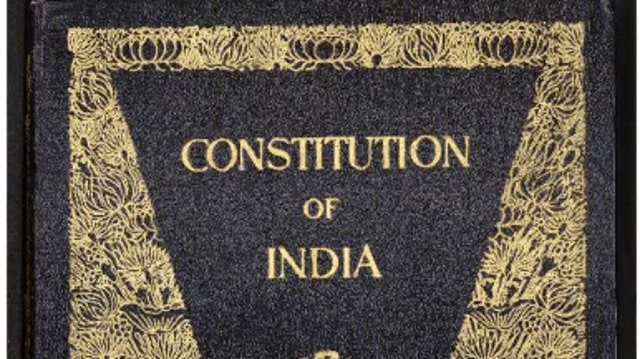
The Supreme Court affirmed that the Constitution is a "living document," capable of evolving with changing social and political needs, while upholding the inclusion of these terms as reflective of India's commitment to equality, justice, and secularism.
Table of Contents
Supreme Court’s Verdict on “Socialist” and “Secular” in India’s Preamble
On the eve of Constitution Day 2024, the Supreme Court of India rejected pleas for the removal of ‘Socialist’ and ‘Secular’ from the Preamble to the Indian Constitution. Such a ruling is a powerful declaration that the Constitution has life in it and has both a constitutionally historical legacy and a constitutional historical continuum. The case is a timely reminder of the ongoing debate around the foundational principles of what the Indian state should or should not be: Are these terms — absent from the original document, to which they were added later through amendment — appropriate?
Historical Context: The Genesis of the Constitution’s Preamble
The Constitution of India was adopted on 26 November 1949 but came into force on 26 January 1950. The Preamble of the Indian Constitution was written to sum up the character of the nation and the hope that the nation possessed. But its destiny to its final form was not straightforward. The story of the Constitution’s initial discussions can be traced back to 1946 when Jawaharlal Nehru proposed the Objectives Resolution in the Constituent Assembly, which crystallised broad aims for the Constitution. This milestone brought India the future of an independent and sovereign republic.
The Preamble of October 17, 1949, referred to India as a ‘Sovereign Democratic Republic.’ Importantly, the terms “Secular” and “Socialist” were not yet part of this early vision. However, they were later added in 1976 under the 42nd Amendment during the Emergency period, and these words reflect the political and ideological changes of that time.
The Debate in the Constituent Assembly
The curiosity about the presence of ‘Secular’ and ‘Socialist’ in the Preamble started in earnest during the debates of the Constituent Assembly. Professor KT Shah proposed an amendment to describe India as a ‘Secular, Federal, Socialist Union of States’ on November 15, 1948. He said that using the words ‘secular’ and ‘socialist’ in the Preamble will elucidate India’s commitment to secularism and its social and economic parity aspirations. According to Shah, these terms were necessary to forestall any misunderstandings about the nature of the Indian state.
It did face opposition, but very strong opposition. Dr Critics of socialism mention include BR Ambedkar, the principal architect of the Constitution. Ambedkar argued that, by fixing India’s future social and economic structure in the Constitution, we did not strengthen but actually weakened democracy by preventing future generations from deciding what form of society they should live in and, factoring that in, he cautioned that the Constitution should not fix too much on what India’s economic policies should be throughout its generations; it should provide room for the people to decide for themselves, along its evolution. He argued that the ideals of socialism had already been reflected in other parts of the Constitution, with the provisions for equality and justice.
So, in spite of Shah’s motion being rejected, the question of whether India is socialist or secular continued to be debated. Some members, like HV Kamath, suggested that these terms be included in the Preamble rather than in the body of the Constitution so that the Constitution remains flexible and able to accommodate change.
The Amendment of 1976: A Shift in Political Ideology
During the Emergency of the 1970s, when Indira Gandhi was at the helm, the political climate forced the addition of the words ‘Socialist’ and ‘Secular’ to the Preamble of the Constitution through the 42nd Amendment. It was viewed as a move intended to indicate that this would be a social justice and equality state, which would be religiously neutral.
However, these terms weren’t added without a murmur. Opposition critics who opposed the amendment saw it as an attempt to freeze into the Constitution a definite political ideology, such as socialism, making it hard to adjust future policy.
The Supreme Court’s Ruling: A Living Constitution
The Indian Constitution is a living document that changes with the times, the Supreme Court reiterated in November 2024 when it upheld “Secular” and “Socialist” being a part of the Preamble. Nevertheless, referring to the terms as not part of the 1949 text, the Court further asserted the flexibility of the Constitution, where Article 368 allows the amendment given changing values and needs in a changing society.
Regarding the term ‘secular,’ the Court said that whilst it was not part of the original Preamble to the Constitution, secularism, as practised in India over the years, meant the state did not promote or penalise any particular religion. This, the Court said, was India’s unique interpretation of secularism, in which none seeks to do away with religion, none seeks to discriminate against one faith from the other.
In the same way, the Court also spoke about the limitation where, according to the term ‘Socialist’ there is no doubt that the Constitution itself does not require a preference towards any economic system. Still, the term conveys India’s undertaking to create equal opportunities and ensure that the state works towards a welfare state. This does not commit India to any particular economic doctrine but is a generalized criterion of social justice.
The Broader Implications
This signifies the transient face of constitutional interpretation. Although the framers of the Constitution, under the leadership of Dr Ambedkar, deliberately left out the words ‘socialist’ and ‘secular’ from the Preamble, they felt that the changing nature of India in political, social and economic terms necessitated that these terms be inserted subsequently. The Court has once again asserted that ours must still remain a dynamic Constitution, where the fundamental values of justice, liberty, and equality remain paramount. Still, the Constitution is also responsive to the fresh realities of India today.
The debate over whether India should identify itself as socialist or secular is not over. Sam Walder and his colleagues’ problems beg larger questions about the nature of democracy and the role of the state in shaping social, political, and economic outcomes. The use of these terms indicates the difficulty elites face maintaining ideological commitments alongside democratic flexibility.
Even as the nation evolves, so will its interpretation of its own Constitution. The debate over these words—’socialist’ and ‘secular’—reminds us that India’s democratic project is ongoing, and ideals from our past need to be updated to accommodate future challenges.
Conclusion
Furthermore, the Court’s ruling confirms that the Constitution is a living, breathing thing that can evolve in step with modern times but retains the sight of its founders. When the Court holds up the terms “socialist” and “secular” in the Preamble, it affirms the value of these values in present day India. Also, it remains mindful of the overarching framework of democracy that the Constitution envisages to change here and there. Having the Constitution able to metamorphose and evolve in concurrence with India’s identity changes and ensure protection to the rights and freedoms of its people is precisely what this ruling does.
FAQ:
Q1: Why were “Socialist” and “Secular” added to the Constitution’s Preamble?
A1: The 42nd Amendment added these terms in 1976, reflecting India’s political shift towards social justice and a neutral stance on religion, in line with the government’s ideological stance during the Emergency.
Q2: Did the Constituent Assembly originally include “Socialist” and “Secular”?
A2: The terms were not part of the original Preamble drafted in 1949. There were debates, particularly over the inclusion of “Socialist,” but the Assembly rejected it, with figures like Dr. Ambedkar opposing it.
Q3: What did the Supreme Court rule in 2024 regarding these terms?
A3: The Court upheld the inclusion of “Socialist” and “Secular” in the Preamble, emphasizing that the Constitution is a living document that adapts to changing times and that these terms reflect India’s commitment to social justice and religious neutrality.
Q4: What was Dr. BR Ambedkar’s stance on including “Socialist”?
A4: Dr. Ambedkar opposed the term “Socialist” in the Constitution, arguing that it would restrict democratic flexibility by locking India into a specific social and economic system. He believed such decisions should be left to the people to determine in the future.
Q5: Why did some members want to invoke God in the Preamble?
A5: Some members, like HV Kamath, proposed adding references to God, reflecting the religious beliefs of certain sections of society. However, others opposed this, feeling it was inappropriate to impose a religious view in the state’s foundational document.