The Supreme Court of India, in an 8-1 majority decision, ruled that not all privately owned properties qualify as "material resources of the community" under Article 39(b) of the Constitution, thereby limiting the State's authority to appropriate private property for the common good.
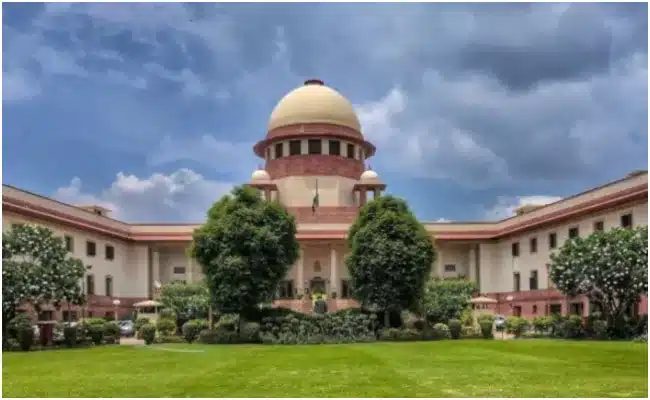
Your Private Property is Safe Now: Supreme Court Of India Says
In a major decision today, the Supreme Court ruled that not all privately owned lands are community resources that the State can appropriate for all benefit. With an 8-1 majority, the nine-judge Constitution bench, presided over by Chief Justice of India DY Chandrachud, decided on the complex matter.
Justice BV Nagarathna wrote a concurrent but distinct judgment, Justice Sudhanshu Dhulia dissented, and the Chief Justice wrote a ruling for himself and six colleagues. Chief Justice DY Chandrachud, Justices Hrishikesh Roy, Nagarathna BV, Sudhanshu Dhulia, JB Pardiwala, Manoj Misra, Rajesh Bindal, SC Sharma, and AG Masih were among the judges appointed to the bench.
The lawsuit concerns Article 31C of the Constitution, which safeguards laws enacted by the State to carry out directive principles of state policy—rules that the Constitution establishes for governments to abide by when enacting laws, etc. Article 39B is one of the statutes protected by Article 31C. According to Article 39B, the State must focus its policies on making sure that the community’s material resources are owned and controlled in a way that best serves the general welfare.
The Chief Justice said, “Does a community’s material resource use in 39B include privately owned resources? The answer is theoretically yes; privately owned resources may be included in the statement. Nevertheless, this court cannot support Justice Iyer’s minority opinion of Ranganath Reddy. We maintain that just because a resource satisfies the requirement of material needs does not mean that it is a material resource of a community.
“The enquiry about the resource in question falls under 39B must be contest-specific and subject to a non-exhaustive list of factors such as nature of resource, the characteristics, the impact of the resource on well-being of the community, the scarcity of resource and consequences of such a resource being concentrated in the hands of private players, the public trust doctrine evolved by this court may also help identify resources which fall under the ambit of material resource of a community,” he stated.
With a 4:3 majority, a seven-judge panel had decided in 1977 that not all privately owned property was included in the community’s material resources. However, according to Justice Krishna Iyer’s minority view, both public and private resources were considered “material resources of the community” for the purposes of Article 39(b).
Justice Nagarathna disagreed with the Chief Justice’s observations regarding Justice Iyer’s decision in her own ruling.
In a broad-based approach, Justice Krishna Iyer made decisions regarding a community’s material resources against the backdrop of an economic and constitutional framework that prioritized the State. In actuality, socialism was included in the Constitution by the 42nd Amendment. Can we condemn former judges and accuse them of misconduct just because we arrived at a different interpretation?
It is concerning how judges of the future view judges of the past… perhaps because they have forgotten the time when the latter carried out their duties and the socio-economic policies that the state pursued. However, following liberalization and a paradigm shift following the 1991 reforms, it is impossible to accuse judges of violating the Constitution. To begin with, I may say that such remarks coming from this court and accusing them of not being true to their oath of office, but simply because economic policies have changed, judges of the future shouldn’t adopt the practice. In this matter, I disagree with the Chief Justice’s viewpoint,” she stated.
FAQs:
The decision reinforces protecting private property rights, ensuring that the State cannot arbitrarily appropriate private property without thorough, context-specific justification.
What was the Supreme Court’s recent ruling regarding private property?
The Court determined that not all privately owned properties can be considered “material resources of the community” under Article 39(b), restricting the State’s power to take over such properties for public welfare.
What is Article 39(b) of the Indian Constitution?
Article 39(b) directs the State to ensure that the ownership and control of the community’s material resources are distributed to best serve the common good.
How does this ruling affect the State’s ability to acquire private property?
The State cannot indiscriminately appropriate private property under the guise of serving the common good; each case must be evaluated based on specific criteria.
What criteria did the Court suggest for determining if private property qualifies as a community resource?
The Court indicated that factors such as the nature and scarcity of the resource, its impact on community well-being, and the consequences of its concentration in private hands should be considered.
Was the decision unanimous among the justices?
No, the decision was an 8-1 majority. Chief Justice DY Chandrachud authored the main judgment, Justice BV Nagarathna wrote a concurring opinion with some differences, and Justice Sudhanshu Dhulia dissented.
What was Justice Nagarathna’s position in her separate judgment?
Justice Nagarathna disagreed with the Chief Justice’s critique of past judgments, emphasizing the importance of considering the historical and socio-economic context in which earlier decisions were made.
How does this ruling relate to previous Supreme Court decisions?
The ruling revisits the 1977 decision where a seven-judge bench held that not all private properties fall under “material resources of the community.” The current judgment reaffirms this stance with additional context-specific considerations.
What is the significance of this ruling for private property owners?

A Dirty Condom Can Save Your Hotel Expense
A 21-year-old in China scammed over 300 hotels by fabricating hygiene complaints, exposing vulnerabilities in the hospitality industry and underscoring…

How Your 3 Year Old Can Start A Startup
Balancing parenthood and entrepreneurship is a complex journey, as highlighted by the co-founders of YourDOST, Puneet Manuja and Richa Singh,…

How Do Airplanes Land In A Cyclone
Cyclone Fengal made landfall in northern Tamil Nadu and Puducherry, causing heavy rainfall, aviation disruptions, and localized damage, underscoring the…
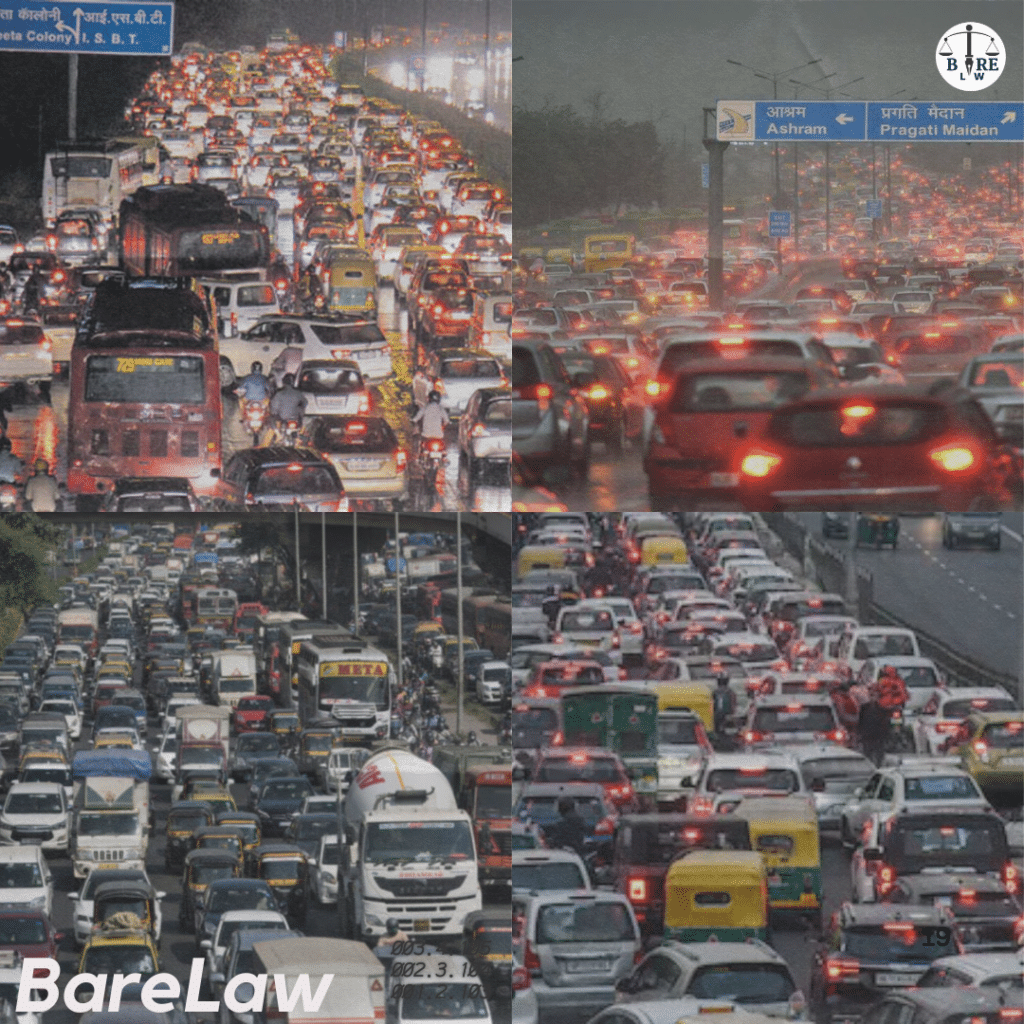
In Delhi “25.5 Kms in 1.5 Hours” Amid Protests In Noida
The ‘Delhi Chalo’ protest by farmers, demanding fair compensation and policy reforms, caused massive traffic disruptions in Delhi, highlighting the…