
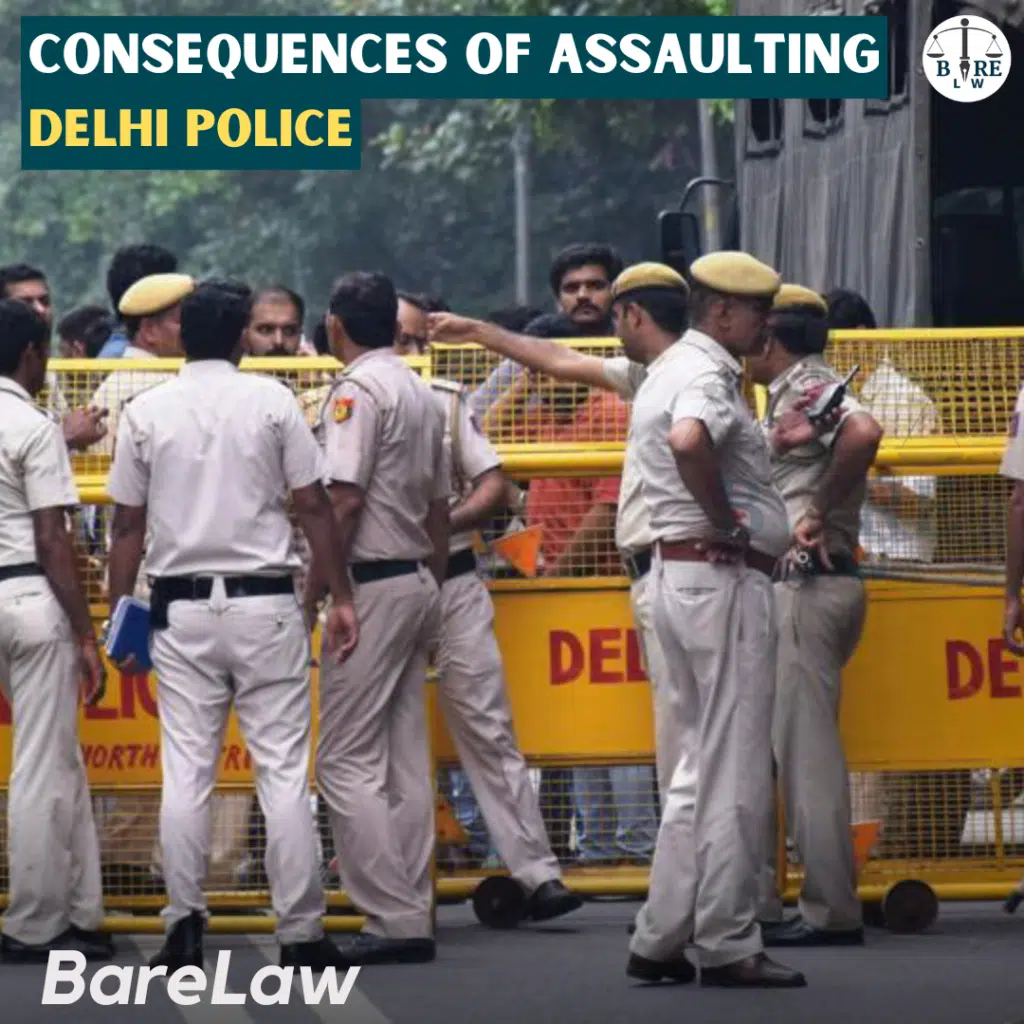
A recent incident in Delhi highlights the severe legal consequences of assaulting police officers, with a father-son duo arrested after physically attacking officers over a modified bike silencer. This case underscores the legal protections for law enforcement in India and the importance of public responsibility in police interactions.
You Can Hit Delhi Police Now
Recent conversations have surrounded Delhi people confronting or assaulting law enforcement officers. Most recently, in Delhi, a young man, Asif and his father, Riyazuddin, were arrested for attacking police officers over arresting him for using a modified, noise-enhanced motorcycle silencer. This is another scam where the physical and legal consequences of impeding or assaulting public servants are serious. Let’s take a closer look at what happens if you assault police officers, the relevant laws in India, some famous cases and how you can avoid legal consequences if you have.
1. Consequences of Assaulting Police Officers
Assaulting your police officers can mean you get arrested and arrested immediately, and the legal proceedings will be hard. In India, physical or verbal obstruction to an officer doing his duty is considered to be a serious offence. The severity of the incident will determine what charges an offender faces: assault, obstruction and other criminal charges. Here’s what can happen:
- Arrest and Detainment: Typically, if you assault a police officer, you are arrested immediately and brought to court to answer for what you did.
- Criminal Charges: Assault or criminal force to deter a public servant from duty; obstruction of duty; and more serious charges should the injury occur.
- Legal Penalties: If an assault causes physical damage to officers, the penalties can be imprisonment or fines.
- Permanent Criminal Record: A criminal record can affect your future employment opportunities, travel permissions, and even your position in society.
2. Relevant Laws in India
The laws protecting public servants are very strict in India, which means they can work without fear of any harm. Key laws include:
- Section 353 of the Indian Penal Code (IPC) concerns assault or criminal force tending to deter a public servant from discharge of duty. An offence under section 353 can attract imprisonment for up to two years and a fine or both.
- Section 332 of the IPC: This section applies where someone ‘voluntarily hurt’ them to prevent a public servant from duty. This is punishable by up to three years imprisonment, or a fine, or both.
- Motor Vehicles Act: The Motor Vehicles Act can be invoked in cases where an altercation occurs between two people, one of whom has somehow modified his or her motor vehicle. An offence is the use of modified silencers that are louder than permissible, which can result in fines and the seizure of the vehicle.
3. How to Protect Yourself Legally
If you ever find yourself in an escalating situation with law enforcement, it’s crucial to remain calm and cooperative to avoid legal complications. Here are some strategies to protect yourself:
- Stay Calm and Compliant: The best thing is to stay polite and give in to police instructions. Refrain from contact; even the slightest gesture can be mistaken for an assault.
- Understand Your Rights: You should comply, but you also have rights. They need to follow due process, and they can’t physically deport you because if they did, they wouldn’t have legal grounds.
- Seek Legal Advice Immediately: You have the right to ask to consult with a lawyer. It can help make sure that your rights are treated properly and misunderstandings are cleared up legal representation.
- Avoid Arguments: This can quickly turn into an argument with the police. Instead, express your concerns in a civilized and nonconfrontational manner or record anything you would like to discuss later with legal counsel.
4. Famous Cases Related to Police Assault in India
Several high-profile cases highlight the serious repercussions of assaulting police officers in India:
- 2016: Jasleen Kaur Case: A woman said she was harassed by a man who she said hassled her after she tried to go to the cops. The case triggered national outrage for treating public servants the way that they had and raised questions about law enforcement involvement and public behaviour.
- 2020: In protests over the Hathras case, police were beaten up allegedly by some protesters. Eventually, it resulted in multiple arrests and left the stone on which strict boundaries should be upheld regarding public demonstrations.
- 2021: Farmer’s protest in Delhi: Assault charges were brought against protestors after several policemen during the protests got beaten up by the demonstrators. The clash with law enforcement highlighted legal and severe risks for anyone challenging it.
5. Understanding the Public’s Responsibility
The public has a responsibility to respect law enforcement officers who work to maintain order and safety. Here’s how individuals can play their part:
- Follow Lawful Orders: On vehicle modifications and in situations of public safety regulations, comply with the lawful orders of police.
- Report Issues Legally: If you think the police did something illegal, you must try to report them using legal channels. This approach protects your rights without breaching the law.
- Promote Awareness: These events can help raise awareness about the legal repercussions of assaulting police officers for other events to avoid such incidents. Educating the public on their rights and responsibilities will hopefully help improve public and law enforcement relations.
Conclusion
In India, assaulting or obstructing police officers is a serious offence indeed. However, the case of Asif and his father shows the sort of action that comes with the territory and the need for good relations between people, particularly the public and law enforcement. It is important that before we get ourselves in a situation to clash with police, or even worse unnecessarily, make the community unsafe, we follow legal procedures, understand our rights, and behave responsibly so that we prevent compliance with how we live our lives being taken away from us.
FAQs:
1. What happens if someone assaults a police officer in India?
Assaulting a police officer in India can lead to immediate arrest, criminal charges, fines, imprisonment, and a permanent criminal record, which may affect employment and travel prospects.
2. What are the relevant laws in India regarding assaulting a police officer?
Key laws include Section 353 of the IPC (assault or criminal force to deter a public servant from duty), punishable by up to two years in prison, and Section 332 of the IPC (voluntarily causing hurt to a public servant), punishable by up to three years in prison.
3. Are there penalties for using modified silencers on motorcycles?
Yes, modifying a vehicle’s silencer to enhance noise beyond permissible limits contravenes the Motor Vehicles Act, and violators may face fines and vehicle confiscation.
4. How can I protect myself legally if a situation with law enforcement escalates?
Stay calm, comply with police instructions, avoid physical contact, and seek legal advice if detained. Arguing or resisting can escalate charges and increase legal complications.
5. Can you provide examples of similar incidents in India?
Notable cases include the 2021 Farmers’ Protest in Delhi, where several demonstrators were charged with assaulting police, and the 2016 Jasleen Kaur case, which brought public behaviour and police interactions into the national spotlight.
6. What should I do if I feel a police officer is acting unfairly?
Document the interaction if possible, comply with instructions, and report any misconduct through proper legal channels later to protect your rights without escalating the situation.