Table of Contents
If you’re on airplane and it gets hijacked or catches fire
Introduction
The idea of an emergency, such as a hijacking or fire aboard an airplane, can be alarming. However, strict safety protocols, well-trained crew members, and robust legal systems are in place to handle such incidents. This article will explore how airline staff respond in emergencies, including hijackings and fires, and the compensation policies that protect passengers and their families if something unfortunate happens during a flight. We will also highlight real-world examples and answer some common questions.
How Do Airline Staff Handle Emergencies?
1. Hijacking Scenarios
Airlines take hijacking threats seriously, and their crew members are trained for such situations. If a hijacking occurs, the following procedures are typically followed:
- Crew Training: Flight attendants and pilots undergo extensive training in how to handle hostile situations. Their primary role is to maintain calm, keep passengers safe, and communicate discreetly with authorities.
- Silent Distress Signals: Pilots can communicate a hijacking situation without alerting the hijackers. The universal hijacking distress code is 7500, which is sent via the aircraft’s transponder. This informs air traffic control and law enforcement agencies about the emergency.
- Negotiation Protocols: Airlines, along with law enforcement agencies, follow a structured negotiation process if hijackers make demands. Meanwhile, the primary objective is to ensure the safety of passengers and crew.
- Specialized Response Teams: Governments and airports have specialized teams such as counterterrorism units that deal with hijacking situations. These teams coordinate with the airline and ensure a safe resolution.
2. Fire Emergencies
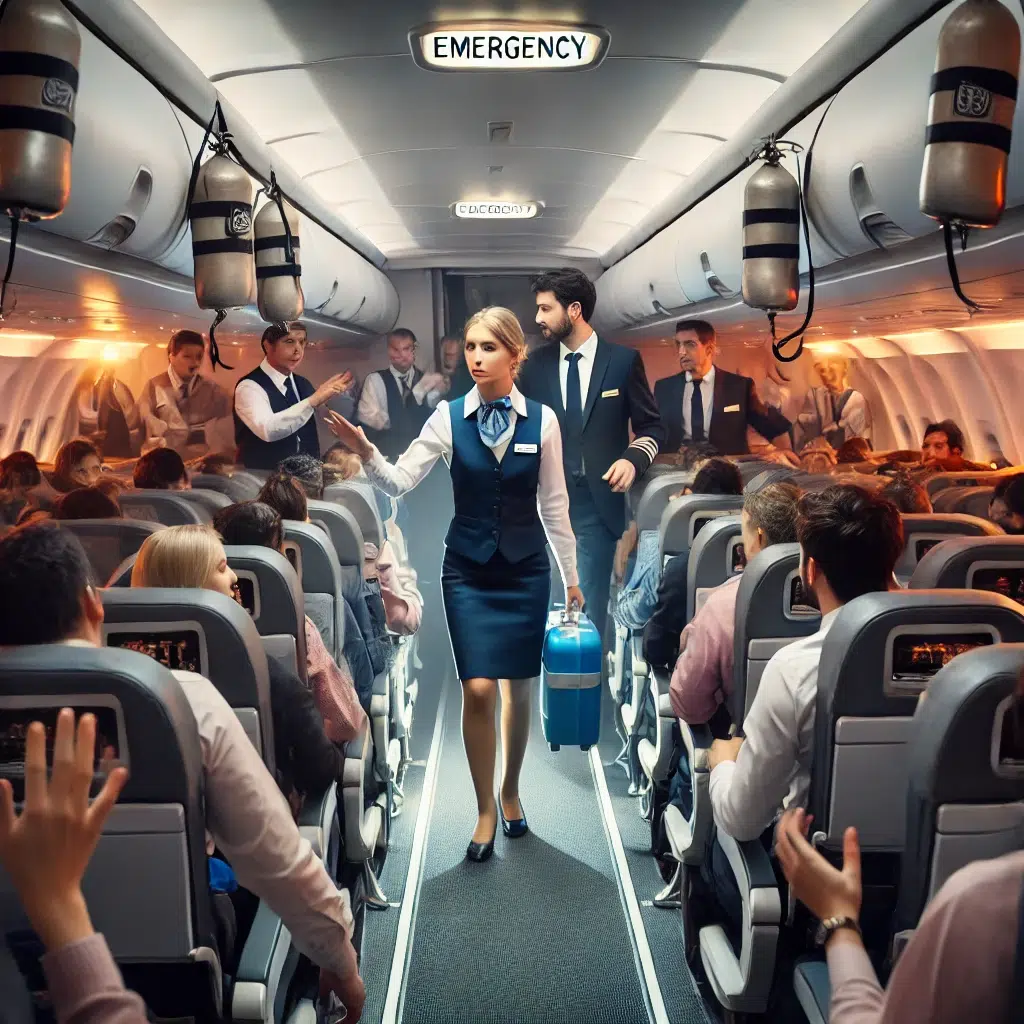
Fires aboard aircraft are another serious concern. Thankfully, modern aircraft are designed with strict safety measures to minimize the risk of fire. In the event of a fire:
- Immediate Evacuation: Flight attendants are trained to lead an orderly and rapid evacuation in case of a fire. They guide passengers on how to use emergency exits and slides efficiently.
- Onboard Fire Extinguishers: Planes are equipped with fire extinguishers in multiple locations. Flight attendants are trained to deal with small fires quickly, often containing them before they spread.
- Oxygen Masks: In case of smoke in the cabin, oxygen masks are deployed to help passengers breathe while the crew works to stabilize the situation.
- Fire Detection Systems: Advanced aircraft have sensitive fire detection systems, including in areas such as the cargo hold. In the event of smoke or fire, these systems trigger automatic extinguishers or alert the crew.
What Happens If You’re Affected? Airline Compensation Policies
In the rare event that passengers are injured, killed, or suffer losses due to a hijacking or fire, there are several avenues for compensation. Here’s what passengers and their families can expect:
1. Compensation Under the Montreal Convention
The Montreal Convention of 1999 establishes clear compensation guidelines for passengers involved in air travel accidents, including hijackings or fire-related incidents. It requires airlines to provide compensation for:
- Injury or Death: In the event of death or injury, airlines are liable for damages up to approximately 113,100 Special Drawing Rights (SDRs), which is about USD 160,000 per passenger. However, there is no limit to the compensation if the airline is found at fault beyond these damages.
- Loss of Baggage or Cargo: If baggage is lost or damaged due to an emergency, airlines are required to compensate up to 1,131 SDRs (about USD 1,600).
- Flight Delays: Compensation for delays caused by security threats can also be claimed, especially if the airline is found negligent in ensuring the safety of the flight.
2. Insurance Policies
In addition to airline compensation, most travelers have travel insurance that covers emergency medical treatment, loss of life, or evacuation costs. Airline insurance policies also include coverage for passengers in the event of a hijacking or a fire.
3. Government Assistance
Governments often provide additional support to victims of terrorist activities, including hijackings. For example, the United States Victims of Terrorism Compensation Fund offers assistance to citizens impacted by terrorist acts abroad, including during flights.
Real-World Example: The Air France Flight 8969 Hijacking
A notable hijacking incident occurred in 1994, when Air France Flight 8969 was hijacked by four terrorists affiliated with the Armed Islamic Group. The French government successfully negotiated with the hijackers, and a special forces team stormed the plane, saving 229 passengers. The passengers were evacuated with minimal casualties, thanks to the crew’s efforts and the swift intervention of authorities.
Real-World Example: British Airways Flight Fire Incident
In 2015, British Airways Flight 2276 experienced an engine fire during takeoff in Las Vegas. The fire was quickly extinguished by the airport fire services, and all passengers were evacuated safely. This incident highlighted the importance of swift crew action and well-practiced emergency protocols, which saved lives.
FAQs
1. What should I do if my flight is hijacked?
Remain calm, follow the crew’s instructions, and avoid making sudden movements that could escalate the situation. Crew members are trained to handle hijacking incidents, and they will do everything possible to ensure your safety.
2. Can I claim compensation if I’m involved in a hijacking or fire incident on a flight?
Yes, under the Montreal Convention, passengers are entitled to compensation for injury, loss of life, or baggage damage. Additionally, travel insurance policies and government programs may offer further compensation.
3. Are airlines required to train their staff for emergencies like hijackings and fires?
Yes, all airlines are required by international aviation laws to train their crew members in handling hijackings, fires, and other emergency situations. This includes regular drills and simulations.
4. What happens after a hijacking or fire is resolved?
After the resolution, passengers will typically be debriefed by law enforcement and offered medical assistance if needed. Airlines may provide compensation for delays or losses, and authorities will investigate the incident thoroughly.
Conclusion
While hijacking and fire emergencies are rare, airlines follow stringent protocols to ensure the safety of passengers and crew. In such cases, airline staff are well-prepared to manage the situation, and legal frameworks like the Montreal Convention provide compensation to those affected. By understanding these processes, passengers can feel more informed and reassured about safety during air travel.