
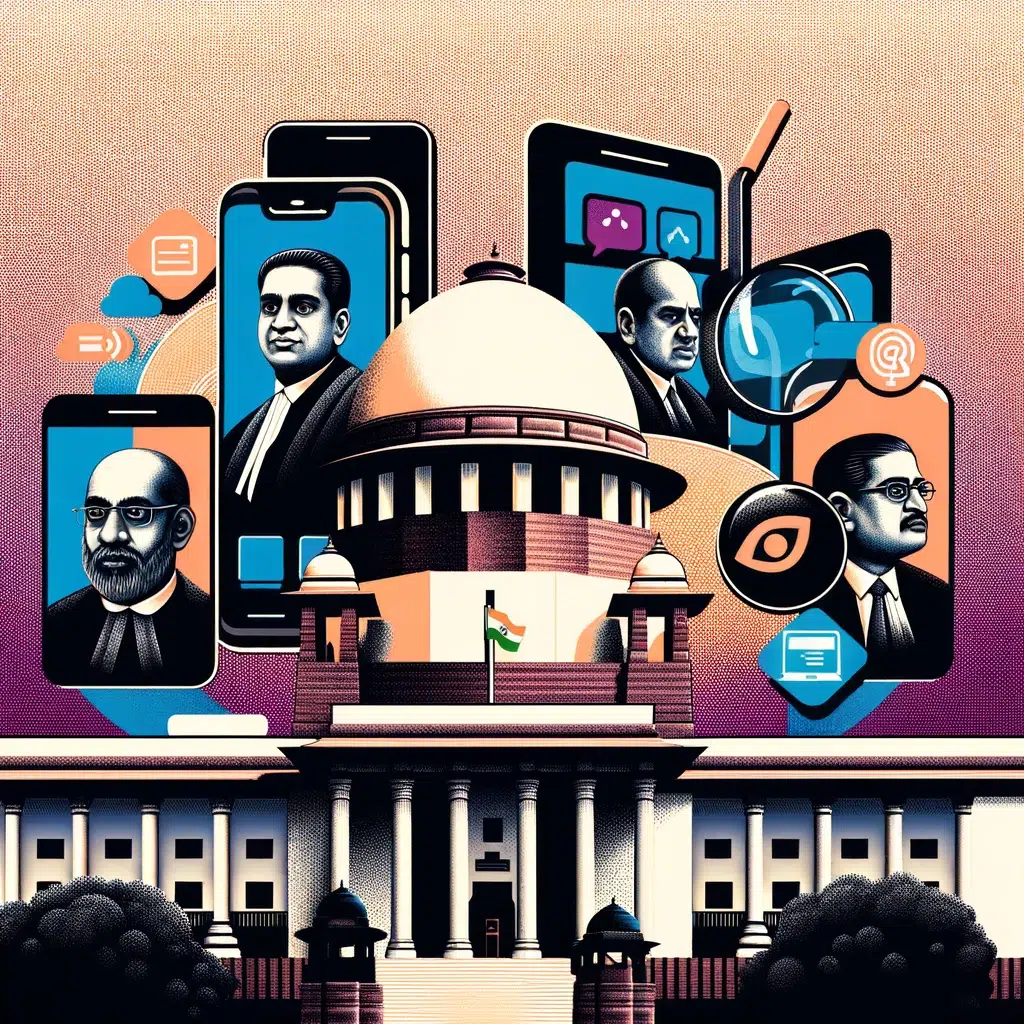
Supreme Court’s Call for Urgent Guidelines on Digital Device Seizures
The Supreme Court of India, on Wednesday, expressed its growing impatience with the Central government over the prolonged delay in establishing guidelines for the search and seizure of personal digital devices by police and central agencies. This stern admonishment came during the hearing of two public interest litigation (PIL) petitions demanding clear, civilised protocols for such seizures.
Background of the Case: The case, titled “Foundation for Media Professionals vs Union of India and Ors,” highlights a crucial concern in today’s digital age – the need for safeguards against arbitrary search and seizure of digital devices, which often contain a citizen’s personal and professional life.
Government’s Delay and the Court’s Reaction: Justice Sanjay Kishan Kaul, along with Justice Sudhanshu Dhulia, questioned the two-year delay since the petition’s filing. The bench expressed frustration over the government’s sluggish pace in addressing this significant privacy issue. The Additional Solicitor General (ASG) V Raju informed the Court of a committee’s formation and requested additional time, but the bench insisted on a more prompt response.
Pleas for Digital Privacy: The first plea, by the Foundation for Media Professionals, calls for definitive guidelines. The second, filed by a group of five academicians and researchers, points out the unregulated power wielded by investigating agencies in seizing digital devices, which often results in significant invasions of privacy. The petitioners argue for a more civilized approach, guided by the Supreme Court’s directives.
Urgency of the Situation: Senior Advocate Nitya Ramakrishnan, representing the petitioners, stressed the urgent need for such guidelines. She highlighted the case of 300 journalists raided in the Newsclick case, suggesting that duplicating necessary data could be an alternative to seizing entire device contents.
The Court’s Stand: The Supreme Court’s dissatisfaction is palpable, as it has previously found the government’s responses incomplete and unsatisfactory, even imposing a fine for non-compliance. The Court’s latest hearing reflects its commitment to ensuring the government’s accountability and the protection of civil liberties in the digital realm.
Awaiting Resolution: Despite the ASG’s assurance that guidelines would be ready by the next week, the Court’s skepticism remains. As the hearing concluded, the bench firmly instructed the government to finalize the guidelines, scheduling the next hearing for December 14.
Conclusion: This case represents a watershed moment in the ongoing debate over digital privacy and government accountability in India. The Supreme Court’s proactive stance signifies the judiciary’s role in safeguarding civil liberties against potential overreach by law enforcement agencies. As the nation awaits the guidelines, the outcome of this case will undoubtedly have far-reaching implications for digital privacy rights in India.