
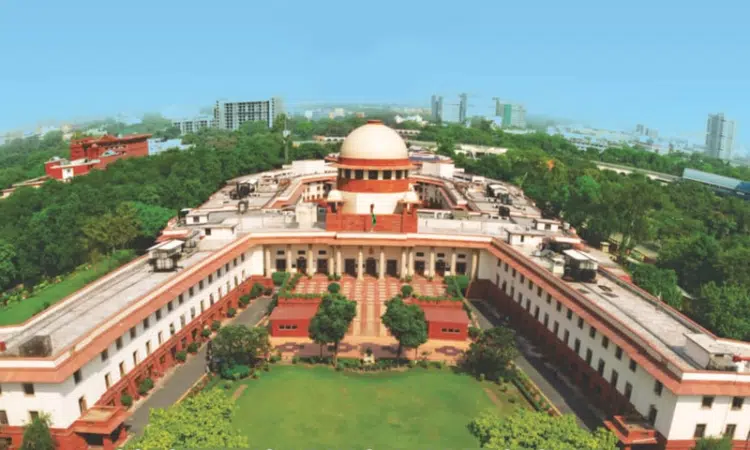
Supreme Court Upholds Tamil Nadu Minister’s Cabinet Status Amid Legal Challenges
The Supreme Court of India (SC) recently delivered a significant ruling in a politically charged case involving Tamil Nadu Electricity Minister, V. Senthil Balaji. On Friday, the apex court dismissed a petition challenging the Madras High Court’s verdict from September 2023. This pivotal judgment has profound implications for the interpretation of constitutional principles and the norms of good governance.
The crux of the matter revolves around Minister Balaji, who faced arrest due to allegations of involvement in a money laundering case linked to a notorious jobs-for-cash scam. The scam allegedly transpired during his tenure as the state’s Transport Minister between 2011 and 2015, where he is accused of soliciting bribes in exchange for job placements in the Transport Department.
The Enforcement Directorate (ED) of India apprehended Balaji on June 14, 2023, following which he was placed in judicial custody. Despite his arrest and the subsequent withdrawal of all his ministerial portfolios, Balaji continued to retain his position in the state cabinet. This unusual situation led to legal challenges, with advocate RL Ravi petitioning against this continuity in the Madras High Court.
The High Court, in its judgment, stated that neither the Constitution of India nor the Representation of People Act of 1951 disqualifies an individual from being a Member of the State Legislative Assembly while under custody or undergoing trial. However, the court advised the Chief Minister of Tamil Nadu to review whether Balaji should continue as a minister, given that retaining a minister without portfolios neither serves a purpose nor aligns with the principles of good governance and constitutional ethos.
Subsequently, the matter escalated to the Supreme Court under Article 136, which allows the apex court to entertain ‘Special Leave Petitions’ in the interest of justice. The bench of Justices Abhay Shreeniwas Oka and Ujjal Bhuyan, in a landmark decision, refused to interfere with the High Court’s judgment. The SC’s oral statement emphasized that the removal of a minister in custody requires the recommendation of the chief minister, and the governor cannot act independently in this regard.
This decision underscores the complex interplay between legal provisions, governance, and the discretionary powers of political leaders. It reaffirms the autonomy of state governments in managing their cabinets, albeit within the ambit of constitutional and legal frameworks. The ruling also highlights the delicate balance between the presumption of innocence until proven guilty and the ethical considerations essential for public office.
As this legal and political saga continues to unfold, it poses challenging questions about the standards of purity in administration and the ethical responsibilities of elected representatives. It also throws light on the procedural nuances of the Indian judicial system and the discretionary powers vested in constitutional offices.
In conclusion, the Supreme Court‘s stance in this matter not only sets a precedent for similar cases but also sparks a broader discourse on governance, ethics, and the role of judiciary in upholding constitutional values.