
Supreme Court Upholds SFIO’s Role but Leaves Key Legal Question Open
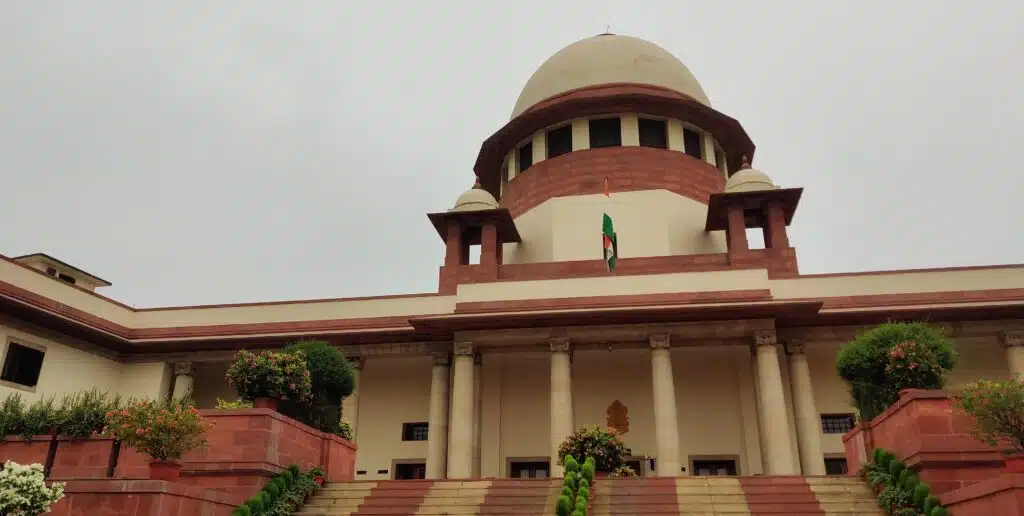
In a recent development that has drawn the attention of legal experts and corporate entities alike, the Supreme Court of India has made a pivotal decision in the case titled R.K. Gupta vs. Union of India. The apex court, comprising Justices Sanjiv Khanna and Dipankar Datta, dismissed a petition that challenged a complaint filed by the Serious Fraud Investigation Office (SFIO). However, the court intriguingly left a significant question of law unanswered: whether the SFIO qualifies as a police officer under the Code of Criminal Procedure, 1973.
This question arises from a complex interplay between the powers of the SFIO, as delineated in the Companies Act, and the definitions within the Code of Criminal Procedure (CrPC). The High Court, in its earlier ruling, had concluded that a combined reading of the CrPC and the Companies Act does not preclude the SFIO from investigating offenses under the Indian Penal Code (IPC). This interpretation was central to the High Court’s decision, as it expanded the SFIO’s investigative ambit beyond just corporate misdemeanors.
However, the Supreme Court’s January 16 order clarified that this question did not directly arise for consideration in the High Court. Consequently, the top court decreed that the High Court’s judgment should not be treated as a precedent, leaving the legal community in a state of ambiguity regarding the SFIO’s exact status under the CrPC.
The case originated when the Ministry of Corporate Affairs (MCA) ordered an investigation into the affairs of 15 companies. The SFIO, following a sanction from the MCA, expanded its probe to include other companies as well. It later filed an Investigation Report under Section 212(12) of the Companies Act, leading to the prosecution of the petitioners for alleged offenses under both the Companies Act and the IPC, including Section 447 (Punishment for Fraud).
In their defense, the petitioners argued that the SFIO, as per the Companies Act and the CrPC, is limited to investigating offenses under the Companies Act only. They contended that the SFIO, not being a police officer, cannot initiate investigations under the IPC. This argument pivots on the interpretation of who can be considered a ‘police officer’ and what powers such a designation entails under the CrPC.
The High Court’s observation that an SFIO officer could be regarded as an officer in charge of a police station, especially when filing a report that would be treated akin to a police report under Section 173(2) of the CrPC, was a notable point in the case. However, the Supreme Court’s decision not to treat this as a precedent leaves the legal position unclear.
This decision has significant implications for corporate investigations and the powers of the SFIO. While the Supreme Court’s ruling acknowledges the SFIO’s authority to investigate, the unanswered legal question about its status under the CrPC could have far-reaching consequences on future corporate fraud investigations.
The legal community, corporate entities, and regulatory bodies will keenly await further clarification on this critical issue. Until then, the SFIO’s role in investigating offenses under the IPC remains a subject of legal interpretation and debate.