Supreme Court upholds the constitutional right to a pollution-free environment
The Supreme Court of India, in its judgement on Wednesday, stated that every person has a fundamental right to pollution-free air to live under Article 21 of the constitution. Article 21 of the Constitution entitled right to life and personal liberty, no person be deprived of the rights to life and personal liberty except according to the procedure established by law.
In its order, the court has said that rights addressed under Article 21 are basic and has pointed to failure to enforce anti-pollution laws and scanty action against those who burn stubble. It calls for barring compliance and adopting penalties as well as federal-state cooperation in implementing citizens’ environmental rights to clean air and environmental human dignity. The court directed the government to take necessary actions on the same day to enhance the compliance level and tackle pollution concerns in Delhi and nearby regions. The court added:
It is high time for the Government of India and the State Governments to be reminded that every citizen in India has a right enshrined under Articles 21 of the Constitution of India to live in a clean environment … [the stubble burning and air pollution] are the acts which constitute violation of the fundamental rights and in particular the provision of Articles 21 of the Constitution of India … Now, the Governments shall have the question as to how they are
Paternalism of the environment refers to a legal fiction of the UN Human Rights Committee and the UN General Assembly whereby people have a right to a clean, healthy and sustainable environment. Regarding framework principles of environmental human rights, there are 16 of them; for instance, states are under the obligation to ensure the successful implementation of the environmental standard that was set in the states and give effective remedies for violations of human rights as well as other laws of the states concerning the environment.
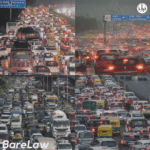
Each year, pollution increases in the air around November, and this may be due to the increase in vehicle emissions and activities from industries, construction directly burning agricultural waste, and so on, before winter arrives because cold and calm weather in winter also causes air pollutants from various human activates to accumulate in the atmosphere. The farmers of Punjab and Haryana states of India practice burning crop residue after harvest to save time and prepare the field for the next crop growing season. According to the SAFAR, the national government’s air quality analysis body, this tradition has been carried out for years and currently contributes to 30-40 per cent of pollution in October and November. Although the courts have passed directions to control stubble burning, its implementation is still a problem; state governments have less control and sometimes, the farmers refuse to stop despite paying penalties.