Supreme Court Relieves Doctor of Imprisonment in Medication Licensing Case
Table of Contents
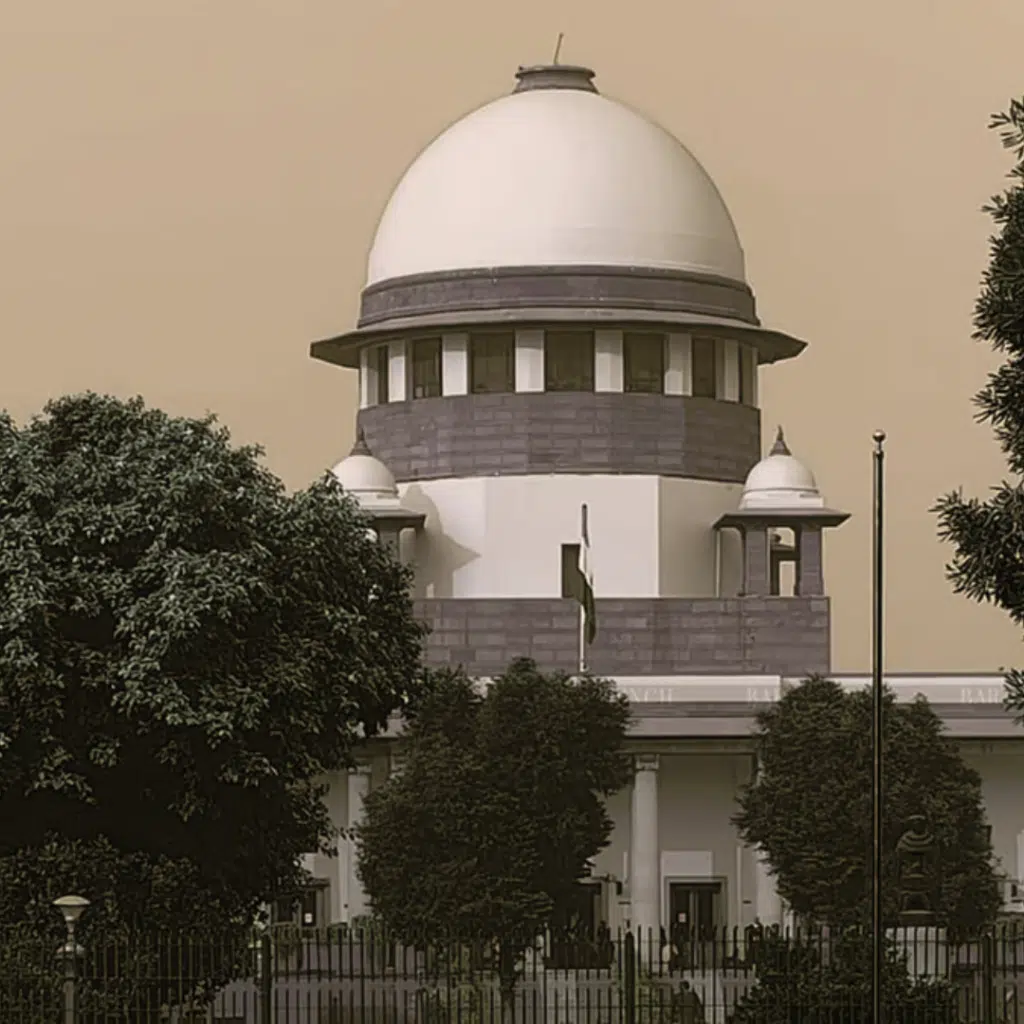
The Supreme Court of India reversed a previous decision that had sentenced a doctor to two years in prison for storing allopathic drugs without the required licences in a historic decision. In the case known as “Palani vs. Tamil Nadu State,” the supreme court took a significant stance by reducing the punishment to a ₹1 lakh fine, taking into account the little amount of drugs involved and the lack of intent to distribute or sell them illegally.
The bench, which is made up of Justices BR Gavai and Sanjay Karol, stressed that the main goal of the laws enacted under the Drugs and Cosmetics Act, 1940, is to protect the public interest by prohibiting the unlawful distribution of pharmaceuticals. Given the lack of evidence showing the purpose to sell or distribute the pharmaceuticals in accordance with Section 18(c) of the Act, the justices reasoned that the failure to disclose the source of the medicines did not constitute a direct threat to public safety and, therefore, did not justify a jail sentence.
This case began with a district health department inspection of the doctor’s office in October 2015, during which 29 different types of allopathic medicines were found to be improperly documented. At first, a trial judge had imposed a strict two-year prison sentence in addition to a fine. On appeal, however, a judge from the Additional District and Sessions lowered the sentence to six months of simple imprisonment, stating that there was insufficient evidence to support the claim that the drugs that were confiscated were meant for distribution or sale.
The sessions court called for the return of the fine that was issued, but it upheld the doctor’s conviction for storing illegal medications despite the decrease. The doctor filed an appeal with the Supreme Court after the High Court declined to reverse the sessions court’s decision.
The Supreme Court’s choice to maintain the conviction but overturning the prison term demonstrates their careful consideration of the facts of the case. The Court chose a sentence that appropriately represents the seriousness of the breach without placing an excessive burden on the doctor because it acknowledged the doctor’s lack of malevolent intent and the relatively modest nature of the offence.
The doctor Palani was represented by Senior Advocate S Nagamuthu and Advocate MP Parthiban, who made a strong case that eventually convinced the Supreme Court to take a more lenient position. This ruling could establish a standard for situations that are comparable to it, in which the context and purpose of the infraction are considered before imposing penalty.
In summary, the landmark decision in “Palani v. Tamil Nadu State” by the Supreme Court highlights the significance of proportionality in punishment, particularly when there is no immediate threat to public safety. This ruling strikes a balance between the necessity to uphold the law and the consideration of each case individually, offering the accused doctor relief as well as direction for similar cases in the future.
FAQ:
- What was the ruling in the case of “Palani vs. Tamil Nadu State” by the Supreme Court?
- Why did the Supreme Court rule against the doctor’s imprisonment?
- Which charges were initially brought against the physician?
- How will this ruling affect the way instances that are similar are handled by the law?
- In this context, what does the 1940 Drugs and Cosmetics Act mean?
Barelaw, an online platform dedicated to delivering comprehensive legal knowledge, proudly presents its exclusive category of case briefs. This section is meticulously crafted to offer insightful analyses of landmark judgments, providing a valuable resource for legal professionals, students, and anyone interested in understanding the intricacies of law. Our case briefs delve deep into pivotal court decisions, exploring the rationale behind each judgment and its impact on the legal landscape.
We understand that navigating the complexities of legal judgments can be challenging. That’s why our case briefs are designed to be both informative and accessible, ensuring that readers gain a clear understanding of the key legal principles involved. Each brief includes a summary of the facts, the legal issue at hand, the court’s reasoning, and the ultimate decision. This structured approach makes it easier for our audience to grasp the nuances of each case.
Our website is a treasure trove of legal wisdom, constantly updated with the latest and most significant cases. Whether you’re a law student seeking to enhance your knowledge, a practicing attorney looking for a quick reference, or simply a curious mind eager to understand the law’s evolution, Barelaw is your go-to destination.
Explore our case briefs and immerse yourself in the world of law. Visit our website now and discover the wealth of legal knowledge at your fingertips. The link is provided below for your convenience and direct access to our expansive legal database
You can access more legal drafts here – https://www.barelaw.in/legal-drafts/