
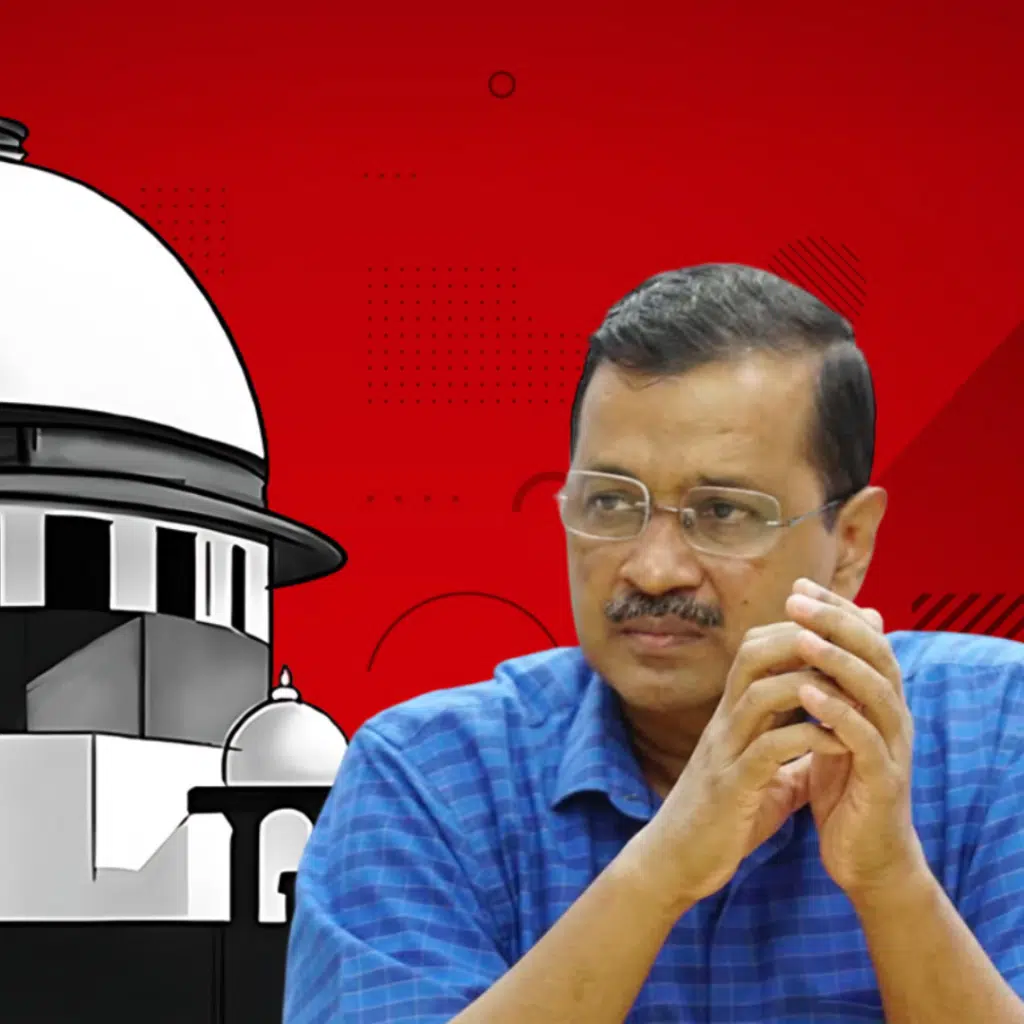
Supreme Court Questions Defamation Case Against Arvind Kejriwal Over Retweet of Dhruv Rathee Video
Table of Contents
The Supreme Court of India has recently expressed serious concerns over a defamation lawsuit brought against Delhi Chief Minister Arvind Kejriwal. The allegation centers on Kejriwal’s retweet of a Dhruv Rathee video that went viral on YouTube. Judges Sanjiv Khanna and Dipankar Datta asked the court if the matter might be dropped if Kejriwal acknowledged that he had mishandled the retweet of the YouTube video. The person who had filed the defamation complaint against Kejriwal was Vikas Sankrityan, also known as Vikas Pandey, a self-described follower of Prime Minister Narendra Modi. The court stressed during the hearing that more proof was required to decide whether or not Kejriwal’s retweet amounted to approving defamatory content.
When the court heard Kejriwal’s request to have the criminal defamation case dismissed, Kejriwal’s attorney contended that if Kejriwal had known about the implications, he would have admitted his error. Though it saw this as a formality, the court also took notice of the complainant’s purported suppression of the withdrawal of an earlier complaint in the case. The trial court has been instructed not to hear the defamation action in the interim while the case is being handled; the next hearing is set for March 11.
In the aforementioned video, Dhruv Rathee interviewed Mahavir Prasad, who leveled accusations against Vikas Pandey and said he offered a fee to delete some of his remarks against the BJP IT unit. Vikas Pandey then launched a defamation lawsuit against Kejriwal, claiming that Kejriwal exposed false and defamatory charges to a broad audience by retweeting the video. The Delhi High Court had previously declined to dismiss the criminal defamation case, noting Kejriwal’s awareness of the consequences of his acts, despite Kejriwal having a sizable social media following.
Given these developments, the case is being closely examined by the Supreme Court, which highlights the legal ramifications of sharing content online as well as the difficulties surrounding the usage of social media. The verdict in this case could have wider ramifications for public figures’ accountability while using digital platforms and their need to distribute information to a large audience.
In summary
In cases involving online material sharing, the Supreme Court’s involvement in the defamation suit against Arvind Kejriwal emphasizes the significance of proof and responsibility. The case calls for a critical analysis of public personalities’ obligations on social media platforms and the laws that govern their behavior, even as the legal proceedings drag on.
FAQ
What is the subject of Arvind Kejriwal’s defamation lawsuit?
The lawsuit concerns Kejriwal’s repost of a Dhruv Rathee video that purportedly had offensive material directed at the complainant, Vikas Pandey.
Which inquiries were made at the hearing by the Supreme Court?
The court stressed the necessity for proof to establish if Kejriwal’s retweet of the video amounted to condoning defamatory content and questioned whether the action could be dropped if he acknowledged making a mistake.
What relevance does this case have?
This case brings to light the legal nuances surrounding the usage of social media and public figures’ obligations when it comes to online information dissemination. It also calls into question who is responsible for the content that users post on social media.
Barelaw, an online platform dedicated to delivering comprehensive legal knowledge, proudly presents its exclusive category of case briefs. This section is meticulously crafted to offer insightful analyses of landmark judgments, providing a valuable resource for legal professionals, students, and anyone interested in understanding the intricacies of law. Our case briefs delve deep into pivotal court decisions, exploring the rationale behind each judgment and its impact on the legal landscape.
We understand that navigating the complexities of legal judgments can be challenging. That’s why our case briefs are designed to be both informative and accessible, ensuring that readers gain a clear understanding of the key legal principles involved. Each brief includes a summary of the facts, the legal issue at hand, the court’s reasoning, and the ultimate decision. This structured approach makes it easier for our audience to grasp the nuances of each case.
Our website is a treasure trove of legal wisdom, constantly updated with the latest and most significant cases. Whether you’re a law student seeking to enhance your knowledge, a practicing attorney looking for a quick reference, or simply a curious mind eager to understand the law’s evolution, Barelaw is your go-to destination.
Explore our case briefs and immerse yourself in the world of law. Visit our website now and discover the wealth of legal knowledge at your fingertips. The link is provided below for your convenience and direct access to our expansive legal database