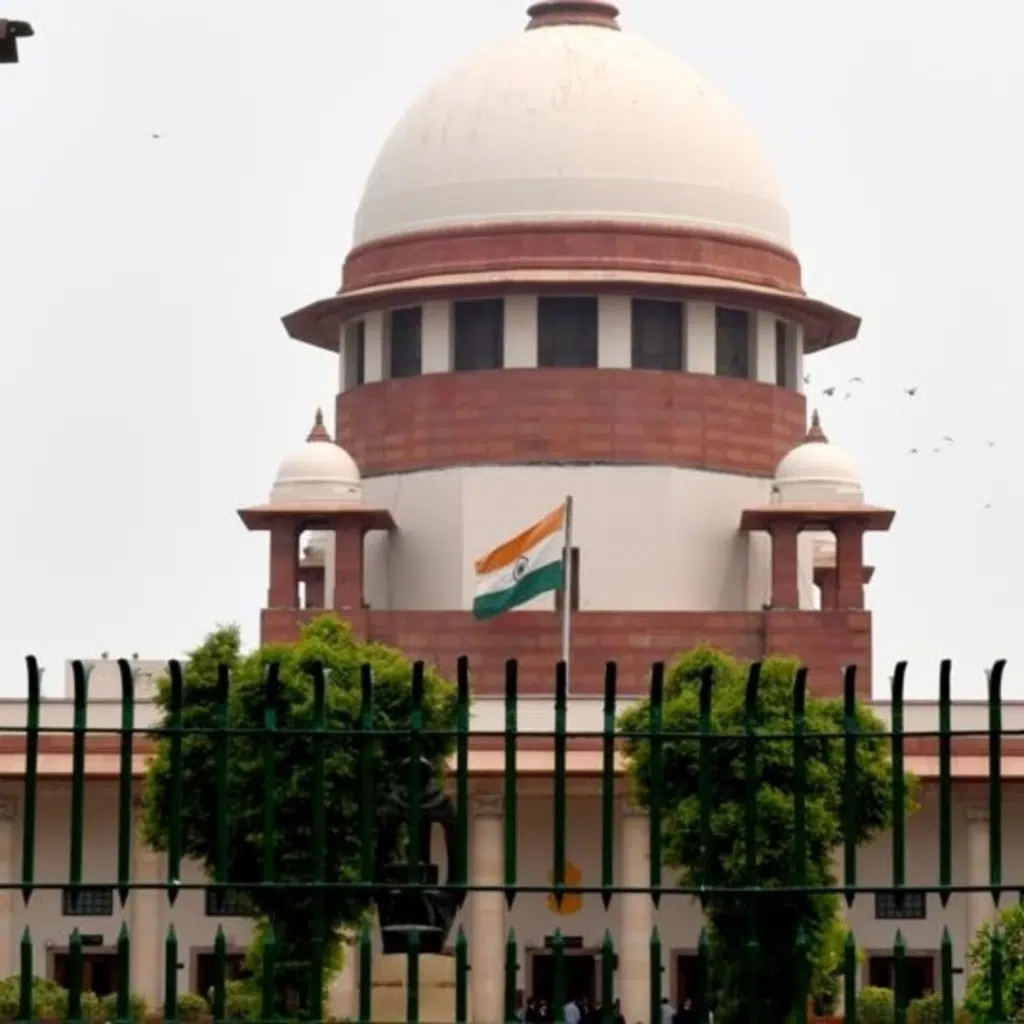
Supreme Court Announces Landmark Judgment Against Gender Discrimination in Military Nursing Service
Table of Contents
In a landmark decision that demonstrates the Indian judiciary’s dedication to protecting human rights and gender equality, the Supreme Court has rendered a decision that significantly overturns gender discrimination in the Military Nursing Service (MNS). The Division Bench of Justices Sanjiv Khanna and Dipankar Datta has pronounced the dismissal of a female nursing officer due to her marital status as an unmistakable example of discrimination and inequality against women. This decision is a significant turning point in the struggle against patriarchal practices in the armed forces.
The petitioner in this case was chosen for the Military Nursing Services, commissioned as a Lieutenant in the MNS, and then married Major Vinod Raghwan, an Army officer. Her commission was prematurely terminated because to her marital status, notwithstanding her qualifications and service; this action was taken in accordance with Army Instruction No. 6 of 1977. This regulation recognized marriage as a legitimate grounds for terminating a woman officer’s service in the MNS, in addition to other reasons like as misconduct and unfitness.
Following the lawsuit, the Supreme Court examined the regulations controlling women’s employment in the MNS and found them to be’manifestly arbitrary’ and unconstitutional. This exposed a glaring prejudice in the regulations. The court emphasized how these discriminatory actions not only violate women’s rights and dignity but also feed a gender-biased mentality that is out of place in contemporary society. The decision made clear how fundamentally faulty and unlawful it is to have laws and regulations that discriminate against workers on the basis of their gender or marital status.
The officer’s dispute was first resolved by the Armed Forces Tribunal in Lucknow, which overturned the termination decision and reinstated the officer with all back pay and benefits. But once the Union appealed to the Supreme Court, the case was reexamined and a significant ruling was reached. The Court modified the Tribunal’s ruling, noting that the petitioner is currently employed by a private company, but it also ordered the Union to pay the petitioner a large amount of Rs. 60,00,000 in full and final settlement of her claims.
The court ordered that this compensation be given to the appellant(s) within eight weeks of the order being made available to them. In the event that payment is delayed, there will be a 12-percent annual interest rate. This ruling upholds the rights and dignity of every member of the armed services, regardless of gender, and not only brings justice to the offended officer. It also sends a powerful message against gender discrimination in the military.
In summary
The decision rendered by the Supreme Court marks a turning point in the ongoing fight for gender parity in the Indian armed forces. It reaffirms the judiciary’s duty in opposing and destroying antiquated customs and behaviors that are biased against women. The court has emphasized how crucial it is to change institutional processes in order to represent the ideals of equality, dignity, and non-discrimination. It did this by acknowledging the unfairness experienced by the petitioner and resolving it through both critique and compensation. In addition to resolving a single complaint, this case establishes a precedent that may spur more reforms and guarantee that gender-based discrimination never again finds a place in the workplace, including the armed forces.
FAQ
What grounds existed for the MNS to fire the female officer?
The reason for her termination was her marriage, in accordance with Army Instruction No. 6 of 1977.
In this case, what was the Supreme Court’s statement regarding gender discrimination?
The Court emphasized that laws and regulations based on gender bias are unconstitutional and described this type of discrimination as a “coarse case of gender discrimination and inequality.”
What was the decision made by the Supreme Court?
In order to fully and finally resolve all of the petitioner’s claims, the Court ordered the Union to give her compensation in the amount of Rs. 60,000,000.
What message does this decision provide on discrimination against women in the military forces?
It advocates for equality and nondiscrimination in the military and delivers a strong statement against gender discrimination.
Barelaw, an online platform dedicated to delivering comprehensive legal knowledge, proudly presents its exclusive category of case briefs. This section is meticulously crafted to offer insightful analyses of landmark judgments, providing a valuable resource for legal professionals, students, and anyone interested in understanding the intricacies of law. Our case briefs delve deep into pivotal court decisions, exploring the rationale behind each judgment and its impact on the legal landscape.
We understand that navigating the complexities of legal judgments can be challenging. That’s why our case briefs are designed to be both informative and accessible, ensuring that readers gain a clear understanding of the key legal principles involved. Each brief includes a summary of the facts, the legal issue at hand, the court’s reasoning, and the ultimate decision. This structured approach makes it easier for our audience to grasp the nuances of each case.
Our website is a treasure trove of legal wisdom, constantly updated with the latest and most significant cases. Whether you’re a law student seeking to enhance your knowledge, a practicing attorney looking for a quick reference, or simply a curious mind eager to understand the law’s evolution, Barelaw is your go-to destination.
Explore our case briefs and immerse yourself in the world of law. Visit our website now and discover the wealth of legal knowledge at your fingertips. The link is provided below for your convenience and direct access to our expansive legal database
You can access more legal drafts here – https://www.barelaw.in/legal-drafts/