
Supreme Court Affirms Judicial Decisions Cannot Infringe Fundamental Rights
Table of Contents
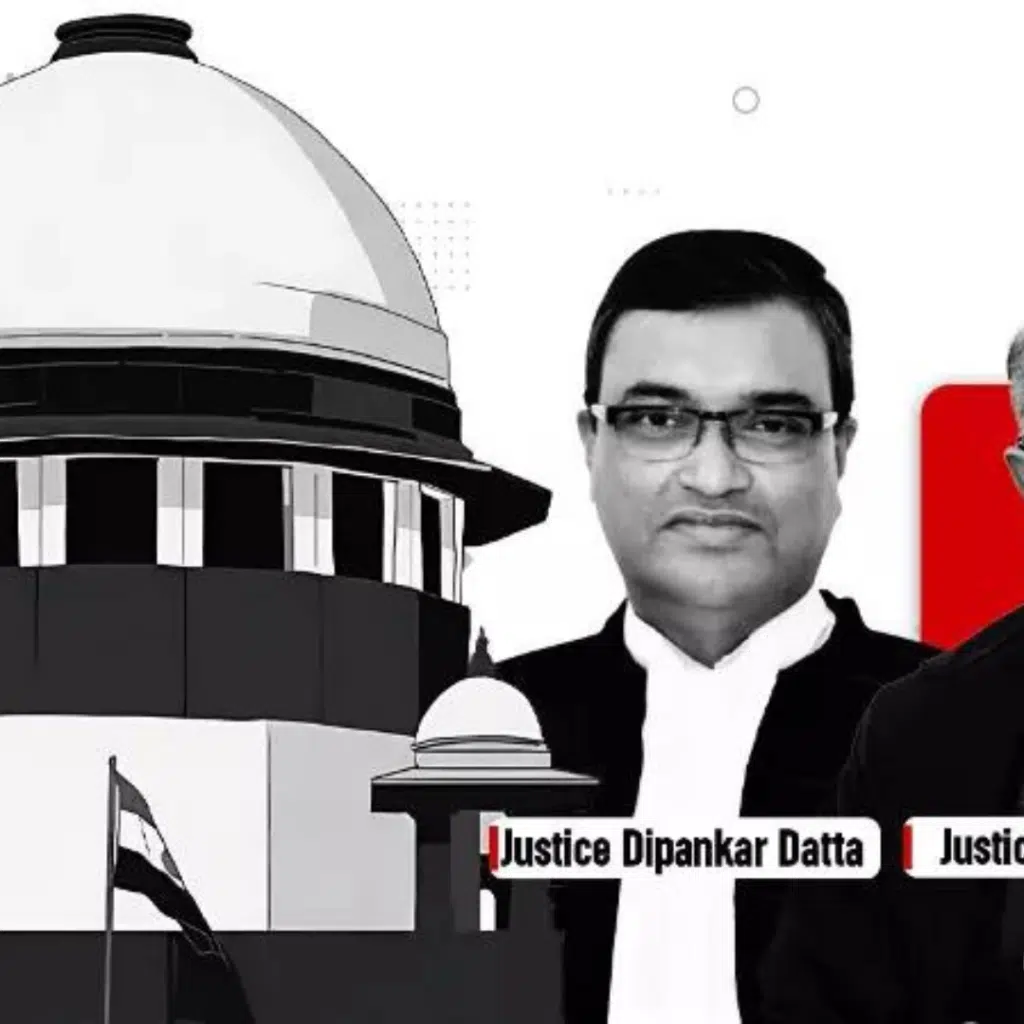
The Supreme Court of India emphasized in a major statement of legal principles that decisions rendered by competent judges within their jurisdiction on cases that come before them do not violate Fundamental Rights. A bench made up of Justices Dipankar Datta and Augustine George Masih provided this explanation, citing the seminal case of Naresh Shridhar Mirajkar Vs. State of Maharashtra to support the independence and power of court decisions in the face of claims of abuses of fundamental rights.
The observation was issued in response to a petition alleging that a court decision had violated fundamental rights and asking the Court to intervene. The petitioners intended to contest an earlier decision on the grounds that their constitutional rights had been infringed. Nonetheless, the bench firmly declined to consider the petition, reiterating the established rule that decisions made by judges working within the confines of their legal authority are not subject to such challenges.
This position stems from the judiciary’s function as a judge of law and justice, which requires some degree of protection against these accusations in order to maintain the impartiality and integrity of legal procedures. By making reference to the Naresh Shridhar Mirajkar case, the Court guaranteed that the legal framework would not be compromised by future attempts to infringe upon judicial authority, while simultaneously upholding a precedent that strengthens the autonomy of the judiciary.
This observation has numerous consequences. First of all, it confirms the judiciary’s standing as a keystone of democracy, empowered to make decisions without worrying about going too far in response to requests for personal or governmental overreach. Second, it draws a boundary around the protection of Fundamental Rights, indicating that although they are inalienable, they do not extend to tampering with the judiciary’s ability to make decisions. Finally, it is a reminder of the significance of using legal channels and procedures to dispute judicial decisions, as opposed to directly challenging their constitutionality on the grounds that they violate fundamental rights.
FAQ
- What recent observation regarding judicial rulings and Fundamental Rights did the Supreme Court make?
- Citing the precedent set by Naresh Shridhar Mirajkar Vs. State of Maharashtra, the Supreme Court noted that judicial decisions made by competent judges on topics within their competence do not violate Fundamental Rights.
- Why is it not possible to challenge judicial rulings for violating fundamental rights?
- In order to protect the judiciary’s independence and integrity and guarantee that judges can make decisions free from accusations of violating fundamental rights, judicial decisions are taken into consideration beyond the purview of such challenges.
- In making its observation, the Supreme Court cited which case?
- The Court cited the seminal decision that established the contested principle in the Naresh Shridhar Mirajkar v. State of Maharashtra case.
- How does this Supreme Court observation affect anything?
- The ramifications include defining the parameters of the Fundamental Rights, bolstering the independence of the judiciary, and emphasizing the proper legal avenues for challenging court rulings.
Barelaw, an online platform dedicated to delivering comprehensive legal knowledge, proudly presents its exclusive category of case briefs. This section is meticulously crafted to offer insightful analyses of landmark judgments, providing a valuable resource for legal professionals, students, and anyone interested in understanding the intricacies of law. Our case briefs delve deep into pivotal court decisions, exploring the rationale behind each judgment and its impact on the legal landscape.
We understand that navigating the complexities of legal judgments can be challenging. That’s why our case briefs are designed to be both informative and accessible, ensuring that readers gain a clear understanding of the key legal principles involved. Each brief includes a summary of the facts, the legal issue at hand, the court’s reasoning, and the ultimate decision. This structured approach makes it easier for our audience to grasp the nuances of each case.
Our website is a treasure trove of legal wisdom, constantly updated with the latest and most significant cases. Whether you’re a law student seeking to enhance your knowledge, a practicing attorney looking for a quick reference, or simply a curious mind eager to understand the law’s evolution, Barelaw is your go-to destination.
Explore our case briefs and immerse yourself in the world of law. Visit our website now and discover the wealth of legal knowledge at your fingertips. The link is provided below for your convenience and direct access to our expansive legal database
You can access more legal drafts here – https://www.barelaw.in/legal-drafts/