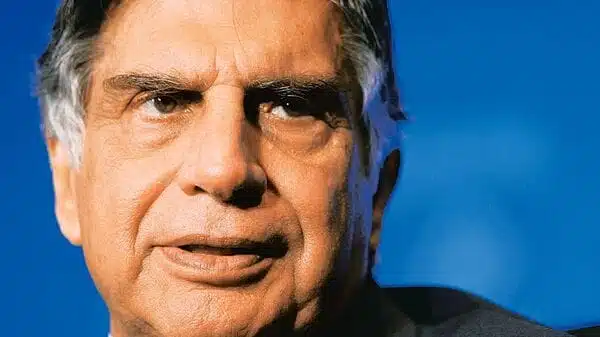
Succession and Corporate Transition Following the Death of Ratan Tata: Implications for Tata Group
There is no doubt the emotional and corporate impact of the possible passing of a business icon, like Ratan Tata, former chairman of Tata Group would be huge. While he’s retired from his formal roles now, Ratan Tata is a highly respected figure and continues to lead Tata Group through different periods of transformation and growth. But in case of Tata Group, it being a structured conglomerate, Tata group has healthy policies in place to handle the leadership transition in case of the happenings of the above nature.
1. Ratan Tata’s Role and Influence
Ratan Tata, though retired as chairman of Tata Group, continues to serve as a guiding influence within the Tata Trusts, which control the majority of Tata Sons, the holding company of the group. While his passing would not disrupt Tata Group’s day-to-day management, his symbolic and strategic influence makes succession planning critical to maintain continuity in corporate governance.
Ratan Tata, chairman of Tata Group, passes away
2. Legal Succession at Tata Group
Being a multi-billion dollar conglomerate, Tata group follows strict legal framework for it’s leadership transitions. Here’s how the process would unfold:
a. Succession Planning in Place
Leadership transitions have been an active area where Tata Group has been most proactive viz a viz transition of power from Ratan Tata to his successor Cyrus Mistry and then to Natarajan Chandrasekaran as the current chairman of Tata Sons —traditionally held by the former chairman. With this precedent in the company’s history, Tata Group has a well-constructed succession plan for key men of the company, including those in Tata Trusts. The passing of Ratan Tata will activate these succession plans so that Tata Trusts, along with its decision-making bodies in the group, can easily be handed over to a designated successor.
b. Board of Directors’ Role
The governance structure of Tata Sons places significant power in the hands of its board of directors. The board is responsible for making key executive appointments, including the chairman. In the event of Ratan Tata’s death, the board would step in to review existing succession plans and make any necessary adjustments. The current leadership under Natarajan Chandrasekaran would ensure that operational stability is maintained.
c. Tata Trusts’ Influence
The most influential role of Ratan Tata was through Tata Trusts, who own about 66% of Tata Sons shares. Tata Trust is the most important entity because it wields power over the decision-making in Tata Sons. In the wake of Ratan Tata’s passing, there would be another head of Tata Trusts, an important position that shapes the leadership and way the far flung Tata Group operates. Given the nature of the trustees — a schematically balanced selection to protect Tata Sons interests — and Tatas’ propensity for operating as familistic businesses, Tata Trusts’ trustees would probably have to come together to elect a successor to preserve the manner in the Trusts continue to wield influence in Tata Sons.
3. Articles of Association and Legal Framework
The leadership transition comes under the purview of Tata Sons, the holding company, and the Articles of Association (AOA) come into the picture and explain how it is to be done. The AOA provides for procedures to appoint new directors and chairmen, all in a legally sound way. In case Ratan Tata dies or something happens to a key member, then the AOA will direct the process of filling his place in Tata Trusts and other avenues.
4. Tata Group’s Corporate Governance and Transparency
And with regard to strong corporate governance, we at Tata Group have always operated in that fashion, in good times and bad, and during leadership transitions. The passing of Ratan Tata, the Chairman of Tata Sons, would subsequently result in board members of the Tata Sons in engaging in transparent communication with stakeholders, that is, shareholders, employees as well as the media. In order for the market not to collapse, and for speculation not to occur, the group would also be likely to follow up with statements reassuring markets and investors about the strength of its leadership and succession plans.
5. Immediate Leadership and Continuity
While Ratan Tata no longer directly holds a chairmanship account in Tata Sons, he’d maintain a considerable amount of influence through Tata Trusts which would need careful handling once he passes. But the successor picked by Tata Trusts will decide the strategic direction and the day to day operations under Natarajan Chandrasekaran, will continue as is.
6. Impact on the Group’s Strategy
Tata Group has a clear strategic roadmap today under its current leadership, but Ratan Tata’s passing could even change the long term vision of the group. But he did leave his profound imprint on the Tata culture, as guardian and guiding influence over seminal decisions, ranging from how tough will you be in business ethics, to international expansion, to philanthropy, taking place throughout his life. The success plans would maintain his thinking and strategic direction shaping the group through a new leadership structure, but some changes in management style or focus could be inevitable.
7. Conclusion
Such a towering figure as Ratan Tata would be passing on at a time when he was leading a great enterprise like Tata Group as also comprising the global business community. In any event, bringing order to this succession model will be easy within Tata Group’s history of sound corporate governance and detailed succession planning, all within a legal framework that protects the company and its stakeholders. In coordination with Tata Trusts the board of Tata Sons will oversee the succession to ensure the continuity of these values that Ratan Tata instilled during his time, as well as maintain stability, growth and ethical leadership of the group.
Ratan Tata’s Passing: Impact on Tata Group and Legacy Management