Simplifying Your Life & Law | Legal Drafting services

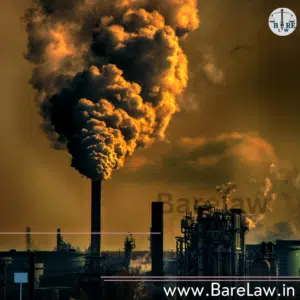
Do we all remember Delhi Air pollution which was witnessed just a few years before? It was, Delhi as a whole, caught our country’s attention and used the masks for protection of lives before the world witnessed pandemics. Keeping that aside, having searched for the reasons for such man-made pollution, the country finally found Stubble burning, in the state of Punjab, as the main reason or in other words, it was Stubble burning which mostly caused such air pollution in Delhi. Taking Delhi as an example, it was the result of the state of Punjab’s negligence that put Delhi to pay the cost in the end. This article will look into what stubble burning is, the cause, and would scrutinize the legal perspective of the same to bring to a conclusion with challenges and the latest Ordinance by Parliament to deal with the issue.
Stubble burning:
Recently, there have been lots of talk on Stubble burning, which helps us to understand that it is a practice that has been prevalent in North India, especially the regions where the wheat is been cultivated. It is applicable to those farmers who basically prepare their field for sowing of wheat as there would be less time gap for harvesting of paddy and sowing of wheat. Irrespective of seeing this as an issue, stubble burning is a needed practice, and farmers of the Punjab, Haryana region have no alternative to such practice. This cannot be brought as a reason for air pollution, but then there is a duty that is vested with the state and the central government to ensure that there are enough opportunities created for such farmers for such practice. It is their duty to come up with a policy to prevent pollution and to help the farmers.
Stubble Burning and Right to Life:
Whenever there is an environmental issue that pops up, anywhere in the world, there will definitely be a violation of citizen’s fundamental rights, irrespective of who creates such a violation. But, the same also has few exceptions that are expressly provided in the respective supreme law. Looking from such an angle, it is well understood that our constitution guarantees the right to life and its enforceability in case of any violations. Apex court and other lower courts have been reiterating the same and protecting such people. Keeping that in mind, the issue of stubble burning-which has a high ratio in causing air pollution, should be seen as the violation of the right to a clean and safe environment, which has been interpreted as an unwritten fundamental right under the purview of the right to life, of those people who have the probability of losing their lives due to stubble burning. Recently in January 2020, in the case of MC Mehta v. Union of India, the issue with respect to pollution in the hotspots in Delhi and NCR regions was observed and was listed before the Supreme Court of India under Article 32 of the constitution. Justice Arun Mishra and Justice Deepak Gupta observed that there was a blatant violation of the right to life through such serious pollution which was caused by various factors, among which Stubble burning was the one. It also stated that stubble burning has caused 40% of air pollution in Delhi and NCR region. It ordered the concerned pollution control boards, government to comply and submit reports of the same.
Stubble Burning and DPSPs:
It was through October 14 order, a panel headed by Justice M B Lokur was constituted to study or look into the issue of stubble burning in Punjab and Haryana. But later, the Central government submitted before the court that they will frame a policy/legislation for resolving and to take appropriate steps in the matter concerned. Thus, the apex court dismissed the panel constitution order which was ordered before. Now, the question is whether the central government has the power to frame a law for such an issue or not? Directive Principles of State policy give discretionary power to the government to take steps and policy for the welfare of the people. Article 48A of the Indian constitution provides the power to the government to promote and safeguard the environment. Court of law, in the above-mentioned case in January 2020, has also observed that there was great negligence from the side of Central and state governments of Punjab, Haryana, and Delhi in controlling the pollution and failed to frame a policy relating to the same. As the pollution was not only caused by farmers who burnt the wheat but was also caused by the irregular waste management, misappropriation of construction in the territory, etc.
Few legal challenges:
Having said earlier that there is a violation of the fundamental rights of citizens, the main aim of any law/rule for such matter should effectively curb the violations. This is noted to be the most important challenge for both Central government and state government and they should ensure the same. Secondly, the debate over how the policy should be and who should frame should be stopped and legislature-be it central or state, should step in to enact a law regarding the same without passage of the time. In the end, it is the state/government that should frame the policy for welfare measures as per DPSPs. In that regard, it becomes important to analyze the recent ordinance promulgated in Mid April 2021.
The Commission for Air Quality Management in National Capital Region and Adjoining Areas Ordinance, 2021
On April 13-2021, an ordinance named Commission for Air Quality Management in National Capital Region and Adjoining Areas Ordinance, 2021 was promulgated in order to constitute a commission that will perform/co-operate in researching, identifying, and resolving the concerned air pollution or the quality of the air, for that matter, in the specified territories. The territories that have been included in this ordinance are the National Capital region in Delhi and the term adjoining areas includes the areas of Punjab, Haryana, and Uttar Pradesh, which has been notified to cause air pollution in Delhi. Another object of the ordinance is to dissolve the already existing Environment Pollution Control Board in Delhi, which was earlier promulgated in the 2020 ordinance. Powers and functions of the commission are exclusive and no other laws/rules made by any state government with regard to that would be over-ruled through the order of the commission. Any contravention to the orders of the commission or laws passed by the same would attract imprisonment up to 5 years or fines up to 1 crore rupees or even both. Appeals against the orders will only be heard by National Green Tribunal.
Conclusion:
After analyzing the relevant legal, statutory provisions, and case laws, it can be concluded that there is a legal duty and a discretionary power that is vested with the center and state government to regulate and protect the environment to ensure that the welfare of the people is attained. The recent ordinance in April 2021 should enhance the probability of reducing the air pollution in the territory, and farmers’ needs are fulfilled.