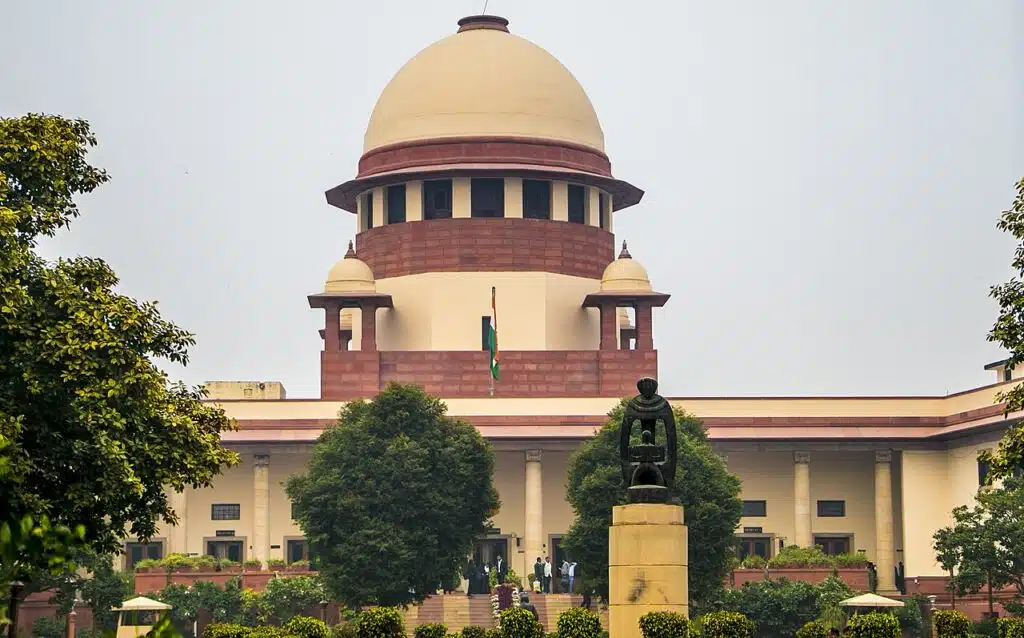
Supreme Court of India Overturns Remission of 2002 Gujarat Riot Convicts in Landmark Bilkis Bano Case
Introduction In a historic ruling, the Supreme Court of India allowed a petition by Bilkis Bano, a survivor of the horrific 2002 Gujarat communal riots, challenging the premature release of her assaulters and family’s murderers. This decision marks a significant moment in Indian judicial history, reaffirming the power of the judiciary in upholding justice and human rights.
Bano’s Petition and Legal Grounds Bilkis Bano filed a writ petition under Article 32 of the Indian Constitution, bypassing the need to approach the Gujarat State High Court under Article 226. The Supreme Court deemed this direct approach maintainable, setting a precedent for future human rights cases. The court’s decision also left open the question of the maintainability of other Public Interest Litigations (PILs) in similar contexts, highlighting the evolving nature of judicial intervention in matters of public importance.
Invalidation of the Remission Orders The remission orders issued by the State of Gujarat on August 10, 2022, were found flawed on multiple grounds. Crucially, the State of Gujarat was deemed to have overstepped its jurisdiction by granting remission to convicts convicted in Maharashtra. Furthermore, the court found the 1992 remission policy of Gujarat irrelevant in this case and noted the convicts’ failure to settle the fine imposed by the Special Court in Mumbai. This comprehensive scrutiny led to the quashing of the remission orders.
May 2022 Judgement Overturned The Supreme Court declared its own judgement from May 2022 null and void, citing that it was based on misrepresented facts and was in contradiction with larger bench judgements. This introspective action by the court emphasizes its commitment to the rule of law and the doctrine of stare decisis, which mandates adherence to legal precedents.
Emphasis on Rule of Law and Personal Liberty While acknowledging the paramount importance of personal liberty under Article 21 of the Constitution, the court emphasized the rule of law as a cornerstone of justice. Balancing these principles, the court concluded that the rule of law should prevail, directing the convicts to report back to prison within two weeks.
Bilkis Bano’s Ordeal and Justice Served Bilkis Bano’s case, with its political undertones and the severity of the crimes, has been a focal point in India’s struggle for justice and human rights. The Bombay High Court’s 2008 conviction of the individuals involved, including police officers and doctors who tampered with evidence, was a significant step, but the premature release of these convicts in 2022 raised serious questions about the justice system. The Supreme Court’s latest ruling is a reassertion of justice for Bilkis Bano and a reminder of the dark chapters of communal violence in India.
Political Reactions and Public Sentiment The judgement has been widely welcomed, especially by political leaders from the opposition, reflecting the case’s impact on the Indian polity. Celebrations outside Bano’s house in Gujarat following the judgement underscore the public’s emotional investment in the case.
Conclusion The Supreme Court’s ruling in the Bilkis Bano case is a landmark in India’s judicial history, reinforcing the principles of justice and rule of law. It stands as a testament to the resilience of survivors and the judicial system’s potential to correct its course in the pursuit of justice.
Barelaw, an online platform dedicated to delivering comprehensive legal knowledge, proudly presents its exclusive category of case briefs. This section is meticulously crafted to offer insightful analyses of landmark judgments, providing a valuable resource for legal professionals, students, and anyone interested in understanding the intricacies of law. Our case briefs delve deep into pivotal court decisions, exploring the rationale behind each judgment and its impact on the legal landscape.
We understand that navigating the complexities of legal judgments can be challenging. That’s why our case briefs are designed to be both informative and accessible, ensuring that readers gain a clear understanding of the key legal principles involved. Each brief includes a summary of the facts, the legal issue at hand, the court’s reasoning, and the ultimate decision. This structured approach makes it easier for our audience to grasp the nuances of each case.
Our website is a treasure trove of legal wisdom, constantly updated with the latest and most significant cases. Whether you’re a law student seeking to enhance your knowledge, a practicing attorney looking for a quick reference, or simply a curious mind eager to understand the law’s evolution, Barelaw is your go-to destination.
Explore our case briefs and immerse yourself in the world of law. Visit our website now and discover the wealth of legal knowledge at your fingertips. The link is provided below for your convenience and direct access to our expansive legal database