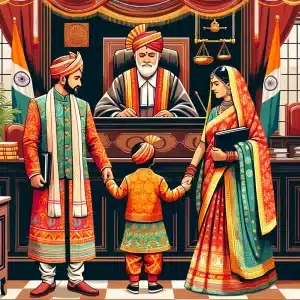

Are all the marriages that are solemnized meeting compulsory registration in India? If yes, then where do we find those provisions relating to compulsory registration of Marriages in India? There are lots of questions that pop up while questioning personal laws. This is because, we Indians follow different procedures during the solemnization of Marriages and personal laws give the procedure for registration of marriages, but does not ensure compulsory registration of marriages. Records of registered marriages across the nation are also less and registration of marriages regardless of what religion, region, and customs are unavailable. With the debate for and against the implementation of UCC in India gets even stronger, it is important to note whether the compulsory registration of marriages is a step towards reaching the final goal under Article 44 of the Indian Constitution? This article will look into the registration procedures under existing laws and will try to determine whether the same requires a compulsory notation or not. It will also scrutinize the need for compulsory registration in India along with the scope of UCC.
Indian laws on Registration of Marriages:
In India, apart from legislation enacted by each of the states, there are few Central legislation that contains provisions relating to the registration of marriages.
- The first legislation that dealt with the registration of marriages and their procedure in India is the Indian Christian Marriages act, 1872. This law contains elaborative provisions relating to solemnization-cum registration of marriages by ministers and clergymen and applies to Indian Christians or Native Christians in India. It allows transmission of records of registration to the registrar-general.
- Solemnization of Muslim Marriages was done through Kazi Act, 1880. The act enabled the government of a particular state to appoint a person to solemnize. Once the marriage/‘nikah’ is solemnized by the Kazi, the married couple will agree, in other words-Nikahnama, through their signatures. This agreement had been used as a valid document while registering the marriages.
- Thirdly, Section 6 of the Parsi Marriage and Divorce act, 1936 requires certifying and registering of Marriages. Once the marriage has been solemnized, the registrar has to provide the certificate and should register the same in the registry.
- Section 8 of the Hindu Marriages Act, 1955 provides for registration of Marriages and ensures this registration as proof of married couple. The state government has the power to frame rules relating to marriages.
- Lastly, the Special marriages act, 1954. The main aim of the act is to facilitate marriages irrespective of their religion, caste, etc. This applies to all Indians. Section 15 of the act deals with the registration of Marriages.
Even though all the above legislation enables the married couple to get registered under the act, the same does not make it mandatory for them. Problems arise from here, which is in case of failure.
Report by Law Commission of India:
As mentioned earlier, the gap of making the registration of marriages compulsory still exists in the personal law and courts have, time and again, reiterated the same. Significantly, the 270th Law commission report, in the year 2017, addressed it and recommended timely reform to address the gap. Earlier, the 18th Law commission in its 212th Report dealt with Reforms needed in Personal law existing in India. But, it did not probe deeper into the aspect of compulsory registration in India.
Interestingly, the 270th report went ahead to look into it. It stated that the absence of compulsory registration of marriages led the women community to get duped without the necessary conditions of a valid marriage and in a way, disables them from getting societal recognition and securities from her husband. This proposition has huge significance and is keenly insisted on by Supreme Court as well. Pointing to a minor amendment to the existing Registration of Births and Deaths Act, the report notified these steps as a ‘necessary reform’.
Significant Case laws:
Even before the 270th Law commission, Indian Supreme Court and High Courts have been insisting on the need for compulsory registration of marriages in India. One such significant pronouncement came in the case of Seema v. Ashwani (2006). It was in this case, the court observed that ‘marriages of Indians should be registered compulsorily irrespective of their religion or caste, in their respective states. It ordered the state and central government to effectuate the procedure for registration of marriages through a statute to serve the purpose.
In another significant case of Kanagavalli v. Saroja (2001), Madras High Court noted and observed that registration of marriages serves as a security to women. It further stated that the registration easily ensures the prosecution for the offense of Bigamy.
Article 44 and Registration of Marriages:
Looking from the Marriages and Divorce perspective, Uniform Civil Code should be the key, as we have different procedures of solemnization under each religion. UCC will ensure that there are essentials on a uniform basis. Few essentials that can be codified include Age limit of men and women, compulsory Registration procedures, and reminding Monogamy, not because it is under Hindu law, but because the sanctity and life of a married wife would be protected. There should be a suitable environment that has to be established to ensure the UCC is implemented properly, and not for a certain community’s benefit. Ensuring this becomes important to avoid chaos among the citizens and ensuring their right to profess and practice their religion is not affected. Hence, there should be a balance between the two for the betterment of our society.
Conclusion:
Having seen the above cases and law commission reports, the need for compulsory registration of marriages takes a huge call for securing and protecting the married women community from being duped or violated. This has been the stance of the judiciary and legal analysts so far. This article is also an initiative to protect married women from being ignored for their rights and benefits under the law. Irrespective of which religion or caste or region, registration of marriages should be made compulsory across India.