
Introduction
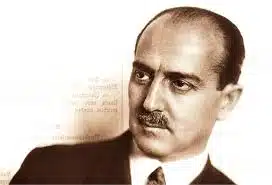
Hans Kelsen was a political and legal philosopher born in October 1881 and breathed last in 1973. At the beginning of the 20th century, Kelsen worked as a legal theorist. Kelsen wished to separate the law from all other social sciences and extra-legal disciplines. Kelsen suggested a theory of law rescuing it from the vagueness and divesting it from the moral, ideal, or ethical elements. He strongly criticized the concept of command and its comparison to law propounded by John Austin because of reason that he wanted the legal theory to be pure and objective. He also did not believe in the concept of justice as an element of the law.
Kelsen’s conception of law
Kelsen describes the law as a normative science distinguishing it from natural science. The basic character of the science of law is the knowledge of what ” ought to be ” as opposed to the nature of normative sciences which are capable of being determined and discovered. Hence, according to Kelsen, the science of law is positive law and not an ideal law. The concept of ‘ ought ‘ in Kelsen’s theory also distinguishes legal norms from social norms. The ‘ought’ in the legal norm refers to the sanction to be applied for violation of the law.
The Grundnorm
Kelsen was of the view that legal norms come in systems like a pyramid. Kelsen termed the pyramid structure of reality of norms deriving their validity from the basic norms as the Grundnorm. Grundnorm, according to Kelsen, is the basic or Apex norm that gives validity to the other norms. With the concept of grundnorm, it was implied that one rule can be derived from another rule and one law can be derived from another law. Grundnorm is described as an exception independent of any other norm which gives validity from the rules derived from it. The process of the subordinate norms deriving their powers from the norms immediately superior to it, finally seizing at the grundnorm was termed as concretization.
For instance, alert derives its authority and validity from the legislative body, and the legislative body, in turn, derives its authority from the constitution. The constitution is the grand norm according to Kelsen’s theory of pure law.
Salient features of Kelsen’s pure theory of law-
The assumptions on which the theory of law was propounded by Kelsen were-
(1) the theory is aimed at reducing the confusion and chaos that rises due to the natural law philosophy.
(2) theory of law deals with the knowledge of what is and not what ought to be
(3) the theory considers law as a normative science distinguishing it from natural science.
(4) Kelsen’s theory is the theory of norms and is less concerned with the effectiveness of the legal norms.
(5) it is confined to the system of positive law.
The implication of Kelsen’s Pure Theory of Law-
(1) According to Kelsen, there is no difference between state and law.
(2) there is no difference between private and public law.
(3) there is no distinction between natural and juristic personality.
(4) He disagrees with the concept of rights and believes in the concept of duties in law.
(5) he did not believe in the concept of separation of powers and considered all the three organs as the norm creating his agencies.
Criticism of Kelsen’s theory-
- Firstly excludes or references social facts and felt needs of the society. Thus, his theory of law is without any sociological foundation.
- Kelsen asserts all norms except The grand norm are pure. This assertion is considered irrational. There is no logic as to how subsequent norms deriving their authority from the apex norm can be pure when the apex norm itself is the outcome of various sociological and political factors.
- The theory is not practical but rather hypothetical as it is not possible two divorce law from the influence of social sciences and social needs.
- Friedmann states that the conflicts arising out of the ideological differences are not solved with the theory of pure law and that it is statically impossible two divest law from morality and ethics in society.
Merits of the Pure Theory of law-
- International law was recognized as law.
- A peaceful change could be a result.
- It is a refined form of analytical positivism
Conclusion-
Hans Kelsen has been among the most influential legal philosophers. His pure theory of law interconnected all the norms with an apex norm at the top which gives validity and legitimacy to all other norms. Thus, it can be concluded that law can be organized by simplifying its parts and elements in a nutshell which can become a logical system.