Table of Contents
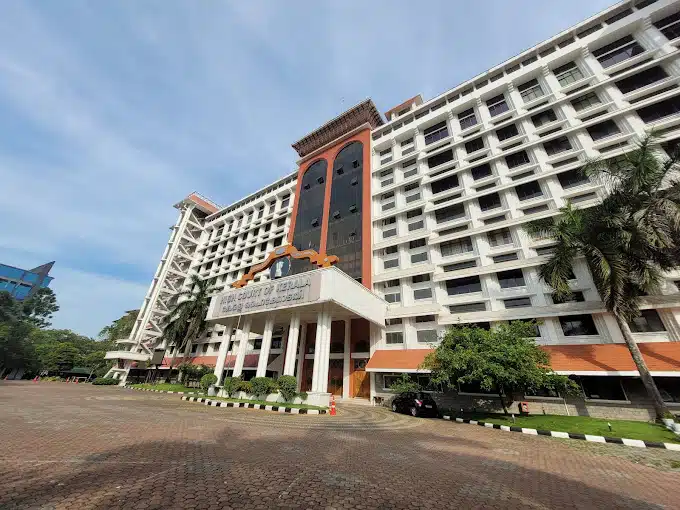
Protection under BNSS for accused with unsound mind or intellectual disability to apply retrospectively: High court of Kerala
The latest Kerala High Court decision is that the accused who has Alzheimer’s disease and who has, therefore become unable to defend himself in the trial is covered by the BNSS [VI Thankappan v State of Kerala & Anr].
In fact according to the law any accused who is declared to be of unsound mind and hence incapable of making his defense then the court has no other option but to adjourn the proceeding against that person.
While dealing with the question of law on this issue, Justice K Babu also found that the provisions of BNSS regarding it has to be given prospective effect to any proceedings initiated before 1st July.
Relevantly, when compared to the provisions of CrPC, while the BNSS enhances the protection to a person what has been categorized as an unsound mind, it goes further to offer protection to a person with mental health disorder of an intellectual disability as established by the Court.
“Every person has a right to a fair trial as enshrined in Article 21 of the Constitution which is sacred of criminal justice system…if the provisions of the Sanhita are not made applicable in a case where the accused person is affected by any form of intellectual disability of a kind that would prevent one from making his defense then there would be failure of justice.”
The single-judge was hearing a plea filed by a 74-year-old the accused in a case under the Prevention of Corruption Act (PC Act).
The counsel for the accused, who was suffering from ‘Alzheimer’s Dementia’ that reduces the ability of an individual to reason well, argued that his client was not fit to defend himself from the charges levelled against him but the trial judge dismissed the argument with a remark that the accused was not insane or of unsound mind.
However, the special-judge had asked him to undergo some medical check up. They informed the nurses that he had advanced dementia, and could not even recognize his children most of the time. But, evaluation from a psychiatrist with considerable scrutiny was also advised.
The trial judge then made a direction that the accused can himself go to the Mental Health Centre, Thrissur with further direction to the Medical Supdt to obtain a report testifying this if the accused approaches them.
The accused had set aside the order of the special-judge before the High Court.
The Hon Justice Babu pointed out that mental or intellectual disability holds an accused back in the right to a fair trial and his or her opportunity to prefer defence.
The Court pointed out that the CrPC had provisions in regard to some of the processes which has to be adopted by the court in case an inquiry or trial has to be conducted against an accused who is of unsound mind.
It also discovered that the Mental Healthcare Act of India’s Section 105 focuses on the processes to be adopted in a judicial process in case someone presents any evidence of mental illness of another person. The BNSS also also has provisions for accused persons of unsound mind.
“If a conjoint reading of the Mental Healthcare Act and the provisions of the Sanhita be made, it would be discernible that the Legislature has assigned a larger palette to the phrase ‘incapability of making defence’ by including the term ‘intellectual disability’ The Legislature has noted of the definition of the term ‘mental illness’ under the Mental Health Care Act, 2017 while enacting the Sanhita,” stated the Court
The Court said that there was not even a requirement for an application to attempt at establishing the fact of/ of an unsoundness or/and of an intellectual disability. It is the mandatory duty of the Court the bench further said.
Especially in the case of dementia, the Court stated it as a decline in mental ability which involves disappearance of various intricate brain functions in a gradual manner.
“It is a form of mental disability that may impact on the ability of an accused person to engage properly in the judicial process. Section 368 of the Sanhita defines what is meant by ‘intellectual disability’ to include Alzheimer’s Dementia if this is in a state whereby the accused is unable to so defend himself. Therefore, I hold that any person who has ‘Alzheimer’s Dementia’ such that he cannot adequately defend himself is
The Court then went on to hearing with respect to the applicability of BNSS to the cases for the period prior to the period of June 30, the day on which the new criminal laws were enacted.
It also noted that if two persons with a mental disability or an intellectual disability are treated in one manner under the CrPC and in another under the BNSS Act, then it would go against the constitutional provision contained under Article 14 of the Constitution of India.
Thus, among equals, the law should be equal and equally administered and should be treated alike The guarantee of ‘equal protection’ under Article 14 is really a guarantee of equality of treatment of persons in ‘equal circumstances’. Hence, in order to protect the fundamental right of an individual, the provisions of the Sanhita can be extended retrospectively to any proceedings initiated prior to 1. 7. 2024. Therefore this saving provision under
Regarding the present case, the Court thought the special-joint’s decision, which asked the accused to get assessed by a psychiatrist, as wrong.
“The learned Special Judge forgot that he has a very heavy burden to justify the direction that he gave to try the issue as to whether the petitioner suffers from any mental disability at all or not,” the Court stated adding that the order impugned is patently illegal and irregular.
It, therefore, referred the matter back to the special-judge for a reconsideration of accused’s case under the provisions of BNSS.
The petitioner was advised by the following advocates T Kabil Chandran, TD Robin, R Anjali and Aayshath Najila Schemnad.
The case was prosecuted by the public prosecutor – G Sudheer for the state.
Renjith B Marar and V Ramkumar Nambiar appeared as Advocates for the appellant along with Advocates as Amicus Curiae.