Parole Granted to Bilkis Bano Case Convict Amid Legal Controversy
Table of Contents
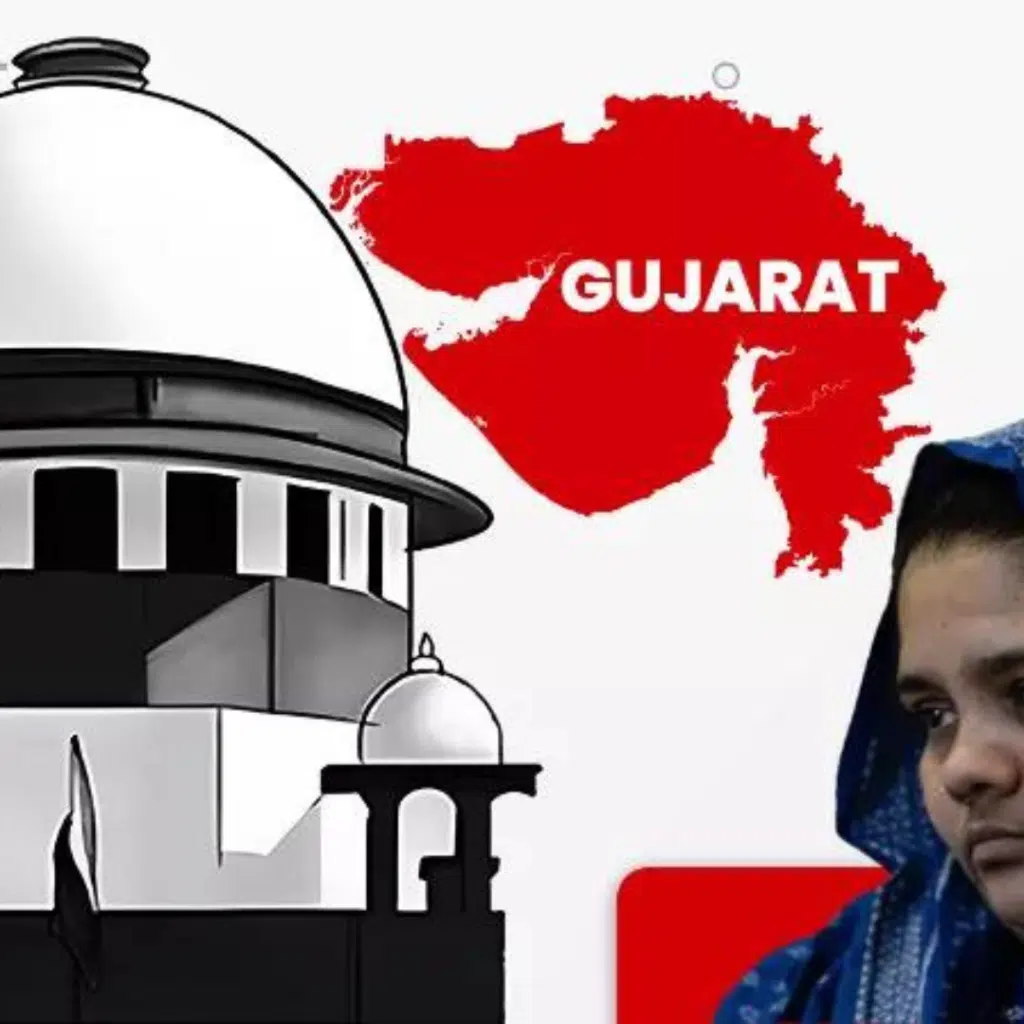
In a recent development that has reignited discussions around the Indian justice system and parole policies, one of the convicts in the infamous Bilkis Bano case, Pradipbhai Ramamlal Modiya, was granted parole for five days by the Gujarat High Court due to the demise of his father-in-law. This decision comes shortly after the Supreme Court of India quashed the remission of eleven convicts, including Modiya, who were previously released from prison, challenging the Gujarat government’s authority in the matter.
Pradipbhai Ramamlal Modiya approached the Gujarat High Court seeking a 30-day parole following his father-in-law’s death. After reviewing the death certificate and statements from the jail authority, Justice MR Mengdey granted Modiya a five-day parole, subject to standard conditions, including a bail bond of ₹5,000.
The backdrop of this parole decision is steeped in a series of legal proceedings and public outcry. The eleven individuals, including Modiya, were convicted for their roles in the rape of Bilkis Bano and the murder of her family members during the 2002 Gujarat riots, a dark chapter in India’s history marked by communal violence. Initially, these convicts were granted remission and released from prison by the Gujarat High Court in August 2023, a decision based on a Supreme Court judgment from May 2022 that emphasized considering remission applications in accordance with the state policy where the crime occurred.
However, this remission was met with widespread criticism and legal challenges, leading to the Supreme Court’s intervention. On January 8, a bench comprising Justices BV Nagarathna and Ujjal Bhuyan overturned the Gujarat government’s remission, ruling that the state lacked the authority to apply its policy to these convicts, thereby ordering their return to prison within two weeks.
The parole granted to Modiya has sparked a debate over the parole system’s fairness and the balance between legal rights and public sentiment, especially in high-profile cases with significant social implications. Modiya’s extensive history of parole and furlough—totaling 1041 days and 233 days, respectively—raises questions about the criteria and transparency governing such decisions.
Conclusion
The parole granted to Pradipbhai Ramamlal Modiya in the Bilkis Bano case is more than a legal formality; it is a reflection of the complex interplay between justice, rehabilitation, and societal values. As the nation watches closely, this incident underscores the ongoing challenges and responsibilities of India’s legal system in addressing the scars of communal violence and ensuring justice for victims.
FAQs
- What led to the parole of Pradipbhai Ramamlal Modiya?
- Modiya was granted parole due to the death of his father-in-law, after petitioning the Gujarat High Court.
- Why were the Bilkis Bano case convicts initially released?
- They were released following a remission granted by the Gujarat High Court, based on a Supreme Court judgment that remission applications should be considered under the state policy where the crime was committed.
- What was the Supreme Court’s stance on the convicts’ remission?
- The Supreme Court quashed the remission granted by the Gujarat government, stating that the state had no authority to apply its remission policy to these convicts.
- How long has Pradipbhai Ramamlal Modiya been out on parole and furlough since his imprisonment?
- Modiya has been out on parole for a total of 1041 days and another 233 days on furlough.
Barelaw, an online platform dedicated to delivering comprehensive legal knowledge, proudly presents its exclusive category of case briefs. This section is meticulously crafted to offer insightful analyses of landmark judgments, providing a valuable resource for legal professionals, students, and anyone interested in understanding the intricacies of law. Our case briefs delve deep into pivotal court decisions, exploring the rationale behind each judgment and its impact on the legal landscape.
We understand that navigating the complexities of legal judgments can be challenging. That’s why our case briefs are designed to be both informative and accessible, ensuring that readers gain a clear understanding of the key legal principles involved. Each brief includes a summary of the facts, the legal issue at hand, the court’s reasoning, and the ultimate decision. This structured approach makes it easier for our audience to grasp the nuances of each case.
Our website is a treasure trove of legal wisdom, constantly updated with the latest and most significant cases. Whether you’re a law student seeking to enhance your knowledge, a practicing attorney looking for a quick reference, or simply a curious mind eager to understand the law’s evolution, Barelaw is your go-to destination.
Explore our case briefs and immerse yourself in the world of law. Visit our website now and discover the wealth of legal knowledge at your fingertips. The link is provided below for your convenience and direct access to our expansive legal database
You can access more legal drafts here – https://www.barelaw.in/legal-drafts/