Table of Contents
NCLT Approves Air India-Vistara Merger: Aviation will help open up a new era in the Aviation Industry of India.
Introduction
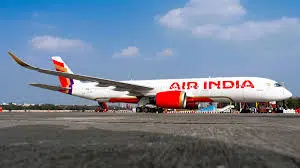
Ministry of Civil Aviation, the Indian government has green-signaled the merger of Air India and Tata’s Vistara company, a significant development in the Indian aviation sector. Out of the two particular routes, this merger aims at establishing a stronger airline entity in terms of the Air India’s background and Vistara’s service quality. It will further give a new dimension to the competition in aviation sector in India by improving the service delivery and bringing efficiency in both operations as well as expanding the network of destinations for the passengers.
Background and Significance
This clearly shows that the customers will benefit on the long term because Air India, a flag carrier with a rich heritage and Vistara, a relatively new but immensely popular and highly rated full service airline carrier now fall under the same umbrella. This merger seeks to blend the two airlines so that passengers from the two companies can enjoy their ultimate traveling package. The vast connectivity that Air India has on both the international and domestic sectors along with the splendid reputation that Vistara has made for itself in terms of service and fleet will together make for a great value proposition to the traveller.
It is the final passage after the regulatory bodies, such as the NCLT, have scrutinized it for several months and after the management has formulated different strategies. The merger can also be seen right in line with the Tata Sons’ long-term vision and planning for air operations. Tata Sons which own a major stake in both airlines have been in efforts to merge its aviation portfolio to present a stronger airline.
Operational and Strategic Implications
This led the two companies to predict that the merger would bring out marked improvements in terms of efficiency. Through consolidation of the opposed routes, fleets, and employees, the new entity will mean rationalization and possibilities of economies of bulk in costs. This is likely to lead to economies that can be accomplished by improving the functionality of customer service and the coverage of the airline.
Passengers are also guaranteed better service due to the enhanced connection that the merger is expected to bring into the travel plans. The extend of reach in terms of destinations that users will be able to choose from will as well be broader offering both local and overseas options. Other improvements that are expected include improved airline services – in-flight services and frequencies & frequency – and a more elaborate loyalty program.
Competitive Landscape
This is interesting in the midst of evolving competition in the Indian aviation where low-cost carrier like IndiGo celebrates major market share successes. As a result of this merger to create a full service, new airline with greater heft in contrast with the previous airlines, there is an opportunity to offer a favorable service to commoditized growth markets.
Further, the formation of this new airline presents it with a favorable opportunity to compete in the global market. It will establish AI with long-helicopter international routes and an ability to bring in a global customer base due to Vistara’s services. This is of particular importance given the rise in IIndians living abroad as well as a general rise in global travel in this day and age.”
Regulatory and Financial Aspects
Endorsement from the NCLT, therefore, is an indication that the fusion meets all legal and operational demands that govern combos in the nation. This ranges from radical integration of fleets and human staff to changes in day to day operations of the business. Financially, it is claimed that the merger would bring about improvement in balance sheet of the merged company would open up access to significantly larger amounts of capital to underwrite the purchase of new vessels and the upgrading of services.
The merger also has a strategic importance because it supports the policy goals of the Indian government to create and develop the domestic industry of civil aviation. Through the creation of a stronger airline the government intends to prevent splintering of the market as observed in the past and improve the over all heath of the industry.
Future Outlook
Finally, the plans of amalgamation between Air India and Vistara is to become a model for other companies in the Indian aviation sector. This may consolidate the two players into shared goals of developing better digital front ends, refining the service quality in planes, and providing end-to-end solutions regarding travel. This will be important in the strategic positioning of the new airline through identifying the key areas that will create a competitive gap between the new airline and its competitors.
Therefore, this approval entails the enhancement of the Indian aviation sector through the formation of this strategic partnership between Air India and Vistara. The formation of operational synergies is likely to result in a far more effective, customer-oriented, and financially sustainable airline company – for the passengers as well as the broader market. Air India and Vistara together provide a great foundation for the new aviation company to and aims for greater height in the strategic operation.