Supreme Court Rebukes Uttar Pradesh Government in Muzaffarnagar Student Slapping Case
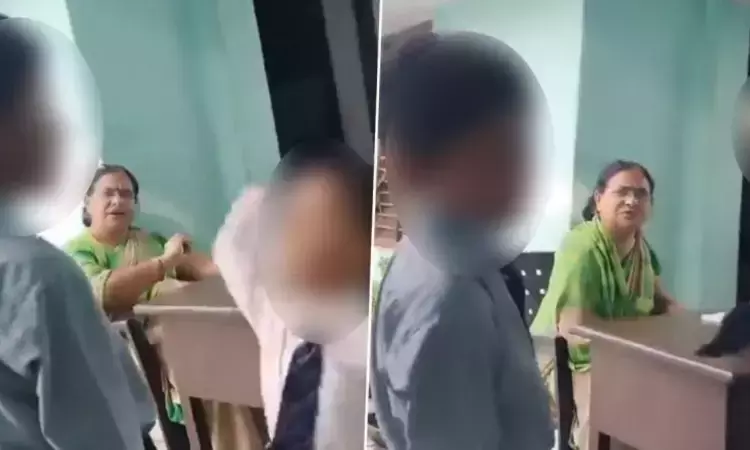
In a recent development that highlights the continuing challenges in ensuring child welfare and social justice in India, the Supreme Court has expressed its dissatisfaction with the Uttar Pradesh government’s handling of the infamous Muzaffarnagar student slapping incident. This case, which caught the nation’s attention last August, involved a primary school teacher in Muzaffarnagar, Uttar Pradesh, who instructed students to slap a Muslim classmate, an act that was caught on video and went viral on social media.
A bench of Justices Abhay S Oka and Ujjal Bhuyan, during a hearing on January 12, critically remarked that the state government had not acted as expected in response to this incident. This observation came while hearing a public interest litigation (PIL) filed by activist Tushar Gandhi, seeking a proper and time-bound investigation into the matter.
The Supreme Court has been monitoring the state’s response, particularly concerning the recommendations made by the Tata Institute of Social Sciences (TISS) for the counseling of the victim. Although an affidavit was filed by the education department detailing its compliance, Advocate Shadan Farasat criticized the response as inadequate, prompting Justice Oka to ask for written suggestions from the petitioner.
Notably, the case also touches on the Right to Education (RTE) Act’s mandates and the socio-economic disparities highlighted by the victim’s educational circumstances. The child, still enrolled in the same school, had to overcome challenges, including a significant commute, which the state government cited as contrary to the RTE Act’s provisions.
In a previous hearing, the court had shown its concern over the Uttar Pradesh police’s delay in filing an FIR and omitting allegations of communal hatred. This lapse pointed to a broader issue of the state’s failure to adhere to the RTE Act and rules, which prohibit physical and mental harassment of students and discrimination based on religion and caste.
The incident, involving teacher Tripta Tyagi instructing her students to physically assault a young Muslim student while making communal remarks, had sparked nationwide outrage. An FIR was registered against Tyagi, and the National Human Rights Commission (NHRC) also took suo moto cognizance of the incident.
The Supreme Court’s latest observations and the ongoing proceedings underscore the critical need for state accountability in protecting children’s rights and enforcing the law without bias or delay. The case, set to continue on February 9, remains a litmus test for the Indian judiciary and government in upholding the principles of justice and equality.
Barelaw, an online platform dedicated to delivering comprehensive legal knowledge, proudly presents its exclusive category of case briefs. This section is meticulously crafted to offer insightful analyses of landmark judgments, providing a valuable resource for legal professionals, students, and anyone interested in understanding the intricacies of law. Our case briefs delve deep into pivotal court decisions, exploring the rationale behind each judgment and its impact on the legal landscape.
We understand that navigating the complexities of legal judgments can be challenging. That’s why our case briefs are designed to be both informative and accessible, ensuring that readers gain a clear understanding of the key legal principles involved. Each brief includes a summary of the facts, the legal issue at hand, the court’s reasoning, and the ultimate decision. This structured approach makes it easier for our audience to grasp the nuances of each case.
Our website is a treasure trove of legal wisdom, constantly updated with the latest and most significant cases. Whether you’re a law student seeking to enhance your knowledge, a practicing attorney looking for a quick reference, or simply a curious mind eager to understand the law’s evolution, Barelaw is your go-to destination.
Explore our case briefs and immerse yourself in the world of law. Visit our website now and discover the wealth of legal knowledge at your fingertips. The link is provided below for your convenience and direct access to our expansive legal database