

Authored by – Harpreet Kaur
Table of Contents
Minimum Wages Act | Applicability and non – Applicability
Introduction:
The Minimum Wages Act is a significant legislation for ensuring that employees across different sectors are paid justly. It serves as an important tool in preventing exploitation and maintaining a decent standard of life for workers. This Act is crucial in promoting social justice and economic growth through setting the lowest possible wage limit that every employer should adhere to. The purpose of this write-up is to explore the scope of the Minimum Wages Act through analyzing its implications on various sections of economies.
Objective
The Minimum of Wages Act aims to achieve the following objectives:
- 1. Giving minimum wages to employees in organized sector (scheduled employment)
- 2. Saving worker from exploitation
- 3. Government can fix minimum rates and revise them after five years with advice from advisory committees or advisory board comprising representative employers/workers locally.
- 4. Establishing Advisory committees and Advisory Boards with equal representation from employers and workers to provide guidance and recommendations.
Applicability of Minimum Wages
The Act’s applicability extends to various entities as outlined below:
- 1) Except Jammu and Kashmir, it applies throughout India.
- 2) Any establishment where 1000 workman employed within the respective state
- 3) But it doesn’t apply on employees in undertakings owned/controlled by Central government/Federal railway except with approval form central government.
Under Section 2 of the Act, wages refer to any form of compensation that can be expressed in monetary terms. This encompasses the house rent allowance, but excludes the following:
- The monetary value attached to a house accommodation,
- Supplying water-light-medical attendance.
- Any other amenity not allowed by government order.
- Contributions made to the pension fund, provident fund or insurance.
- Allowances for travel.
- Special additional expenses occurred due to nature of employment.
- Gratuity is payable when one is discharged.
Key Points of Applicability
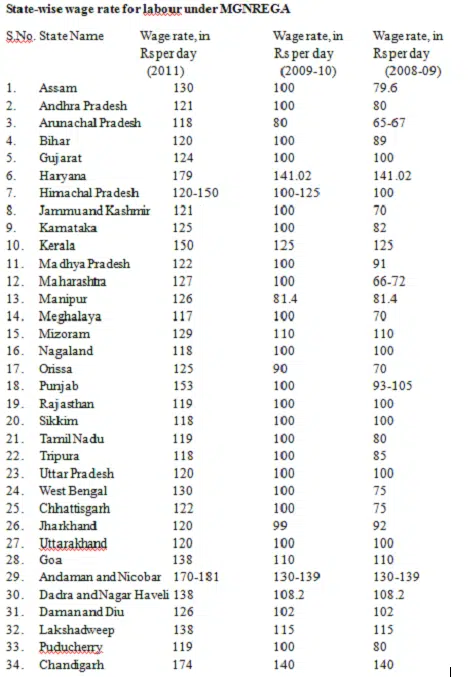
⦁ Jurisdictional Disparities: Minimum wage laws are enacted at different levels of government (federal, state/provincial and local), and can differ substantially between regions in a country.
⦁ Industry-Specific Regulations: Some jurisdictions have specific minimum wage rates applicable only to certain industries. For example, hospitality industry may have different minimum wages from agricultural sector and even more different from retail sector.
⦁ Types of Employment: Different types of employment like part time, temporary or seasonal work usually have their own specific minimum wage regulations applying to them.
⦁ Age and Experience: In some areas, there are provisions allowing lower minimum wages for young workers or those with little job history.
⦁ Exemptions: Certain occupations or professions may be exempt from minimum wage laws. This typically includes salaried positions, apprenticeships, or specific job categories.
Non-applicability of Minimum wages
Exemptions based on industry: There are instances where some industries or sectors do not fall under a particular jurisdiction’s minimal pay policies due to their unique characteristics or economic considerations. For example, there might be certain jobs in agriculture that have separate wage regulations compared to other occupations performed during this season only.
⦁ Considerations for small businesses: Some regions have exceptions for small businesses or lower rates than the standard minimum wage acknowledging their inability to meet higher thresholds for remuneration like larger enterprises can afford in order not hamper them from operating as going concerns
⦁ Interns and trainees: Sometimes interns, apprenticeships and trainees might be excluded from being treated as full employees under legislation covering minimum wages, because of the character of their training and facilities provided by their employers.
⦁ Commission-based occupations: For some jobs, especially those that heavily rely on commission earnings, there might be different wage structures. The total income, including commissions, may meet or exceed the minimum wage requirements.
⦁ Independent contractors: Independent contractors who come to an agreement over rates and contract terms do not fall under the jurisdiction of minimal pay regulations
⦁ Tipped employees: In certain jurisdictions, separate minimum wage levels apply for workers who receive a significant share of their incomes from customer tips which they use to top up their basic salaries.
⦁ Special economic zones: Different labor laws may exist in specific regions or economic zones such as variations in minimum wages designed to attract investment into the area.
Conclusion:
The study of the minimum wage is intricate and has many facets. Advocates believe that it ensures fair payment; reduces poverty levels thereby growing economy while critics claim it can lead to job losses especially for small businesses and increased prices in goods and services. It is imperative for impactful minimum wage rules formulation to strike a harmonious balance considering economic factors, social justice and geographical disparities. The varying terminologies used by central government give room for state-government-determined-minimum-wages.