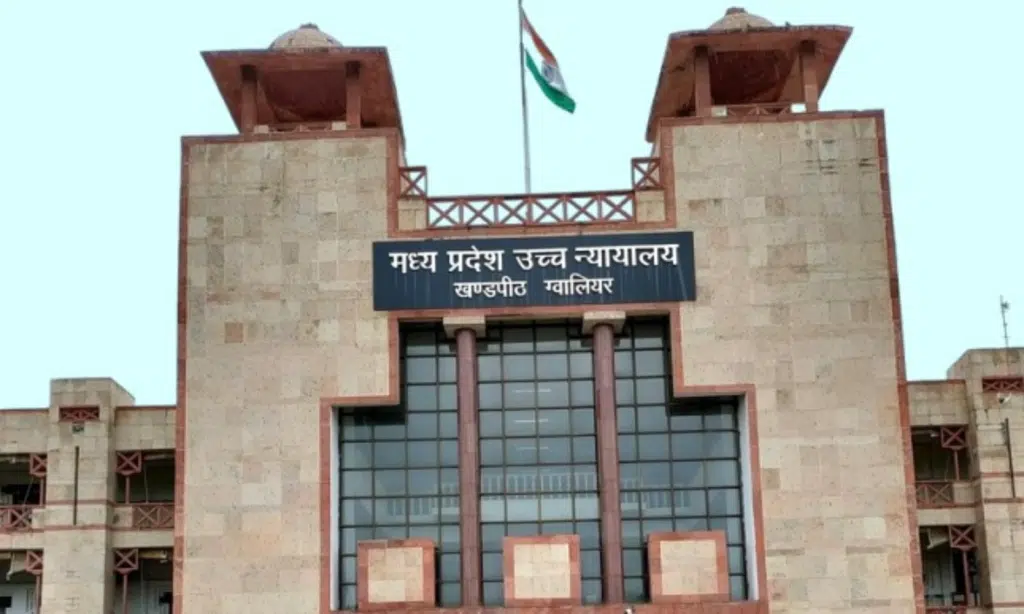
Madhya Pradesh High Court Rules: Refusal to Consummate Marriage Constitutes Mental Cruelty, Grounds for Divorce
In a landmark judgment, the Madhya Pradesh High Court has set a significant legal precedent in the context of matrimonial disputes under the Hindu Marriage Act. The division bench of Justices Sheel Nagu and Vinay Saraf overturned a previous ruling of a family court in Bhopal, holding that a wife’s refusal to consummate a marriage can amount to mental cruelty and thus be a valid ground for the husband to seek divorce.
The case, titled Sudeepto Saha vs Moumita Saha, revolved around the complaint of a husband whose wife allegedly refused to have sexual intercourse without any valid reason for an extended period. The family court’s 2014 verdict had denied the husband’s plea for divorce, a decision that was recently overturned by the High Court.
“We understand that unilateral refusal to have sexual intercourse for a considerable period without any physical incapacity or valid reason can amount to mental cruelty,” stated the Court. This acknowledgment reflects a nuanced understanding of marital relationships and the obligations that come with them.
The Court pointed out that from the date of their marriage on July 12, 2006, till the husband left India on July 28, 2006, the marriage was never consummated due to the wife’s unilateral decision. This absence of physical intimacy, especially without a valid reason, was deemed sufficient to establish mental cruelty.
Furthermore, the Court observed that the wife, despite being aware of the husband’s impending departure from India shortly after the marriage, did not contest his allegations. This lack of contestation led the Court to accept the husband’s contentions as factual.
The bench criticized the family court for its error in judgment, emphasizing that the Supreme Court has already recognized the refusal to consummate a marriage as an act of mental cruelty. The High Court’s ruling underlines that there is no fixed formula to determine mental cruelty in matrimonial matters. Each case must be evaluated on its specific facts and circumstances.
In its conclusion, the Court highlighted that the wife’s refusal to consummate the marriage, knowing the limited time available, constituted mental cruelty. Consequently, the judgment of the family court was quashed, and the husband’s plea for divorce was upheld.
This judgment is significant as it sheds light on the complexities of marital rights and obligations. It also underscores the evolving nature of legal interpretations in matrimonial matters, balancing societal norms with individual rights within a marital context.
The ruling by the Madhya Pradesh High Court sets a vital precedent in the legal landscape of India, particularly in the adjudication of matrimonial disputes. It reiterates the importance of understanding and respecting the mutual obligations that marriage entails, both physically and emotionally.Madhya Pradesh High Court Rules: Refusal to Consummate Marriage Constitutes Mental Cruelty, Grounds for Divorce
Barelaw, an online platform dedicated to delivering comprehensive legal knowledge, proudly presents its exclusive category of case briefs. This section is meticulously crafted to offer insightful analyses of landmark judgments, providing a valuable resource for legal professionals, students, and anyone interested in understanding the intricacies of law. Our case briefs delve deep into pivotal court decisions, exploring the rationale behind each judgment and its impact on the legal landscape.
We understand that navigating the complexities of legal judgments can be challenging. That’s why our case briefs are designed to be both informative and accessible, ensuring that readers gain a clear understanding of the key legal principles involved. Each brief includes a summary of the facts, the legal issue at hand, the court’s reasoning, and the ultimate decision. This structured approach makes it easier for our audience to grasp the nuances of each case.
Our website is a treasure trove of legal wisdom, constantly updated with the latest and most significant cases. Whether you’re a law student seeking to enhance your knowledge, a practicing attorney looking for a quick reference, or simply a curious mind eager to understand the law’s evolution, Barelaw is your go-to destination.
Explore our case briefs and immerse yourself in the world of law. Visit our website now and discover the wealth of legal knowledge at your fingertips. The link is provided below for your convenience and direct access to our expansive legal database