Table of Contents
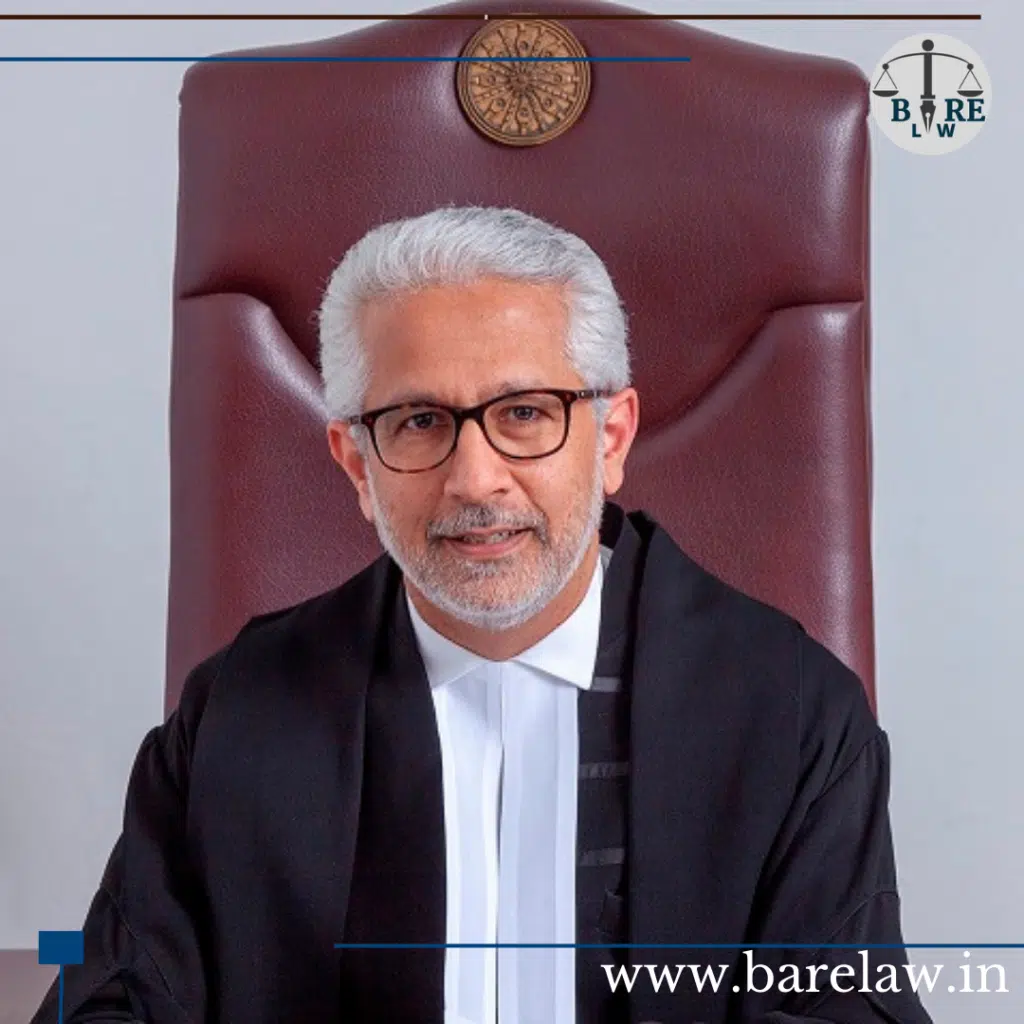
Justice Anup Bhambhani: Media’s Influence on Judicial Proceedings
Justice Anup Bhambhani: Media’s Influence on Judicial Proceedings
According to Justice Anup Jairam Bhambhani of the Delhi High Court, judges and investigative agencies are not immune to the pressure that is applied by the media, and what they read does influence how they think.
According to him, the pressure that comes from a media narrative and a media trial can cause a case to deviate from its original path.
“We must always remind ourselves and be conscious that as judges, as counsel, and as people otherwise engaged in a criminal justice system, we are all influenced, even if subliminally, with what we read and that influences our thinking,” Justice Bhambhani emphasised. “We must always remind ourselves that we are all influenced, even if subliminally, with what we read and that influences our thinking.”
At the first discourse that was sponsored by the Centre for Discourses on Criminal and Constitutional Jurisprudence, he gave a talk titled “Fair Trial: Fairytale, Narrative, or More.” He spoke on the subject of “Fair Trial: Fairytale, Narrative, or More.”
Justice Bhambhani touched on topics including the pressure from the media, the role of investigating agencies, and legal aid as he explained the issues that prevent a fair trial from taking place in the country.
He brought up the issue of investigative agencies collecting electronic documents, servers, and computer systems and presenting them as evidence in a selective manner. He emphasised that there must be some action taken in response to this situation since it is unacceptable.
“In a lot of the investigations that are taking place right now in regards to monetary crimes, the Investigating Officers are conducting raids on offices, picking up electronic records in bulk, and walking away with servers and computer systems. They neither leave copies nor manufacture clones, and out of the 10,000 emails they have, they will show five of them in front of the court and say, “look, this man is guilty,” according to Justice Anup Bhambhani.
When Justice Bhambhani was asked about the subject of the right to remain silent, she stated that there needs to be a distinction made between cooperating with the investigation and confessing.
The theme of “Presumption of Innocence” was also addressed by Justice Siddharth Mridul during his talk at the event.
He stated that the protection of individual liberty is a vital duty in a flourishing democracy, and that this commitment has now been included into the fundamental structure of the Constitution.
“Personal liberty is of the utmost importance, because it is an absolute prerequisite for human dignity and human happiness… Personal liberty is the defining characteristic of civilised society since, in the absence of personal liberty, there is nothing… “Personal liberty has now become a deeply enshrined part of our constitutional safeguards, and in fact, it is a part of the basic structure of the Constitution today.”
Justice Mridul emphasised the significance of the presumption of innocence and referred to it as a fundamental right in his remarks.
“[The Presumption of Innocence] is, in a sense, the elixir of the Criminal Justice System.” Today, it is clear that this is a legally recognised right. To the point of claiming that it is a fundamental right, that is how strongly I feel about it.
In addition to this, he clarified the distinction between the so-called “crime control model,
” in which specialised statutes (such as the Narcotic Drugs and Psychotropic Substances Act or the Prevention of Terrorism Act) are utilised, and the “due process model,” in which defendants are afforded the opportunity to defend themselves.
According to the judge, the primary objective of the crime control model is to ensure that those who are responsible for the crime receive the appropriate punishment for their actions. Additionally, the crime control model permits the chance that some innocent people will be wrongfully convicted because the protection afforded to those who are accused is reduced.
“In contrast, the due process model places a greater focus on improving protection for the accused. This is the case even if it means letting a hundred men go free without any consequences. In spite of these distinctions, however, the overarching purpose of both models is the same: to punish the guilty while protecting the innocent. According to him, “neither model aims to punish the innocent, nor does either model aspire to spare the guilty.”