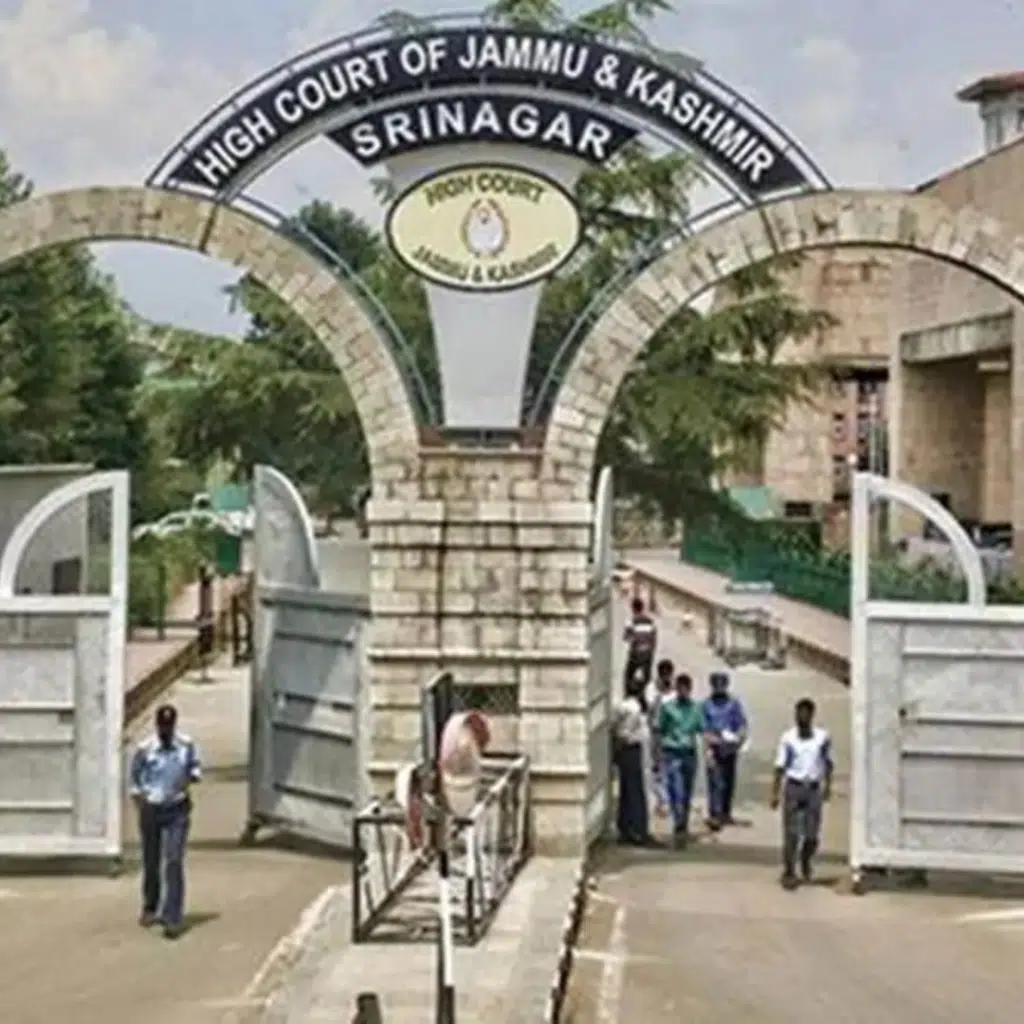
Jammu & Kashmir High Court: A husband slapping his wife in public would not be considered an offense under Section 354 IPC that violates a woman’s right to modesty.
Table of Contents
In a recent ruling in Mehboob Ali v. Nisar Fatima, the High Court of Jammu and Kashmir and Ladakh overturned the trial court’s issuance of process against a man for allegedly slapping his wife in public, which is punishable under Section 354 of the Indian Penal Code (IPC) as assault or criminal force to woman with intent to outrage her modesty.
Judge Rajnesh Oswal noted that although the guy was accused of hitting his wife in public, no crime was proven under Section 354 of the IPC. Nonetheless, the Court stated that intentionally causing harm could result in an offense under Section 323 of the IPC.
The husband was presenting a plea to the court contesting the trial court’s issuing of process regarding his wife’s complaint alleging violations of Sections 354 and 323 of the Indian Penal Code.
There were some ongoing marital issues between the husband and wife. The wife alleged that her estranged husband had publicly slapped and hurt her when she appeared at the family court to attend a hearing in a marital dispute.
The husband was charged under Sections 323 and 354 of the IPC in the complaint brought against him in relation to this occurrence. In the end, the husband was served with process in this matter by a trial court, which he then contested before the High Court.
The trial court’s actions were contested on the grounds that, given the facts in the complaint, there was no basis for the trial court to have issued an order for the commission of an offense under Section 354 of the IPC.
The wife’s attorney also acknowledged that the Section 354 IPC offense was not proven, but they stated that the Section 323 IPC offense was still relevant.
Barelaw, an online platform dedicated to delivering comprehensive legal knowledge, proudly presents its exclusive category of case briefs. This section is meticulously crafted to offer insightful analyses of landmark judgments, providing a valuable resource for legal professionals, students, and anyone interested in understanding the intricacies of law. Our case briefs delve deep into pivotal court decisions, exploring the rationale behind each judgment and its impact on the legal landscape.
We understand that navigating the complexities of legal judgments can be challenging. That’s why our case briefs are designed to be both informative and accessible, ensuring that readers gain a clear understanding of the key legal principles involved. Each brief includes a summary of the facts, the legal issue at hand, the court’s reasoning, and the ultimate decision. This structured approach makes it easier for our audience to grasp the nuances of each case.
Our website is a treasure trove of legal wisdom, constantly updated with the latest and most significant cases. Whether you’re a law student seeking to enhance your knowledge, a practicing attorney looking for a quick reference, or simply a curious mind eager to understand the law’s evolution, Barelaw is your go-to destination.
Explore our case briefs and immerse yourself in the world of law. Visit our website now and discover the wealth of legal knowledge at your fingertips. The link is provided below for your convenience and direct access to our expansive legal database
You can access more legal drafts here – https://www.barelaw.in/legal-drafts/