Israel Prepares Response to Iran Attack as October 7 Anniversary Nears
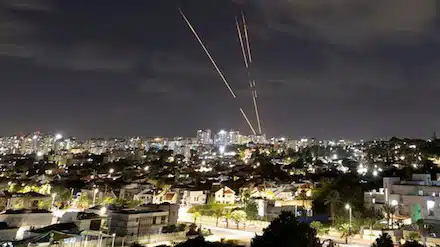
The Israeli military are preparing for an increase in activity in various theatres by the anniversary of the 7 October attacks on Monday, including preparing for a ‘substantial and severe’ response to Iran in response to the ballistic missile attack on Israel last week.
Admonitions of an immediate Israeli counterattack on Iran emerged while the French President Emmanuel Macron demanded an international ban on weapons supply to Israel for their use in Gaza, more than 41,000 Palestinians are said to have been killed by Israel in its one year attack on Gaza.
“I believe that today the main goal is to go back to the political process, to stop providing weapons to fight in Gaza,” Macron said at the France Inter radio station, noting that France does not supply weapons to Israel.
Macron made the remarks as the Israel Defense Forces said a major strike on Iran was imminent, while Israel attacked targets in Lebanon, Syria, and Gaza on Saturday.
“The IDF [Israeli military] is preparing a response to the unprecedented and unlawful Iranian attack on Israeli civilians and Israel,” the military official said on condition of anonymity since he was not authorized to discuss the matter with the media.
As Israel threatened retaliation for Tuesday’s Iranian missile attack on or close to several Israeli bases, President Joe Biden warned against hitting Iranian oil targets, a day after saying Washington was ‘considering’ such action.
“If I were in their shoes, I would be considering the other options than to attack oil fields,” Biden said in a rare appearance at White House daily briefing. The Biden administration has already indicated that it will not support an Israeli operation against Iran’s nuclear programme.
In the middle of the escalating conflict, rumors were being cemented that a raid on Beirut’s southern suburbs had eliminated Hashem Safieddine, who was expected to stand in for Nasrallah after his death. Lebanese security sources said Safieddine has not been seen or heard from since Friday.
There are reports that Safieddine and his aides and Iranian advisers were killed in a powerful strike that has made access to the bodies impossible. The I.D.F. said it had targeted Hezbollah’s intelligence headquarters but did not state who was there at the time of the strike.
The conflict occurs just days before Israel is to observe the one-year anniversary of the 7 October Hamas attack which precipitated the current conflict in Gaza, which has now spread to Lebanon and threatens the stability of the entire region.
Israel’s president, Isaac Herzog, will conduct a memorial service in Sderot one of the towns that received the brunt of the attack from the Hamas militants, with the anniversary worrying many that there will be more attacks carried out on Israel citizens.
The Israeli military said on Saturday it was also ordering Palestinian civilians in some areas of the Gaza Strip, including Nuseirat and Bureij, where large encampments of internally displaced people are located, to leave, stating that the IDF would act with “great force” against Hamas in these areas.
Israeli aircraft also increased sorties over the weekend in southern Lebanon which its ground troops moved into earlier this week.
Lebanon’s Hezbollah said it was preventing Israeli forces from advancing into the southern border town of Odaisseh, with fighting continuing.
Hezbollah launched more rockets into northern Israel with hits in two buildings of Karmiel and near Acre and reports of deaths in an impact on a residential building in the Israeli-Arab village of Deir al-Asad.
Israel, whose air and missile strikes on Beirut and other cities have continued since Thursday, has said that its ground forces are attacking only villages near the border and has left open the question of how long the conflict will last.
It says that the operation is to facilitate the return of tens of thousands of its citizens who fled from the northern part of the country due to the bombardments by Hezbollah that started on October 8, 2023.
Recent days have seen a sharp increase in hostilities and the most notable Israeli raids on Hezbollah infrastructure across Lebanon, with ground forces conducting operations near the border, thus turning a year-long conflict into a full scale war.
In the first reported Israeli attack on the northern Tripoli area in the current round of the conflict, a Hamas spokesman said that “Zionist bombardment” of the Beddawi refugee camp killed commander Saeed Atallah Ali and his wife and two daughters on Saturday.
As the situation worsened across the region, Iran’s foreign minister Abbas Araghchi called for ceasefires in Gaza and Lebanon on Saturday.
“The most important issue today is the ceasefire, especially in Lebanon and in Gaza,” he said to journalists. “There are activities in this regard, there have been dialogues that we would like to achieve this.”