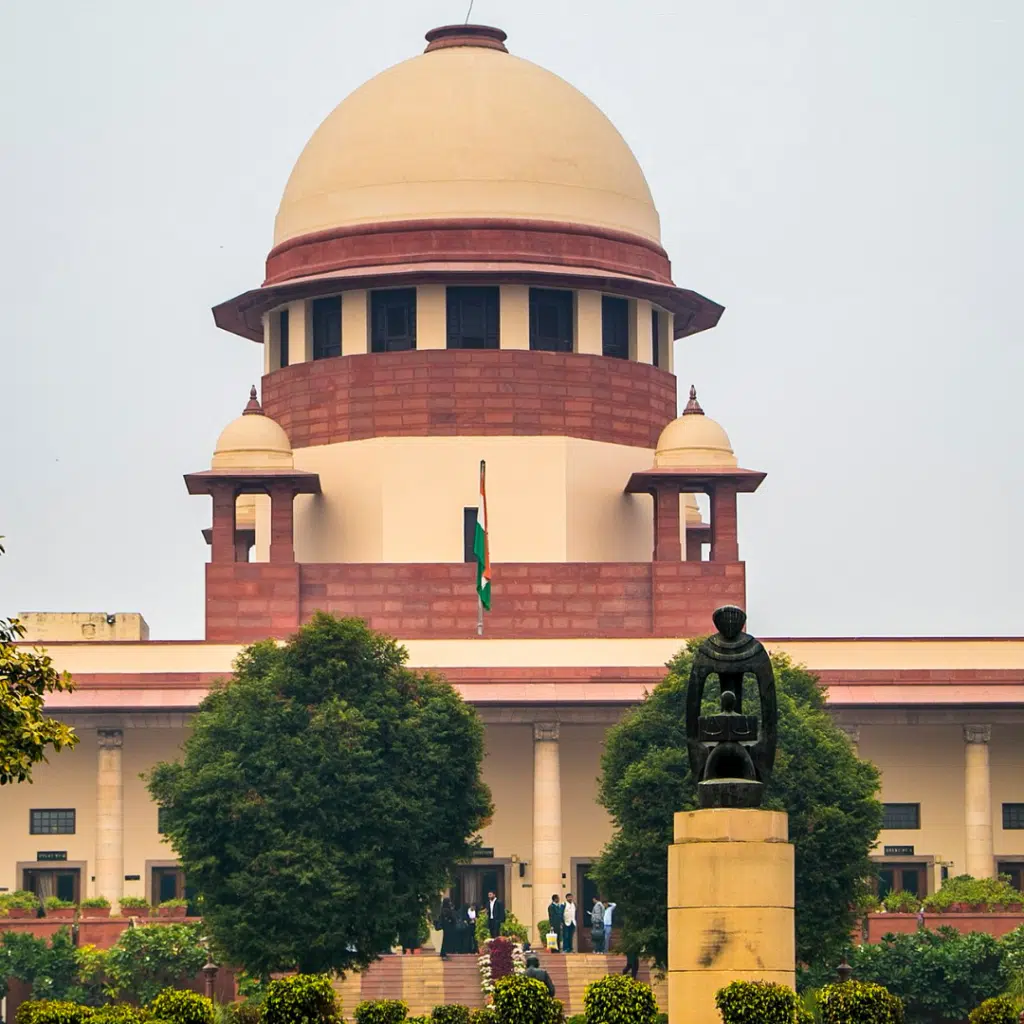
India Supreme Court Ends Immunity for Lawmakers Involved in Bribery
Table of Contents
The India Supreme Court has overturned the protection that had previously been accorded to state legislatures and members of Parliament who used bribery to sway their votes or statements in legislative chambers. This is a historic ruling. A seven-judge panel chaired by Chief Justice of India DY Chandrachud gave the decision, which reverses the precedent set by the P.V. Narasimha Rao v. State (CBI/SPE) case, which had protected legislators from prosecution in similar cases.
The bench—Judges A S Bopanna, M M Sundresh, P S Narasimha, J B Pardiwala, Sanjay Kumar, and Manoj Misra—said that parliamentary privilege does not apply to bribery. The ruling is a substantial change from the 1998 ruling, in which five judges, majority of whom cited the privileges afforded by Articles 105(2) and 194(2) of the Indian Constitution, had decided that politicians engaged in bribing should be allowed immunity.
The powers and privileges of Members of Parliament (MPs) and Members of Legislative Assembly (MLAs) in the parliamentary and legislative assembly settings are outlined in Articles 105 and 194 of the Constitution. Lawmakers were granted legal protection under these provisions, which had previously protected them from prosecution. Chief Justice Chandrachud, however, underlined the negative effects of corruption on India’s parliamentary democracy, emphasizing how it erodes the fundamental ideas of responsiveness, accountability, and representation.
Given that India is preparing for its May national elections, the ruling is especially important. The ruling demonstrates the judiciary’s dedication to maintaining the democratic process’ integrity and guaranteeing elected officials’ accountability.
In conclusion
the decision made by the India Supreme Court to remove the immunity of legislators who have engaged in bribery is a major step in the direction of promoting accountability and openness in the nation’s legislative institutions. The judiciary stresses the value of moral behavior among elected officials and reiterates its role as a defender of democratic values by contesting the idea of parliamentary privilege in cases of corruption.
FAQ
Q1: Which precedent did the Supreme Court’s ruling overturn?
A1: The P.V. Narasimha Rao v. State (CBI/SPE) case, which had given immunity to legislators engaged in bribery within legislative settings, was overruled by the Supreme Court.
Q2: How does this ruling relate to Articles 105 and 194 of the Indian Constitution?
A2: The powers and privileges of members of Parliament (MPs) and the Legislative Assembly (MLAs) are outlined in Articles 105 and 194, which also protect legislators from prosecution in bribery-related matters.
Q3: How does this ruling affect democracy in India?
A3: By holding elected officials accountable for their acts, the decision demonstrates the judiciary’s dedication to maintaining the integrity of the democratic process and promoting openness and public trust.
Barelaw, an online platform dedicated to delivering comprehensive legal knowledge, proudly presents its exclusive category of case briefs. This section is meticulously crafted to offer insightful analyses of landmark judgments, providing a valuable resource for legal professionals, students, and anyone interested in understanding the intricacies of law. Our case briefs delve deep into pivotal court decisions, exploring the rationale behind each judgment and its impact on the legal landscape.
We understand that navigating the complexities of legal judgments can be challenging. That’s why our case briefs are designed to be both informative and accessible, ensuring that readers gain a clear understanding of the key legal principles involved. Each brief includes a summary of the facts, the legal issue at hand, the court’s reasoning, and the ultimate decision. This structured approach makes it easier for our audience to grasp the nuances of each case.
Our website is a treasure trove of legal wisdom, constantly updated with the latest and most significant cases. Whether you’re a law student seeking to enhance your knowledge, a practicing attorney looking for a quick reference, or simply a curious mind eager to understand the law’s evolution, Barelaw is your go-to destination
Explore our case briefs and immerse yourself in the world of law. Visit our website now and discover the wealth of legal knowledge at your fingertips. The link is provided below for your convenience and direct access to our expansive legal database
You can access more legal drafts here – https://www.barelaw.in/legal-drafts/