
Table of Contents
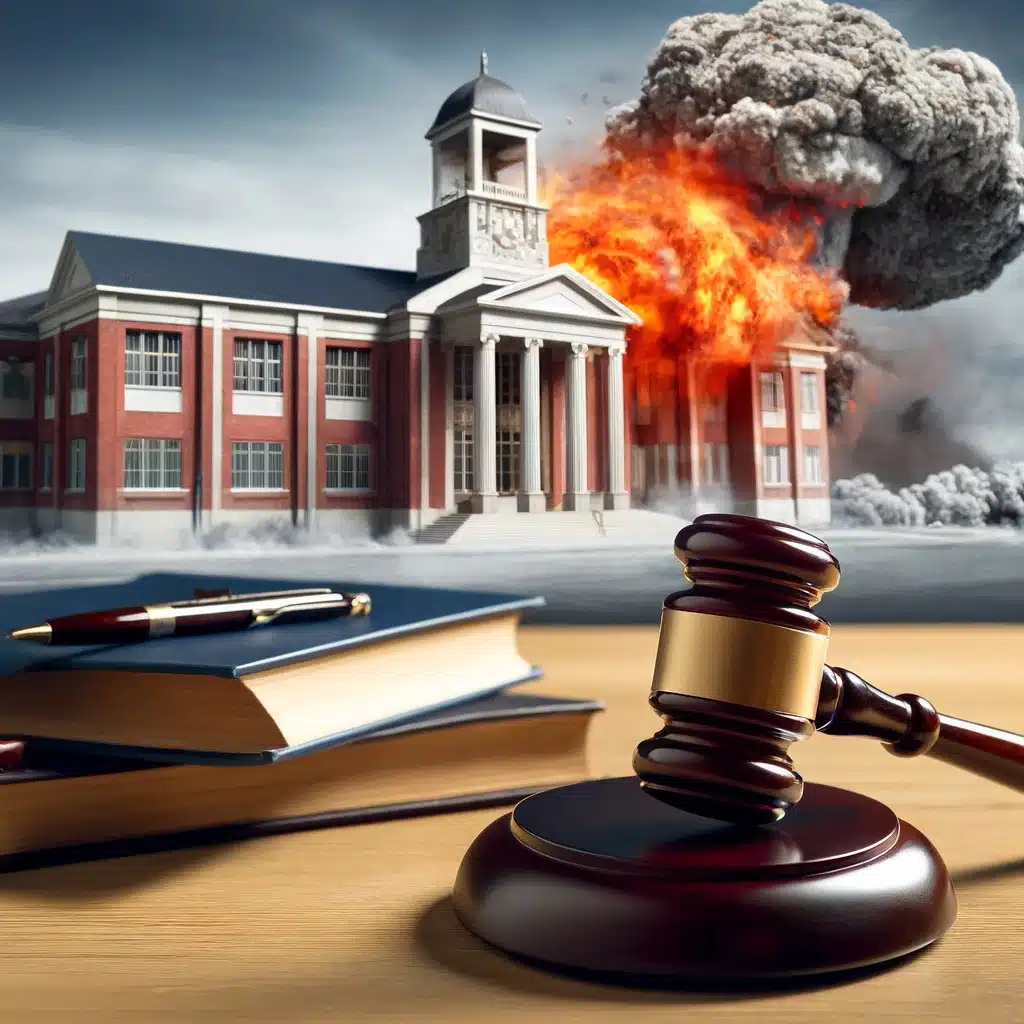
If there is a fire or explosion in your school and you get injured, who will be responsible for it?
The unfortunate event thatbefell the institution is fundamental in raising legal issues that include but not limited to; who is liable for the safety of school going children in cases of a neartragedy like blast? Do victims have a legal right to sue? In this article, legal aspects of liability in such a case, the roles of both a school and government in such an occurrence and the possible legal redress options for the victims of such an event are examined.
Legal Responsibility: School’s Duty of Care
Educational facilities bear legal responsibility for their users who include students. This duty mandates the school to offer protection to scholar, teacher, and anybody learning or working within a school. If this obligation is not met then the school faces the legal consequences of the children who suffer harm or get injured.
To establish that a school was negligent, certain conditions must be proven:
- Duty of Care: The school had a legal responsibility to protect students.
- Breach of Duty: The school could not put up proper measures to guard the safety of the children, or to make sure the compound was safe, or to have proper measures to deal with any disaster that might occur.
- Causation: They get to point where they breached their duties principally causing injuries or death. For instance, they would have questions if the school did not lockdoors or did not inform the police that there are people planning on harming others.
- Damages: A tangible loss—bodily harm or an emotional/mental upset/FINANCIAL LOSS—was inflicted on the injured party because of the school’s negligence.
Schools can be sued for negligence especially in areas such as poor carrying out of security, lack of crucial technologies such as alerts, poor functioning of security cameras, or lack of employees who are prepared to handle a security threat.
Government’s Responsibility for Public Safety
Apart from the tasks of the school, the government shares considerable responsibilities for the functionality of public safety, especially in the case of external hazards, including bombings, acts of terrorisms or the explosions which resulted from the offences.
Under certain legal doctrines, the government can be held accountable for failing to prevent foreseeable harm if it neglected to:
- Provide sufficient law enforcement or security in vulnerable public areas, including school zones.
- Further, omitted to promptly investigate threats or otherwise, act on information that could have prevented the explosion.
- All public places including the street, especially close to learning institutions, should be safe for various perils, for example unattended packages that we might think are harmless but could be a risk.
In such cases the government may be sued if it can be demonstrated that there was reckless disregard of the basics of public safety. Compensation through state/ government compensation programs which seeks to offer monetary help to victims or their families in the occurrences of criminal conduct or omission related to public security may apply.
Compensation for Victims: Legal Recourse
Those affected in such cases may file for compensation through channel of law. The compensation could include reimbursement for the cost of treatment, loss of wages, emotional distress or actual injuries: other forms of negligence could be wrongful deaths.
- Personal Injury Lawsuits: Thus, if the student or staff member is injured in the blast, he or she can bring a personal injury action against those parties who can be held legally liable for the occurrence (e.g., the school, governmental or other). These may be past, current and future losses such as the costs incurred in getting medical treatment, salary lost, physical and emotional suffering, and cost of further care.
- Wrongful Death Claims: If explosion results to death, the family of the deceased is at liberty to launch a wrongful death suit. Damages that may be included include funeral costs, loss of earnings, loss of consortium and grief and suffering.
- Government Compensation Programs: If the government is at fault, or if the incident borders on a crime of the state, the victim or family may yet be eligible for a government fund for terrorism or violent crime victims compensation.
Proving Negligence: A Step-by-Step Process
To establish negligence either on the part of the school or the government a considerable diligence and procedure is needed. Legal professionals will follow these key steps:
- Collecting Evidence: This may include CCTV footage, eyewitness testimonies, police reports, and forensic investigations to establish the cause of the blast and any security lapses.
- Filing a Lawsuit: It is the responsibility of the injured party or, in their absence, their family to begin the court case before the statute of limitations. It is advisable to engage a skilled attorney to ensure the timely and accurate filing of the suit.
- Expert Testimony: Legal cases may involve expert witnesses, including security experts, forensic scientists, and medical professionals, to establish how the incident occurred and whether negligence played a role.
- Settlement or Trial: Almost all the cases involve compromise where the parties involved come to an agreement before going to trial. Nevertheless, should the plaintiff and defendant fail to agree on compensation, the case may move to the trial also known as the court trial; in this trial a judge or the jury will decide on a mix of the liability and compensation.
FAQs: The Liability for School Blast
1. Who is legally responsible if a blast occurs near a school and students are injured? Trespass involves negligence and asking whether the school owed a duty of care and discharge of that duty as well as whether the government breached the duty of care it owed to the public in general. This type of failure might mean that either party was legally liable for injury or fatalities in the performance of these duties.
2. Can a school be sued if a blast happens just outside its premises? Yes, so long as that school has not properly evolved the adequate precautions to safeguard the students, or has not adequately address security problems and appropriate evacuations where required or necessary. More specifically the exact nature and extend of the incurred liability will depend on the occurrence of the event.
3. Is the government responsible for compensating victims of a blast outside a school? Metals & Engineering can sue the government for negligence if it failed to put enough measures in place to guarantee public safety especially where the blast is attributed to criminal incidences or terrorism. Sometimes, the victims can be compensated by government assistance.
4. What type of compensation can victims or their families expect? It may include lost wages, costs of treatment, pain and suffering, and where a loved one dies because of the tortfeasor’s negligence, burial expenses and loss of potential income. The exact amount of compensation payable will depend on the nature of the injury or loss which has occurred.
5. How can victims prove that the school or government was negligent? Negligence entail collection of evidence from bystanders,security cameras, experts and any other form of documentary proof indicating that the negligent party did not exercise reasonable care and taking of precautions.
Conclusion
As is usually the case when a blast happens in the vicinity of a school, there can be a flurry of legal responsibility between the school and the government. In general schools need to provide safety to students and their premises while the government is to make public safe for citizens. Complainants or their near ones can seek recovery in civil lawsuits or through torts with the support of an accident attorney when they are injured or when their loved ones are killed in an accident. As for such cases, legal help is indispensable to enable the victim to receive a reimbursement they are owed.