Human Rights Watch Accuses Israel of War Crimes in Gaza
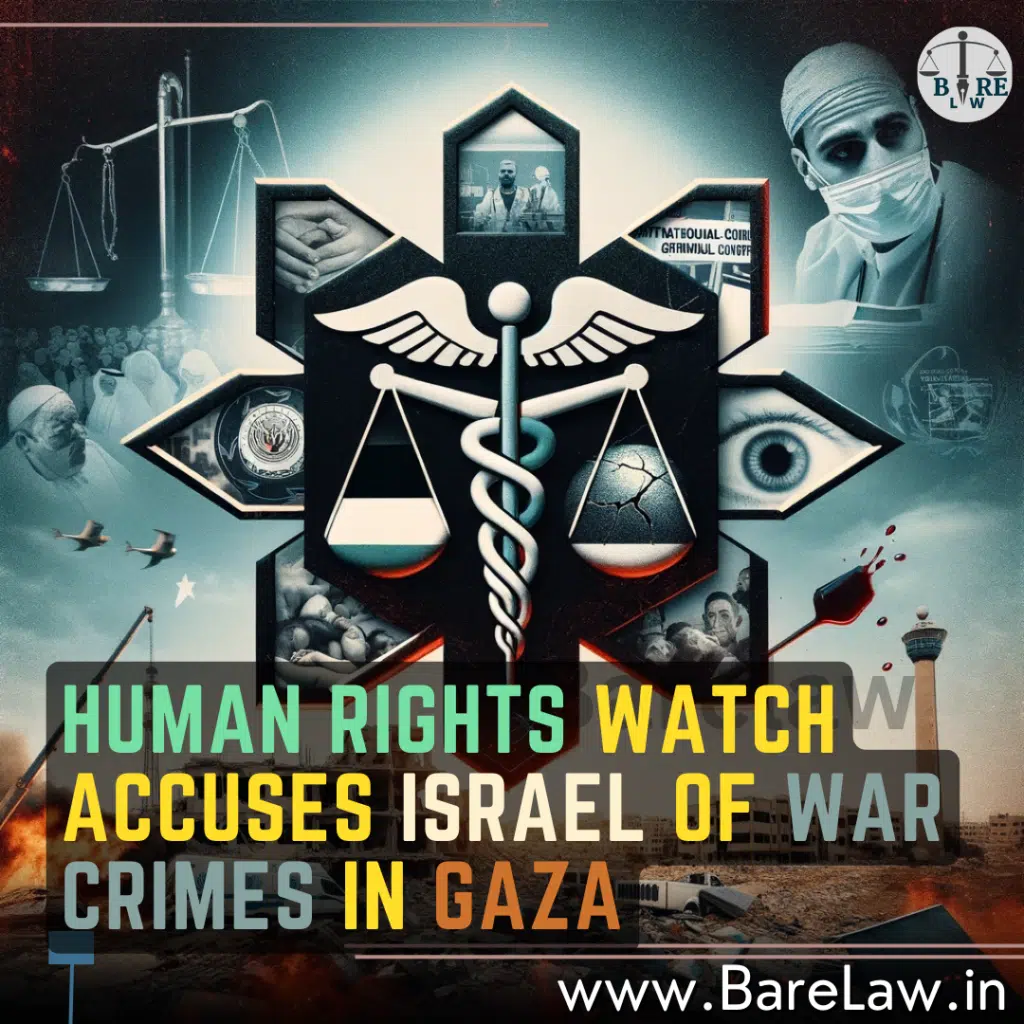
Human Rights Watch (HRW) has issued a sobering report, accusing Israel of perpetrating repeated and unlawful attacks on healthcare facilities, personnel, and transport in Gaza—actions that may constitute war crimes. Amid the chaos of conflict, it appears the fabric of Gaza’s healthcare system is being torn apart, a situation that demands immediate international attention.
The report, released on Tuesday, paints a bleak picture: Indonesian Hospital, al-Ahli Hospital, the International Eye Care Center, the Turkish-Palestinian Friendship Hospital, and the al-Quds Hospital—centers of healing and hope—have become targets in the ongoing conflict between Israel and Hamas. HRW has carried out a meticulous investigation, drawing on testimonies from displaced individuals and healthcare workers, as well as corroborating open-source data, such as satellite imagery and World Health Organization (WHO) databases. An Israeli airstrike near Al-Shifa Hospital, which resulted in the tragic loss of 15 lives, stands as a stark example of the escalating violence against medical establishments.
The report highlights that these strikes are not isolated incidents but part of a broader and more devastating pattern. The cumulative effect of Israel’s military actions and its stringent blockade—limiting essentials like humanitarian aid, water, and fuel—is crippling Gaza’s healthcare capacity. This has prompted the UN Office for the Coordination of Humanitarian Affairs (OCHA) and WHO to warn that Gaza’s hospitals are teetering on the edge of collapse.
A. Kayum Ahmed, a special adviser at HRW, has stated unequivocally that these attacks have shattered Gaza’s medical infrastructure, exacerbating the suffering of hundreds and imperiling patients who rely on these critical services.
International humanitarian law is clear in its stipulation that healthcare facilities and workers should be shielded from military operations. An attack on such facilities can only be justified under international law if the facility is being used to commit an “act harmful to the enemy,” and even then, only under strict conditions, including advance warning.
Israel, for its part, defends its actions by claiming that Hamas is conducting military operations from within Gaza’s hospitals, effectively using civilian patients as human shields. A recent raid on Al-Shifa Hospital by Israeli forces has been justified with claims of Hamas using the facility as a command center. Hamas has refuted these allegations, while the international community has reacted with concern for the wellbeing of patients and civilians in the vicinity.
The gravity of these allegations is underscored by the staggering toll of the current conflict. With over 11,000 Palestinians and 1,200 Israelis killed, the majority being civilians, the call from UN Secretary-General António Guterres for a humanitarian ceasefire rings with urgency. The Secretary-General’s demands are unambiguous: the immediate release of hostages, the safeguarding of civilians and civil infrastructure, and unimpeded access to deliver humanitarian aid.
The HRW report serves as a call to action for the Independent International Commission of Inquiry on the Occupied Palestinian Territory and the International Criminal Court to initiate formal investigations. This plea for accountability echoes around the world, reverberating through the halls of power and the chambers of justice.
As the war surpasses its fortieth day, the international community’s response to these allegations may well define the tenor of international law and the future of humanitarian justice in conflict zones.