
Synopsis
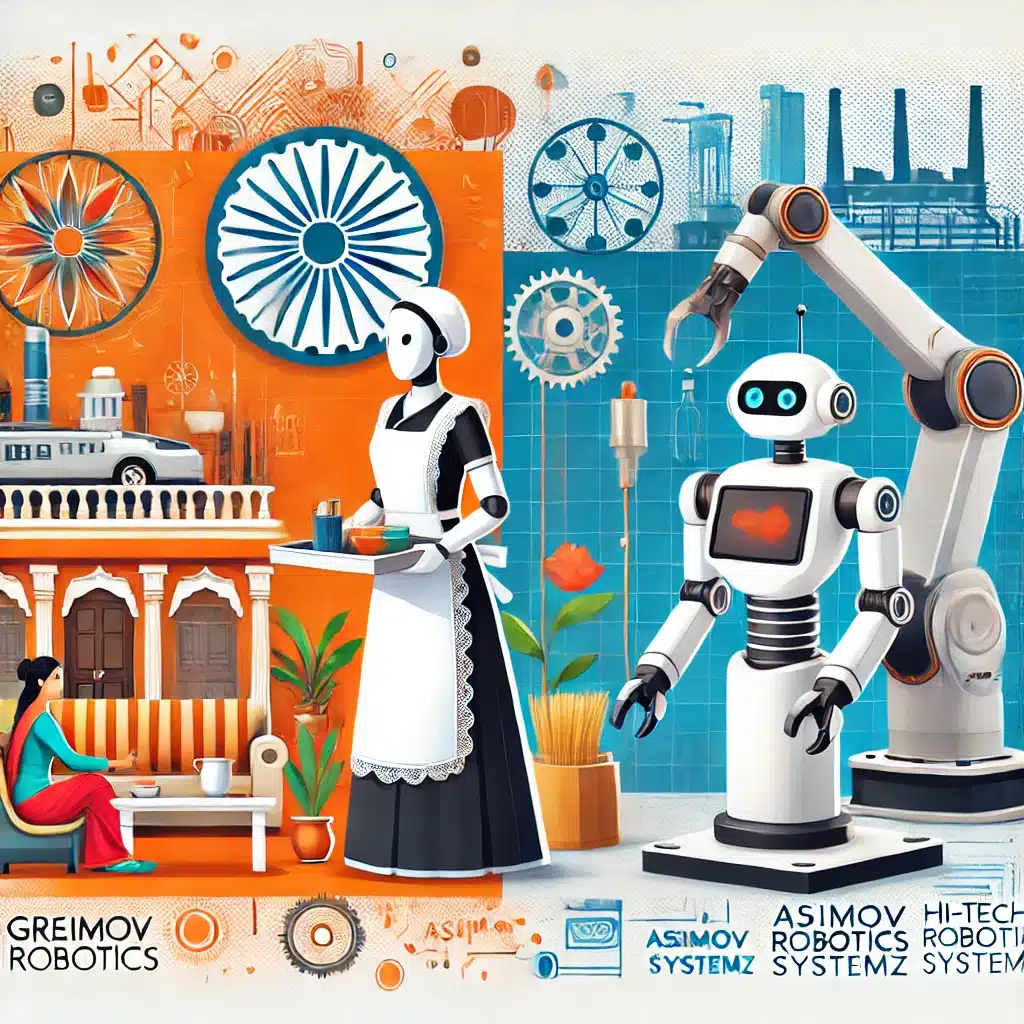
Robotics Systemz driving innovation in logistics, healthcare, and manufacturing, points to a future where robots will become central to daily life and industry efficiency. Supported by government initiatives like "Digital India" and "Make in India," these advancements reflect India's rapid progress toward a more automated and technologically integrated society.
Introducing robotic housemaids to Indian Homes can lead to huge changes in daily life. With today’s technology, robots are becoming more adaptable, user-friendly, and affordable. Let us know how much robotic assistance can make a practical societal impact and be feasible, considering we are an emerging market.
How Robots Will Enter Your House
How Robotic Housemaids Could Transform Indian Households
- Efficiency and Consistency in Household Chores: Robotic maids may be programmed to handle repetitive and time-consuming jobs, like cleaning, preparing the cooking, or laundry, without anyone consistently erring. This would be particularly beneficial for dual-income families, the elderly, and busy individuals, such as the family, who can enjoy this free time and make it useful. For example, robots can work tirelessly, or as you wish, without reminders or necessary adjustments that most human workers will demand.
- Addressing Labor Shortages and Household Autonomy: Robotic maids may offer promise given the availability and wage challenges faced by domestic help: lack of dependable domestic help can be as great a problem in urban areas as it can be a solution. Additionally, robots can be programmed to conduct their chores at specified periods and preferences, ensuring greater house freedom in chore management.
- Privacy and Security Concerns: Robotic maids could be used by households that don’t want strangers (that is, human staff) to come into private spaces regularly. Programming robots enables them to perform tasks without the need for monitoring or supervision, thereby diminishing security worries. This would likely be a very appealing affordance in large cities where privacy is a real issue. Demand, eliminating the need for reminders or adjustments that human workers may require.
Potential Challenges and Feasibility
- Affordability and Access to Technology: Affordability will be a big issue for many Indian households. However, advanced robotic solutions can be difficult and, therefore, expensive, and this could restrict initial adoption to wealthier households. Nevertheless, especially as technology advances, robotics costs will go down, and they may be affordable for middle-income relatives in the future. Delivering affordable models of robots with basic functions may be possible as an alternative to costly robots with high-end features.
- Cultural Adaptation: In India, domestic family ties can be very close as domestic workers often work for the same families and also sometimes perform jobs that are bigger than their roles, for example, taking care of children, elderly family members or even pets. Robots currently lack the nuanced understanding and adaptive responses that humans do, so replicating this flexibility and emotional intelligence would be challenging.
- Technological Limitations and Reliability: Tasks such as caregiving may limit robotic maids’ ability to perform complex tasks that require fine motor skills, adaptability, and judgment (Fig. 2). Further technical malfunctions could cause disruptions, and households would have to either repair or replace malfunctioning robots, which can be annoying and costly.
- Energy and Infrastructure Requirements: However, robotic housemaids will need a stable power supply, internet connectivity, and storage space, which could prove an issue for households with insufficient infrastructure or constant power cuts. Battery-powered robots may have limited operating hours, requiring frequent charging or multiple units to complete a continuous task.
Long-term Feasibility and Future Prospects
The journey to the adoption of the robots in Indian households is a slow one, but the robots could eventually lead to a mix of automation and efficiency. But as robots continue to improve their ability to be more adaptive, more affordable and more reliable, they may eventually supplant or compete with human domestic help in urbanised and technologically advanced locations. Nevertheless, meeting the necessary degree of cultural acceptance, that of affordability and that of multifunctionality will be necessary for household robots to be a sustainability solution for Indian society.
To wrap this, while there is good potential of robotic household help to impact Indian households in a positive way, they will not be fully adopted in the Indian households because of technological progress, cultural adaption and economies of scale.
Robots and AI are growing in India as more major companies and startups are innovating for a future that relies on advanced robotics. Here are three notable Indian companies and the steps they’re taking toward building a world with robots:
1. GreyOrange
- About the Company: Indian robotics company GreyOrange is a leader in AI driven automation and robotic solutions for warehousing and logistics. It was founded in 2011 and now operates across the globe, major markets to include the United States and Japan.
- Steps Toward Robotics: GreyOrange has created advanced robots, like ‘Butler’ which is a system of robots that assists with warehouse operations revolving around autonomous transport of items, and inventory management. This is because the company’s robots serve to automate goods in warehouse efficiency by moving, sorting, and picking goods using the robots to make the supply chains faster and responsive. AI algorithms in GreyOrange’s make real time decision making possible, reducing dependency on human labor for routine tasks in different industries
2. Asimov Robotics
- About the Company: Asimov Robotics is based in Kerala making robots for Healthcare, Service and Educational sectors. It wanted to build robots to do things in complex environments and interact well with humans.
- Steps Toward Robotics: They are one of the many prominent innovators — a robot designed to stop the spread of COVID by giving out information on hygiene, providing sanitizer, and even checking temperaturesworth. Additionally, Asimov Robotics outsources healthcare to help care for the elderly and patients through developing robots with automation. Regionally a pioneer in making India more robotic friendly, their focus on social and healthcare robotics is what sets it ahead in Bangladesh.
3. Hi-Tech Robotics Systemz
- About the Company: Based in Gurgaon, Hi-Tech Robotics Systemz is a pioneer in autonomous and AI driven industrial robotics on autonomous mobile robots (AMR) and autonomous guided vehicles (AGV)s for manufacturing and warehousing.
- Steps Toward Robotics: For warehouse automation Hi Tech Robotics provides ‘Novus’, ‘Mira’ on inventory management. They make manufacturing plant operations faster by having these robots moving materials across large facilities autonomously. The robots can perform their tasks without human intervention, thanks to “Robot Operating System” which is higher level combination of machine learning developed by the company. Industry 4.0 compatible solutions from Hi-Tech, India’s moves towards an automated future.
India’s Overall Progress in Robotics
Government initiatives such as ‘Digital India’ and ‘Make in India’ have helped create an environment around Indian robotics landscape for highly tech driven startups to innovate. Also, IITs and research centers are playing a role by going along with robotics companies for R&D. As India continues to invest and has a supportive policy environment, she is making progress going forward to a future where robotics will be one of the main players in healthcare, manufacturing, logistics, and service industries.
FAQs
1. Which Indian companies are leading in robotics?
Companies like GreyOrange, Asimov Robotics, and Hi-Tech Robotics Systemz are at the forefront, creating robots for logistics, healthcare, and industrial applications. They specialize in automation solutions that enhance efficiency and reduce human dependency in critical sectors.
2. What are the primary sectors in India benefitting from robotics?
Robotics is transforming sectors like logistics, warehousing, healthcare, and manufacturing in India. Robotic solutions improve efficiency in operations like material handling, patient assistance, and inventory management, and are becoming integral to the advancement of these industries.
3. How are Indian companies supporting healthcare through robotics?
Companies like Asimov Robotics develop robots for healthcare that assist with elder care, patient services, and infection prevention, especially useful in hospital settings where tasks can be automated for safety and efficiency.
4. What role do government initiatives play in advancing robotics in India?
Initiatives like “Digital India” and “Make in India” support robotics innovation by providing funding, resources, and a policy framework that encourages tech startups and R&D in AI and robotics, aiding companies to scale operations and develop advanced technology domestically.