
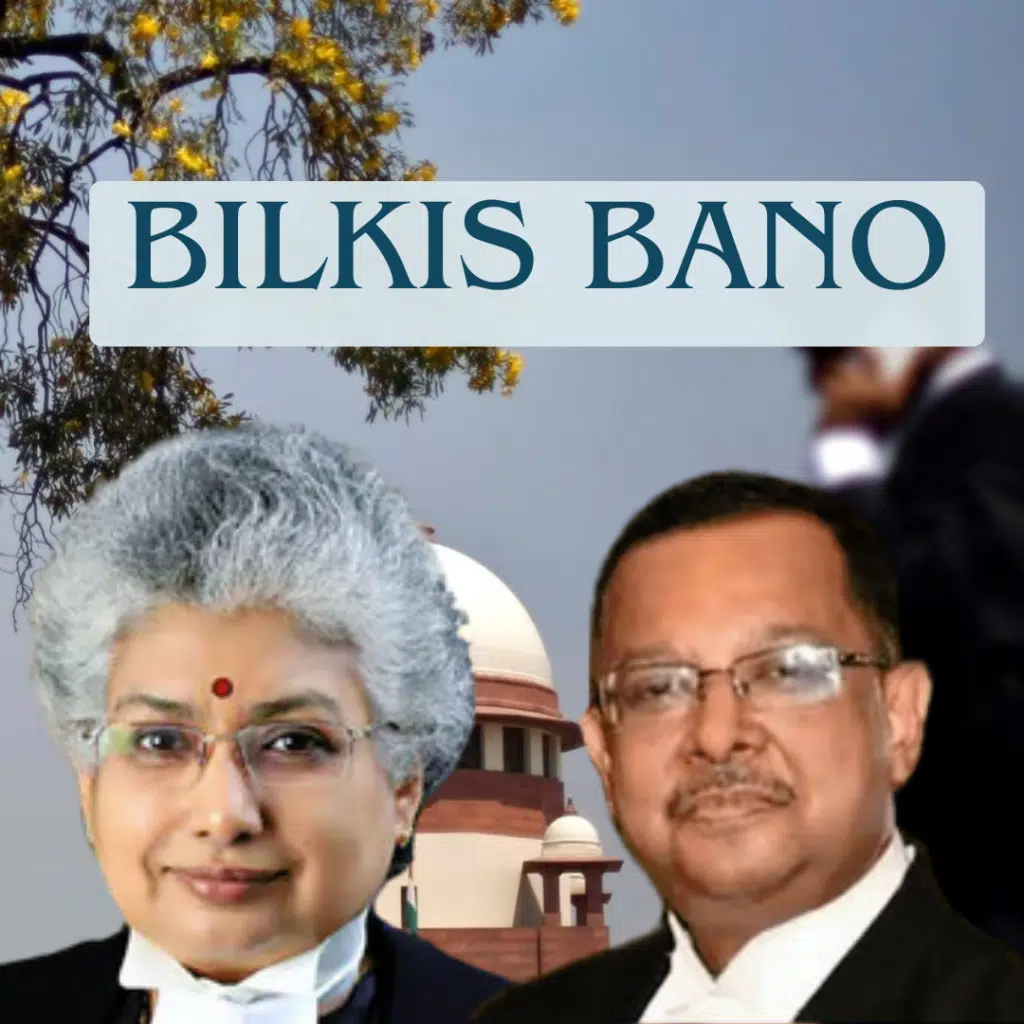
Supreme Court Exposes Gujarat Government’s Complicity in Bilkis Bano Case
In a significant development in the Bilkis Bano gang rape case, the Supreme Court of India has made a startling revelation. The bench comprising Justices BV Nagarathna and Ujjal Bhuyan has accused the Gujarat government of being “complicit and acting in tandem” with a convict who sought premature release. This assertion adds a disturbing layer to the already complex judicial proceedings surrounding this high-profile case.
The Bilkis Bano case, stemming from the horrific events of the 2002 Gujarat riots, has long been a touchstone for discussions about communal violence and the judicial system in India. The recent Supreme Court statement sheds light on the Gujarat government’s questionable conduct in handling the convicts’ release. The Court pointed out that the Gujarat government should have challenged the Supreme Court’s May 2022 judgment, which declared the State competent to decide the plea for remission. Instead, it seemingly colluded with the convicts, leading to a miscarriage of justice.
Justice Nagarathna’s bench emphasized that the Gujarat government’s actions were not only inappropriate but also usurped the powers of the Maharashtra government. It was under Maharashtra’s jurisdiction to pass remission orders, as the trial took place in that state. The convict, referred to as respondent no. 3, was accused of surreptitiously filing the plea before the Supreme Court and misleading it by suppressing critical facts.
The Supreme Court’s critique extends to the Gujarat government’s failure to file a review petition, seeking correction of the May 13, 2022 ruling. This omission is significant, as the Court noted that the law on premature release requires the appropriate government to seek the court’s permission before passing remission orders. The implication is clear: The Gujarat government’s decision to allow premature release was not only a procedural error but a deliberate act that defied legal norms.
The bench also found that the convict played a fraudulent role in seeking premature release. He had not disclosed that his plea for a decision by the Gujarat government was dismissed by the Gujarat High Court. Instead of appealing to the Supreme Court, he approached the Maharashtra government for remission and, upon receiving a negative response, moved the Supreme Court.
The Court’s ruling is a crucial reminder of the importance of transparency and adherence to legal procedures in the judicial system. It highlights the dangers of political interference in judicial matters and underscores the need for checks and balances to prevent such occurrences.
This ruling is not just a legal rebuke but a moral one. It sends a strong message about the integrity of the Indian judicial system and its commitment to ensuring justice, particularly in cases involving heinous crimes like the Bilkis Bano case. The Supreme Court’s stand reiterates that the rule of law must prevail over political manoeuvring and that justice should be served without fear or favor.
In conclusion, the Supreme Court’s exposure of the Gujarat government’s complicity in the Bilkis Bano case is a watershed moment. It reaffirms the judiciary’s role as a guardian of justice and a bulwark against the misuse of power, setting a precedent for future cases where the integrity of the judicial process is at stake.
Barelaw, an online platform dedicated to delivering comprehensive legal knowledge, proudly presents its exclusive category of case briefs. This section is meticulously crafted to offer insightful analyses of landmark judgments, providing a valuable resource for legal professionals, students, and anyone interested in understanding the intricacies of law. Our case briefs delve deep into pivotal court decisions, exploring the rationale behind each judgment and its impact on the legal landscape.
We understand that navigating the complexities of legal judgments can be challenging. That’s why our case briefs are designed to be both informative and accessible, ensuring that readers gain a clear understanding of the key legal principles involved. Each brief includes a summary of the facts, the legal issue at hand, the court’s reasoning, and the ultimate decision. This structured approach makes it easier for our audience to grasp the nuances of each case.
Our website is a treasure trove of legal wisdom, constantly updated with the latest and most significant cases. Whether you’re a law student seeking to enhance your knowledge, a practicing attorney looking for a quick reference, or simply a curious mind eager to understand the law’s evolution, Barelaw is your go-to destination.
Explore our case briefs and immerse yourself in the world of law. Visit our website now and discover the wealth of legal knowledge at your fingertips. The link is provided below for your convenience and direct access to our expansive legal database