
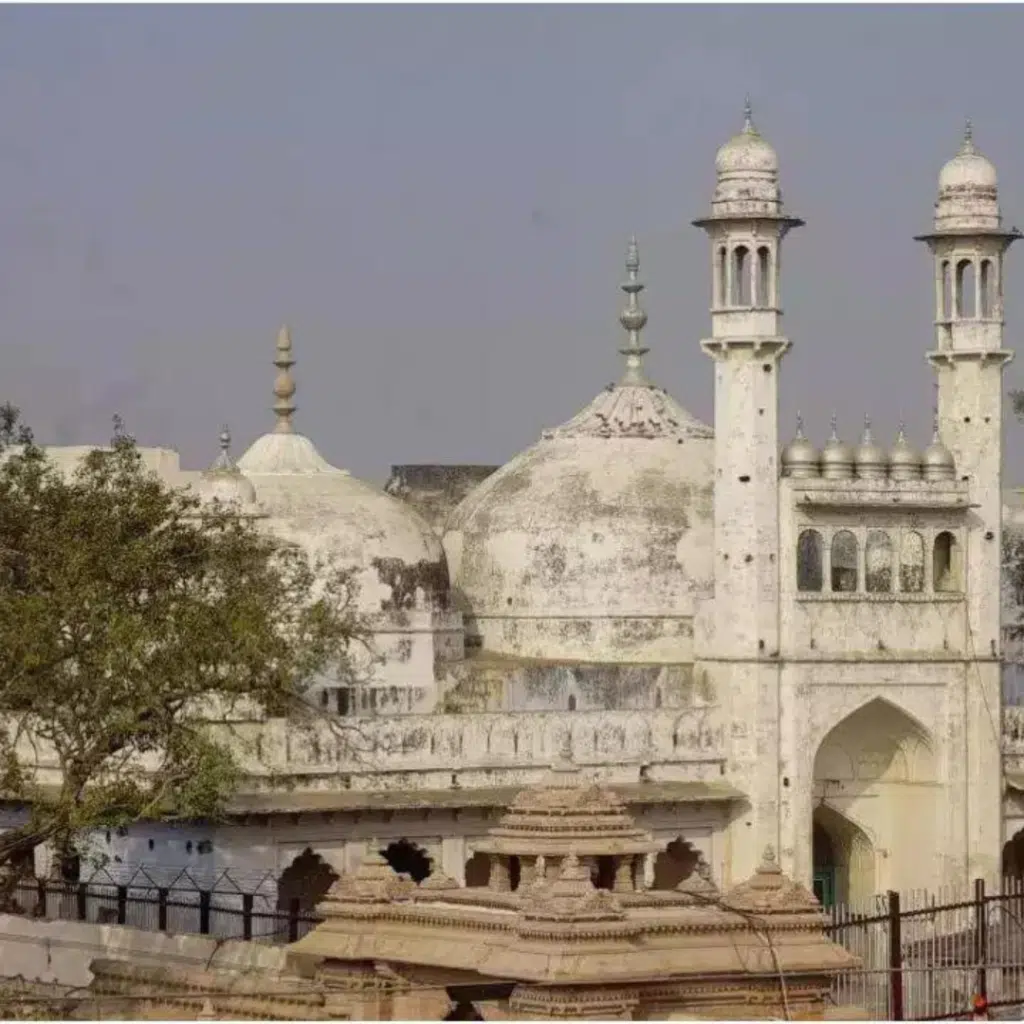
Exploring the Depths of the Gyanvapi Dispute: A Comprehensive Analysis
Table of Contents
Introduction
The Gyanvapi Mosque and Kashi Vishwanath Temple, located in Varanasi, India, are at the heart of a long-standing and intricate dispute that touches upon religious, historical, and legal dimensions. Recently, Hindu parties have intensified the debate by seeking a detailed ASI survey of an alleged Shivling discovered within the mosque’s premises, asserting that modern constructions around it are obscuring its true nature and significance.
Historical Background
The Gyanvapi Mosque stands adjacent to the revered Kashi Vishwanath Temple, a site of immense religious importance to Hindus. The intertwined history of these sites dates back centuries, with claims of the mosque being constructed atop a demolished Hindu temple. This complex history sets the stage for the current legal and cultural contention.
The Recent Application to Supreme Court
In a significant move, Hindu parties have approached the Supreme Court, advocating for an ASI-conducted survey to investigate the nature of the object claimed to be a Shivling. This application underlines the parties’ belief in the need for a scientific examination to uncover the truth behind the contested structure, amidst concerns about modern constructions potentially obscuring historical evidence.
Non-Invasive Surveys and Their Impact
The Supreme Court had previously allowed the use of non-invasive technology for surveying the mosque, excluding the area where the alleged Shivling is located. Non-invasive methods, such as ground-penetrating radar and laser scanning, offer a way to explore beneath the surface without causing damage, providing valuable insights into the site’s archaeological layers.
Modern Constructions and Religious Significance
The Hindu parties argue that the contemporary structures surrounding the alleged Shivling are a deliberate attempt to conceal its features and historical context. This claim raises questions about the preservation of historical sites and the impact of modern constructions on their interpretation and significance.
Legal Proceedings and Court Decisions
The legal journey surrounding the Gyanvapi dispute has seen various turns, with the Allahabad High Court and the Supreme Court playing pivotal roles. The courts’ decisions, balancing the need for scientific investigation with the preservation of religious sentiments and historical integrity, reflect the complexities of adjudicating disputes rooted in deep historical and religious sentiments.
Scientific Investigation and Its Necessity
The call for an ASI survey underscores the importance of a scientific approach in resolving historical disputes. Such investigations can provide objective data, contributing to a more informed and equitable resolution, though they are not without challenges, particularly in contexts where religious beliefs and historical narratives are deeply entwined.
Community Responses and Public Opinion
The Gyanvapi dispute has elicited strong reactions from both Hindu and Muslim communities, reflecting the broader challenges India faces in managing its diverse religious heritage. The perspectives of these communities highlight the broader societal implications of the dispute, extending beyond the immediate legal and historical questions.
Implications of the ASI Report
The ASI’s findings, suggesting the presence of a Hindu temple beneath the mosque, add another layer to the dispute, influencing legal proceedings, public opinion, and inter-community relations. The interpretation and acceptance of these findings remain contentious, reflecting the broader challenges of reconciling historical research with contemporary religious and cultural identities.
The Role of the Judiciary in Religious Disputes
The Indian judiciary has a crucial role in mediating disputes like Gyanvapi, where historical, religious, and legal considerations intersect. The courts’ approach, emphasizing evidence-based adjudication while being sensitive to religious sentiments, exemplifies the delicate balance required in such cases.
Preservation of Cultural Heritage
The Gyanvapi dispute also highlights the broader issue of preserving India’s rich cultural and religious heritage amidst modern development pressures. The challenge lies in safeguarding historical sites as living monuments that continue to hold religious significance while accommodating the needs and sensitivities of diverse communities.
Barelaw, an online platform dedicated to delivering comprehensive legal knowledge, proudly presents its exclusive category of case briefs. This section is meticulously crafted to offer insightful analyses of landmark judgments, providing a valuable resource for legal professionals, students, and anyone interested in understanding the intricacies of law. Our case briefs delve deep into pivotal court decisions, exploring the rationale behind each judgment and its impact on the legal landscape.
We understand that navigating the complexities of legal judgments can be challenging. That’s why our case briefs are designed to be both informative and accessible, ensuring that readers gain a clear understanding of the key legal principles involved. Each brief includes a summary of the facts, the legal issue at hand, the court’s reasoning, and the ultimate decision. This structured approach makes it easier for our audience to grasp the nuances of each case.
Our website is a treasure trove of legal wisdom, constantly updated with the latest and most significant cases. Whether you’re a law student seeking to enhance your knowledge, a practicing attorney looking for a quick reference, or simply a curious mind eager to understand the law’s evolution, Barelaw is your go-to destination.
Explore our case briefs and immerse yourself in the world of law. Visit our website now and discover the wealth of legal knowledge at your fingertips. The link is provided below for your convenience and direct access to our expansive legal database