
Authored By: Karan Gautam
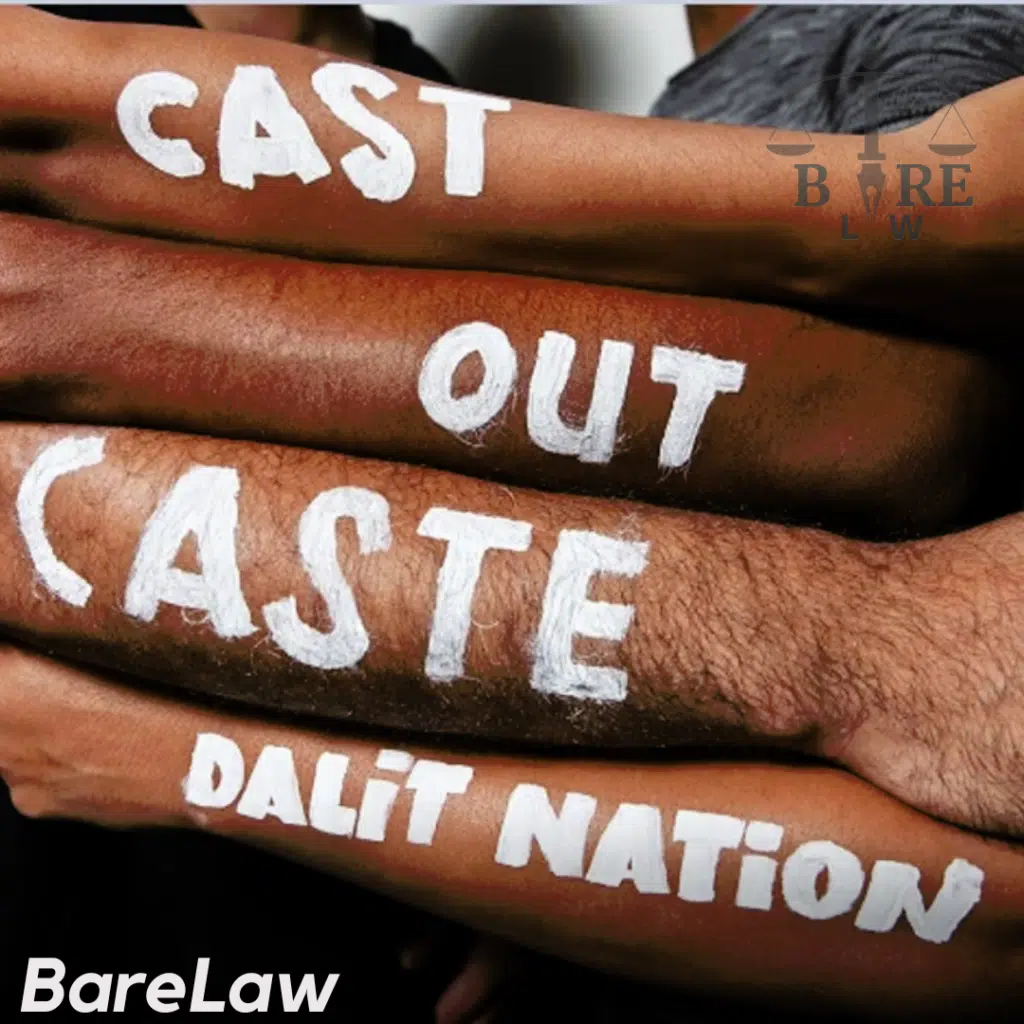
Table of Contents
Existing Caste prejudice
Introduction:
The verified social order, which has been in place from the past can be considered as one of the most important factors to be connected with current contempt. The following article delves into the complex aspects of this social dilemma, illuminating the magnitude and hurdles it poses to the assertion of equality and fairness.
Caste, a rigid social structure, assigned by birth, on which large social differences depend substantially still constrain attempts to create real socio-economic equality in many countries, especially India. Regardless of the fact that law imperors no discrimination and caste bias regarding still in existence and is, in certain aspects of life, exercised even to date. This article discusses caste prejudice from this light and the problems that it is created as well as the fight for a fair society in the future.
1. Historical Underpinnings:
Without the historical comprehension, it is difficult, however, to really grasp how deeply rooted the caste-based discriminations are. Herein the discussion articulates the etiology of Caste-based discrimination and the development of casteism over the course of Indian history.
2. Manifestations in Today’s World:
Social ascendancy, as a result of caste discrimination, is still prevalent, despite the legal provisions there against. The following passage looks at the extent to which caste reverences show up in different sectors that involve education, jobs and social contact.
3. Intersectionality and Multiple Marginalizations:
Caste exclusionism very often shows its religiously-charged roots and other forms of discrimination. It is here when these people from the Venn diagram of caste, gender, and economic status end up with intensified multiplicity of hurdles, thus multiplying the cycle of exclusion.
4. Legal Framework and Its Efficacy:
The existing legal framework on caste discrimination is the starting point of this part and involves an assessment of how successful or how inefficient the framework has been. Subsequently, the area of improvement in the implementation and awareness are discussed as the major two sections.
5. Grassroots Movements and Initiatives:
Focusing on the key roles of ground movements and community-based initiatives here the examples of departments which have successfully defied that caste discrimination and brought about positive changes will be examined.
- Understanding Caste and Prejudice:
Here we will describe the socio-historical background of caste system and draw attention to the contradictory nature of the system. Particularly, it will be revealed that some groups have better opportunities for personal growth and development than others, and this is largely due to the respective beliefs and mentalities. It will explain how these areas come together to make up caste prejudice which can be in the form of social exclusion, denial of opportunities and even violence.
- Impact of Caste Prejudice:
Consequences of caste discrimination will be discussed in this part from its effects on individual and community level. It will explicate the fact that he/she is avenue to educational, occupational and healthcare issues. It is also a platform that consolidate the poverty and marginalization in the community. Furthermore, it will be enlightening to discuss the psychological and societal effects of getting discriminated on the ground of one’s low caste, such as low self-esteem, feeling of shame and isolation.
- Challenges in Addressing Caste Prejudice:
This part of the discussion will deal with the measures that are good or bad in fighting caste prejudice. This documentary will give a close look into the intricacies of a highly systematized caste system, obstacles in enforcing law reforms, and the lack of interest on the part of the representatives of the vested interests. Moreover, in this segment potential problems of the present affirmative action programs will be discussed and argued for an implementation of more holistic approaches that would have both an exposed the root causes as well as the current discriminations.
- Existing Efforts and the Path Forward:
This part will describe the approved endeavors directed to eradicating social discrimination, comprising of the legal reforms, social awareness campaigns, and grassroots initiatives. It will also indicate a critical component of education that is geared towards unlearning discriminatory ideas and inter Faiz Teja
`Discovering English: From learning the alphabet to understanding sentence structure, English language learners undergo a transformative journey in their quest to become proficient communicators. What follows in this part is about tech roles and civil society groups in inclusion measures and giving criminal punishments to the people who are enemies of caste-based discrimination
EXISTING CASTE PREJUDICE IN INDIA, INCLUDING LANDMARK CASES:
- Existing Caste Prejudice in India
Caste System being a gut deep system of social ranking of caste in India is the most ancient. Though the Indian Constitution is did away with untouchability and its component on caste, modern India continues to witness slow and ugly face of prejudice and discrimination. This manifests in:
- Social Exclusion:The cast split members frequently face exclusion from housing, education and social interactions.
- Violence and Hate Crimes: Discriminatory and bias motivated violence against individuals from the Dalit community on the basis of caste is a prevalent issue as well with instances like physical assault, rape and murder taking place.
- Economic Disparity: The members of lower caste may find themselves with less access to jobs, ability to own lands and, other economic areas compared to the people higher in the ranking.
- Political Underrepresentation: Even though there might be some concern on affirmative action policies, these populations still struggle with hindrance of access to positions of absolute power and influence.
Landmark Cases Related to Caste-Based Discrimination
Several landmark cases have shaped legal discourse around caste discrimination in India:
- Champakam Dorairajan Case (1951):[1] First a caste-based quota system being challenged in higher education which led to the first constitutional amendment and subsequently a provision for historically marginalized groups reservation.
- Mohini Jain v. State of Karnataka (1992):[2]Ensured a quota of seating for natives in the universities, which leads to application of affirmation action programs today.
- Indra Sawhney v. Union of India (1992):[3]To be more precise, this paves the way for reservations and at the same time, this is the case that revolves around the Mandal Commission and it asserts that the affirmative action is actually a tool for correction of injustice that is caused by different castes.
- National Campaign on Dalit Human Rights (NCDHR) v. Union of India (1997): [4] This verdict of the Supreme Court was composed of several forms of discrimination and violence experienced by Dalits. It made the government to make implementing those Dalit-oriented laws more effective.
- Khairlanji Massacre (2006): Murdering a Dalit family in Maharashtra put attention in both ongoing atrocities and numerous failures of judiciary system.
Continuing Challenges
- Despite these legal precedents and constitutional safeguards:
- Despite these legal precedents and constitutional safeguards:Despite these legal precedents and constitutional safeguards:
- Prejudice and discrimination persist: Growing social pyramid is built through years of horizontal striations. Castism being a rather harsh reality in many parts of India, especially in rural areas still continues to be one of these pressing issues.
- Enforcement Gaps: Although rules that prohibit the division of society based on caste status do exist, they are hardly ever implemented effectively. Authorities may be less reactive or straight by implication in the cases of caste based acts of violence.
- Systemic Barriers: The idea that the deprived castes have no chance to higher education, good health, or economic advantages, is the loophole that perpetuates the poverty cycle.
Addressing Caste Prejudice
- Efforts on several fronts are needed to address this challenging issue:
- Efforts on several fronts are needed to address this challenging issue:Efforts on several fronts are needed to address this challenging issue:
- Legal Reforms: Make stringent laws prohibiting caste-based discrimination as a part of the legislation and make them effectively functional.
- Affirmative Action: Enlarge reservations policies by making sure they are applied right and as the same time, social-economic life is considered.
- Social Awareness and Education: Work on the so-sense of discrimination regarding caste among the people by promoting humanity and human dignity. Feel free to suggest indicating that sensitization of the teachers, government officials and the law enforcement personnel, will be taken into consideration.
- Representation: Include the marginalized castes to be high in political representation and give them empowringly and a voice by which they can make decision in what affects them.
- Disclaimer: Caste is widely known to be one of the most complicated (or intricate) and sensitive subjects in India. This is an overview article and does not seek to identify the complex blanks.
Conclusion:
Prudently speaking, the article highlights the pressing necessity of the collaboration that is geared towards dismantling the widely existing caste biases. It implies the readjustment of behavioral and social prejudices, reinforced legislative measures, and community movements that will efficiently ensure a better tomorrow. Rooting out this trait of caste prejudice is not going to be a piece of cake and will require a lot of persistent work and collaboration at societal level to bring about the desired change.
It will be a kind of the, for the time being, keeping watch to make sure it’s continuing along with taking actions like advocacy, which tackles both the social legal side of the problem as well as its economic part. Ultimately, being able to attain complete social justice relies on the use of a collective action which is intended to do the dismantling of cast prejudice and the creation of a nation in which people are valued and considered as equal deserving no matter what their caste background is.
[1]AIR 1951 SC 226
[2]1992 AIR 1858; 1992 SCC (3) 666; 1992 SCR (3) 658
[3]AIR 1993 SC 477; 1992 Supp 2 SCR 454
[4]https://en.wikipedia.org/wiki/National_Campaign_on_Dalit_Human_Rights