
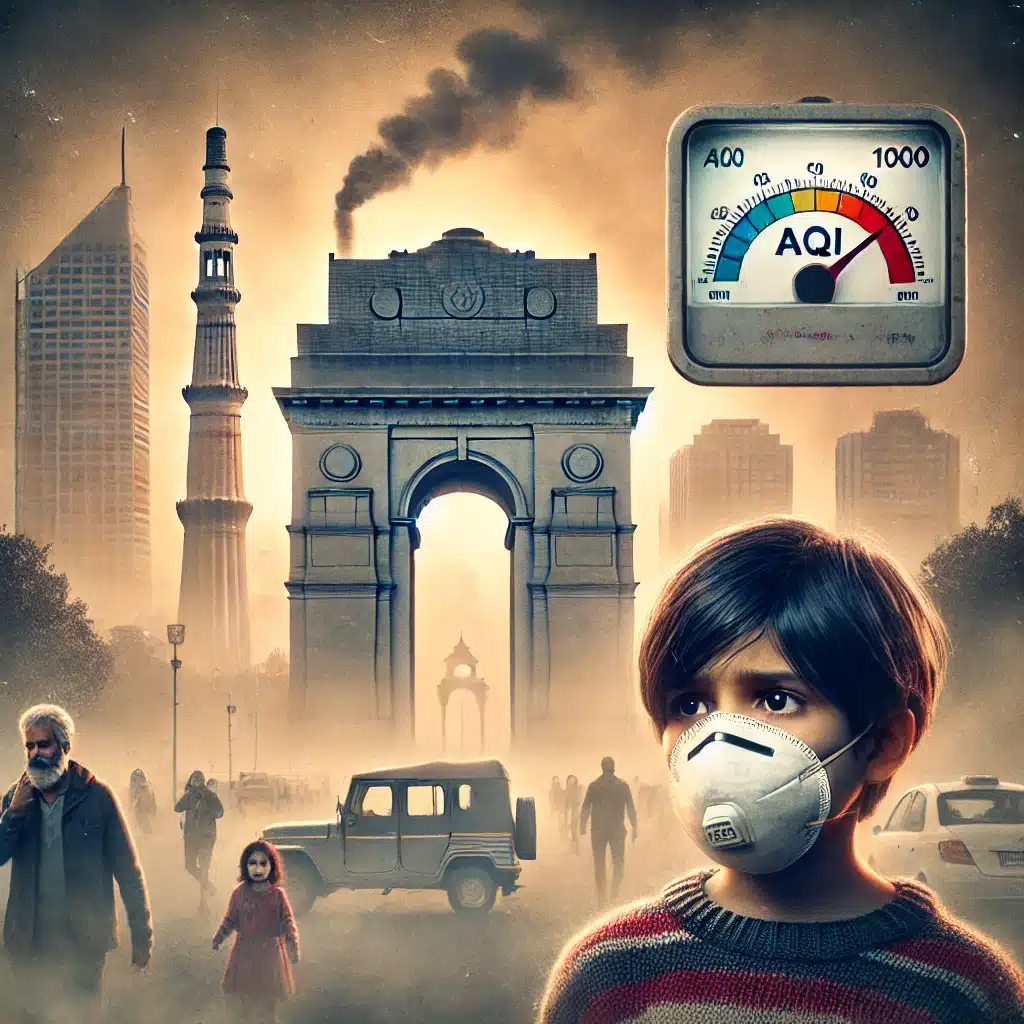
Delhi is facing an unprecedented air pollution crisis, with the Air Quality Index (AQI) reaching "severe-plus" levels as per the Central Pollution Control Board (CPCB) and even surpassing 1,600 according to international monitors like IQAir
Delhi’s Air Quality Crisis: An Alarming Wake-Up Call for Action
Recent findings highlight the seriousness of New Delhi’s air pollution. According to the Central Pollution Control Board (CPCB), Delhi’s total Air Quality Index (AQI) was 494 on a recent Tuesday, hovering just below the “severe-plus” threshold. However, IQAir, an international monitoring app, reported an AQI of 1,600 in some places, painting an even more dire image. This discrepancy emphasizes the glaring variations in air quality assessment criteria and the increasingly pressing need to solve this issue.
Understanding the Numbers: Why the Discrepancy?
The CPCB measures the AQI according to Indian guidelines, which cap PM 2.5 levels at 60 and the index at 500. When the air quality reaches this threshold, it is classified as “severe-plus.” In contrast, the US Environmental Protection Agency’s scale, which goes beyond 500 to define “hazardous” levels, is used by IQAir as a global standard. As a result, international monitors report higher AQI values.
Health Implications: A Public Health Emergency
The impacts of such toxic air are profound:
- Chronic exposure to elevated PM 2.5 levels raises the chance of developing bronchitis, asthma, and chronic obstructive lung disorders (COPD).
- Cardiovascular Issues: Extended exposure may increase the risk of strokes, high blood pressure, and heart attacks.
- Decreased Immunity: People are more prone to illnesses when pollutants impair immunological responses.
- Developmental Problems in Kids: Children’s lung development and cognitive development are greatly impacted by air pollution.
The necessity for immediate action is further highlighted by the World Health Organization’s (WHO) prior identification of air pollution as a major worldwide environmental cause of early death.
What the Delhi Government Can Do
To address this escalating crisis, the Delhi government must implement immediate, medium-term, and long-term measures:
Immediate Actions
- Expand the Ban on Vehicles: Extend restrictions on diesel and petrol vehicles, especially those not meeting BS-VI standards.
- Enforce Work-From-Home Policies: Continue encouraging remote work for private and public sectors to reduce vehicular emissions.
- Control Construction Activities: Halt all construction and demolition work until air quality improves.
Medium-Term Measures
- Increase Green Coverage: Initiate urban forestry programs and incentivize rooftop gardening.
- Improve Public Transportation: Expand and improve the efficiency of metro and electric bus services to reduce reliance on private vehicles.
- Implement Dust Control Technologies: Deploy advanced dust control measures, such as road sprinkling and vacuum cleaning.
Long-Term Goals
- Encourage the use of renewable energy. Gradually replace coal-fired power facilities with wind, solar, and other sustainable energy sources.
- Boost Regulatory Frameworks: Implement more stringent emissions regulations for automobiles and industries.
- Educate the Public: Spread knowledge about the significance of lowering personal carbon emissions.
- Speculative Situation: AQI Greater Than 1,000
- Delhi will experience a dire situation if the AQI exceeds 1,000 at the majority of monitoring stations:
Hypothetical Scenario: AQI Above 1,000
If Delhi’s AQI were to breach 1,000 across most monitoring stations, the city would face a catastrophic situation:
- Public Health Emergency: Patients with serious cardiovascular and respiratory disorders would fill hospitals to capacity. Children, the elderly, and people with pre-existing diseases are among the vulnerable groups who would be disproportionately impacted.
- Economic Impact: Companies would experience severe disruptions as a large percentage of the workforce would be unable to work because of health problems. A significant economic driver, tourism, would sharply fall.
- Mass Migration: Prolonged exposure to such dangerous air may cause Delhi residents to leave, resulting in social unrest and economic instability.
- Environmental feedback loops: Higher pollution levels and extended air stagnation may intensify the urban heat island effect, further degrading the air quality.
The Road Ahead
The air pollution problem in Delhi serves as a sobering reminder of how vital it is to prioritize environmental health. The Graded Response Action Plan (GRAP) has prompted the government to take action, but these initiatives must be expanded. Fighting this issue requires a coordinated strategy that includes stringent regulations, public collaboration, and ongoing investment in clean technologies.
We all share the resource of the air we breathe. Addressing pollution calls for teamwork for Delhi’s residents to have a safer and healthier future. Now is the moment to take action, and the stakes have never been higher.
FAQs
1. Why is there a difference between CPCB and IQAir AQI values?
CPCB follows India’s standards, where AQI is capped at 500, while IQAir uses the US Environmental Protection Agency’s extended scale, which records levels above 500 as “hazardous.”
2. How does air pollution affect health?
Exposure to high levels of pollutants can lead to respiratory issues, heart problems, reduced immunity, and developmental issues in children.
3. What immediate steps can the government take to combat air pollution?
- Restrict older vehicles.
- Enforce work-from-home policies.
- Suspend construction activities.
4. What are long-term solutions for controlling pollution in Delhi?
- Transition to renewable energy sources.
- Increase urban greenery.
- Strengthen emission regulations for industries and vehicles.
5. What happens if AQI exceeds 1,000?
- A public health emergency with widespread illness.
- Economic disruptions due to workforce incapacitation.
- Possible migration from the city.
6. What is the GRAP Stage 4?
It is an emergency action plan that bans non-essential vehicles, halts construction activities, and enforces remote work to reduce emissions during severe pollution episodes.
7. How can citizens contribute to improving air quality?
Adopt energy-efficient practices at home.
Use public transport or carpool.
Avoid outdoor activities during severe pollution.