
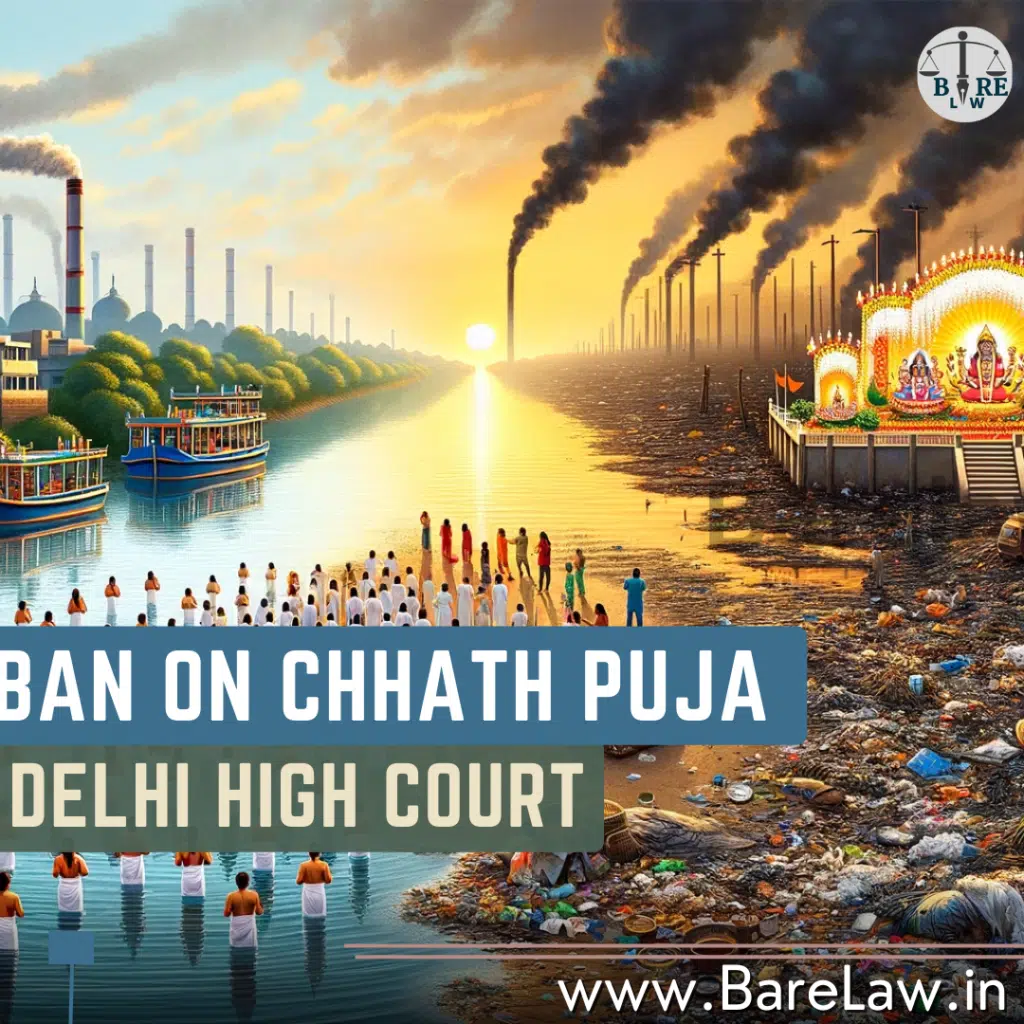
Delhi High Court Upholds Ban on Chhath Puja Celebrations Along Yamuna Banks
In a recent hearing, the Delhi High Court has maintained the standing ban on the celebration of Chhath Puja along the banks of the Yamuna River. This decision was taken amidst concerns regarding the pollution of the river, which has been a longstanding issue affecting the capital’s environment and health of its citizens.
Justice Subramonium Prasad, presiding over the case, emphasized that the prohibition serves the critical purpose of safeguarding the river from further pollution. The plea, which was brought forth by the Chhath Pooja Sangharsh Samiti and the Purwanchal Jagriti Manch, was ultimately withdrawn after the court indicated its stance on the matter.
The two organizations argued that the Delhi government’s notification, dated October 9, 2021, which restricted the festive activities, infringed upon the fundamental rights of the devotees. They pointed out that a significant portion of Delhi’s population, amounting to approximately 30-40 lakh individuals, was affected by this order. Comparatively, neighboring states such as Uttar Pradesh and Haryana continue to allow celebrations on the banks of the same river.
The counsel for the petitioners contended that the notification was issued during the COVID-19 period without proper authority and lacked a clear reference to any specific law or rules that would justify the restriction of religious practices for such a large number of devotees.
However, the counsel representing the Delhi government responded by highlighting the measures taken to accommodate the devotees’ needs. According to them, artificial ponds have been constructed across all city wards to facilitate the observance of Chhath Puja, thereby providing an alternative to the riverbank celebrations while also mitigating the risk of pollution.
The Court’s decision comes at a time when environmental concerns are increasingly influencing the regulation of public and religious gatherings. While acknowledging the cultural and religious significance of Chhath Puja, a festival dedicated to the Sun God and celebrated particularly by the people of Bihar, Jharkhand, Eastern Uttar Pradesh, and Nepal, the court’s stance reflects a growing judicial consciousness towards environmental issues.
The case, which was promptly withdrawn after the Court’s inclination to dismiss it, highlights the delicate balance between religious practices and environmental conservation. Advocate Vinay S Dubey represented the petitioners in this notable case.
This legal development sends a clear message about the government’s commitment to environmental issues, even when they intersect with traditional practices. The ruling may set a precedent for future cases where environmental and religious concerns are at odds.
As Delhi grapples with the dual challenges of preserving its religious traditions and protecting the environment, this case will likely be remembered as a significant moment in the city’s ongoing journey towards sustainable living.