Delhi High Court Challenges the Legality of Manual Scavenging Laws
Table of Contents
Main Section
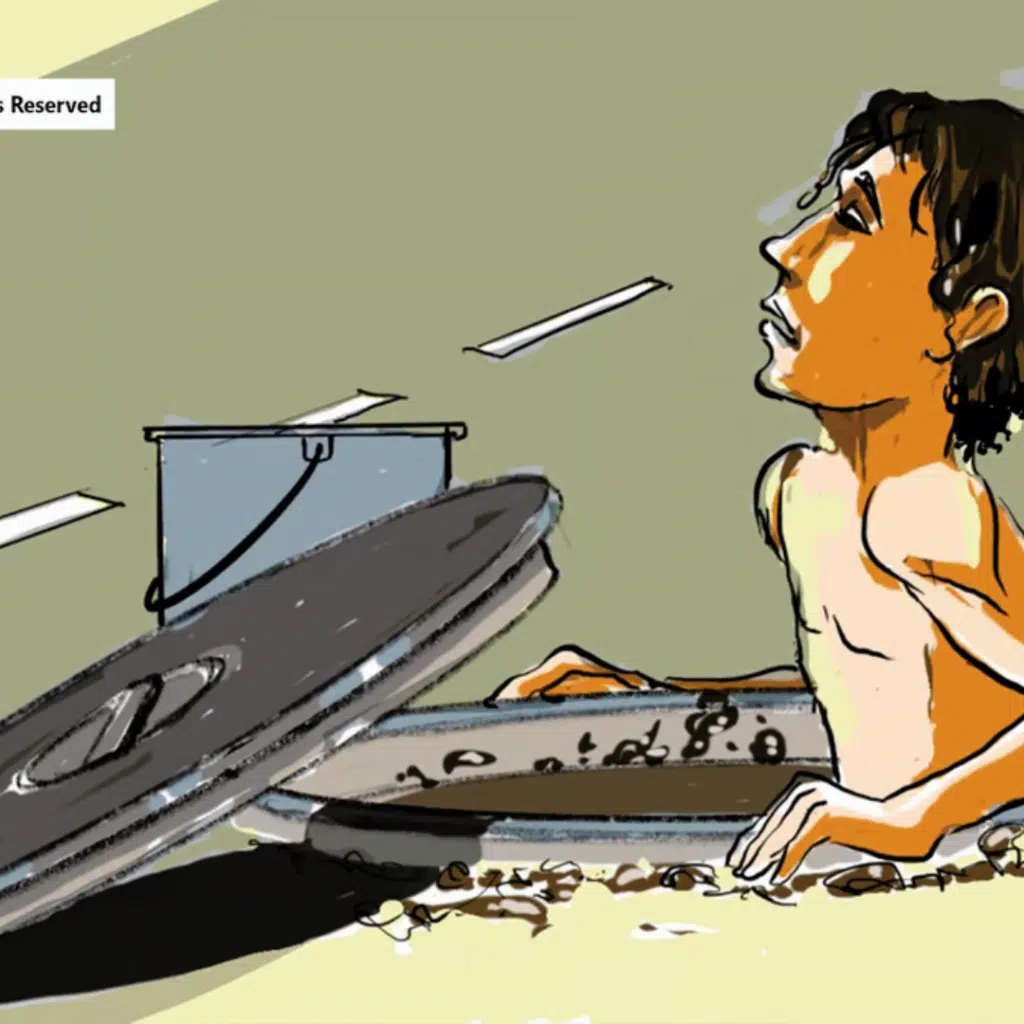
The Delhi High Court responded to a public interest litigation (PIL) challenging the constitutionality of certain sections under the Manual Scavenging Act, 2013, and its accompanying rules, by sending a notice to the Central Government on Tuesday. This was a significant move. Kallu, a sewer and septic tank cleaner, submitted the petition to highlight the predicament of workers in the industry, including his brother’s untimely death while performing sewage cleaning.
Acting Chief Justice Manmohan and Justice Manmeet Pritam Singh Arora have set a July 4 date for additional case consideration and have instructed the government to submit a response within eight weeks. Particular provisions of the Manual Scavenging Act, 2013—Sections 2(1)(g), 13, 14, 15, 16, and 39—as well as Rules 3, 4, 5, and 6(2) of the Manual Scavenging Rules, 2013—are the subject of the legal challenge. According to the petition, these clauses unintentionally allow for the manual scavenging and cleaning of septic tanks and sewers, even when safety equipment is worn. This goes against the spirit of the Indian Constitution.
According to Kallu’s case, the contested sections and regulations violate fundamental constitutional rights guaranteed by Articles 14, 17, 21, and 24 since they not only fail to end manual scavenging but also uphold the untouchability and caste-based discrimination that the practice entails. The petition persuasively argues against the “compromised dignity” that these regulations sanction, claiming that they violate people’s right to a dignified life and perpetuate the stigma of purity and contamination under the pretense of sanitation labor.
A key argument made in support of the plea is the “cosmetic effect” of Section 2(1)(g) explanation (b), which justifies the dehumanizing practice by making a distinction between manual scavengers and those who wear protective gear. Despite the unchanging nature of their employment, this artificial classification effectively denies workers wearing protective gear essential benefits like scholarships and rehabilitation. Moreover, the petition challenges the reasoning behind explanation (a) of Section 2(1)(g) in that it denies daily wage earners, temporary employees, and those using the Jajmani system access to the advantages and protections provided by the act.
The petition also draws attention to the controversial Section 39 of the Act, which undermines the goal of the legislation—to end manual scavenging—by allowing the Central Government to exempt specific practices from its restrictions.
In conclusion, the Delhi High Court’s legal challenge to the Manual Scavenging Act, 2013 and its regulations represents a turning point in the struggle against manual scavenging, a practice ingrained in prejudice and social shame. In addition to addressing the legal issues raised by the act’s provisions, the court is also bringing attention to the larger social injustices that are carried out against underprivileged people by carefully examining the act’s constitutional legality. The resolution of this lawsuit may result in important societal and legal changes that would completely end manual scavenging and give victims’ rights and dignity back.
FAQ
How does manual scavenging work?
The act of manually cleaning, moving, and discarding human waste from septic tanks and sewers is known as “manual scavenging,” and it frequently occurs without the proper safety precautions or equipment.
The 2013 Manual Scavenging Act: What is it?
India passed the Manual Scavenging Act, 2013 with the intention of outlawing the cruel practice, ending manual scavenging, and assisting people who are employed in it in their efforts to recover.
Why is there a legal challenge to the Act?
The Act is being contested on the grounds that certain of its clauses allow manual scavenging under specific circumstances, which violates the Indian Constitution’s fundamental rights and leaves the practice unresolved.
What possible ramifications could this legal challenge have?
If the challenge is successful, the law may change to include stronger bans against manual scavenging as well as improved protection and rehabilitation for individuals who are impacted by it.
Barelaw, an online platform dedicated to delivering comprehensive legal knowledge, proudly presents its exclusive category of case briefs. This section is meticulously crafted to offer insightful analyses of landmark judgments, providing a valuable resource for legal professionals, students, and anyone interested in understanding the intricacies of law. Our case briefs delve deep into pivotal court decisions, exploring the rationale behind each judgment and its impact on the legal landscape.
We understand that navigating the complexities of legal judgments can be challenging. That’s why our case briefs are designed to be both informative and accessible, ensuring that readers gain a clear understanding of the key legal principles involved. Each brief includes a summary of the facts, the legal issue at hand, the court’s reasoning, and the ultimate decision. This structured approach makes it easier for our audience to grasp the nuances of each case.
Our website is a treasure trove of legal wisdom, constantly updated with the latest and most significant cases. Whether you’re a law student seeking to enhance your knowledge, a practicing attorney looking for a quick reference, or simply a curious mind eager to understand the law’s evolution, Barelaw is your go-to destination.
Explore our case briefs and immerse yourself in the world of law. Visit our website now and discover the wealth of legal knowledge at your fingertips. The link is provided below for your convenience and direct access to our expansive legal database
You can access more legal drafts here – https://www.barelaw.in/legal-drafts/