
CJI Chandrachud on Gender and Justice: Addressing Delays and Barriers in the Legal System
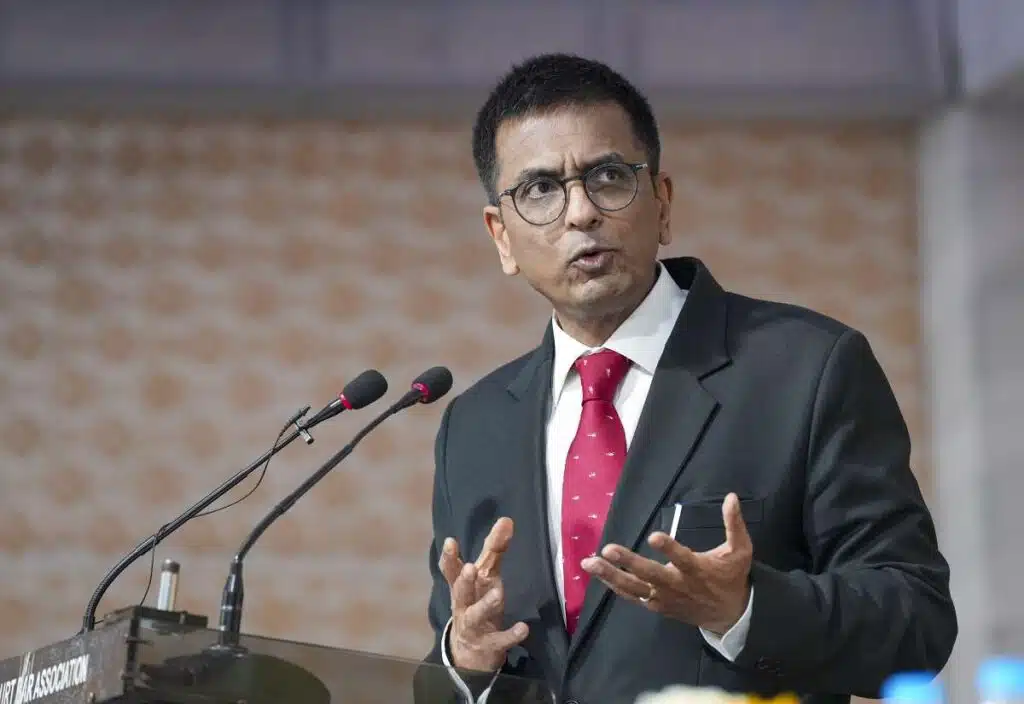
In a significant observation, Chief Justice of India DY Chandrachud highlighted the disproportionate impact of delays in judicial outcomes on female lawyers compared to their male counterparts. Speaking at the inaugural ceremony of the Central Administrative Tribunal (CAT) in Mumbai, the Chief Justice emphasized the gendered implications of prolonged court battles in a society that often equates intellect and capability with gender.
CJI Chandrachud stressed that while delays in obtaining timely outcomes affect both male and female lawyers, the societal perceptions associated with gender amplify the impact on women in the legal profession. He explained that female lawyers face the dual challenge of combating the immediate opponent in court and overcoming ingrained gender biases regarding their professional competence.
The Chief Justice’s address underscored the need for addressing various barriers to justice, including social, physical, and systemic obstacles. He acknowledged that improved infrastructure in courts and tribunals could play a crucial role in ensuring that legal disputes are resolved efficiently and effectively. This, in turn, would benefit both lawyers and litigants, especially women lawyers who disproportionately suffer due to delays.
CJI Chandrachud also touched upon the increasing trend of lawyers working voluntarily in tribunals and the corresponding need for better infrastructure to meet their demands and those of court staff. He stressed the importance of infrastructural development being inclusive, catering to people with diverse needs from various segments of society.
Furthermore, Justice Chandrachud cautioned against over-reliance on virtual courts as the sole medium of accessing justice. He emphasized the importance of physical access to courts, especially for physically disabled individuals and senior citizens. The CJI argued for providing litigants with a choice between physical court complexes and virtual courts, underscoring the need for both to be equally efficient and accessible.
Concluding his speech, CJI Chandrachud praised the judicial and governance culture in Maharashtra, noting the state’s non-interference approach towards the judiciary. He highlighted this as a fortunate aspect of working in Maharashtra, contrasting it with other regions where such conditions may not prevail.
This insightful speech by the Chief Justice sheds light on the nuanced challenges faced by female lawyers in India’s legal system and the broader issues of access to justice. It underscores the need for systemic changes and infrastructural improvements to create a more equitable and efficient judicial system.