Bombay SC rules Sai Baba Sansthan Trust eligible for Income Tax exemption on anonymous donations
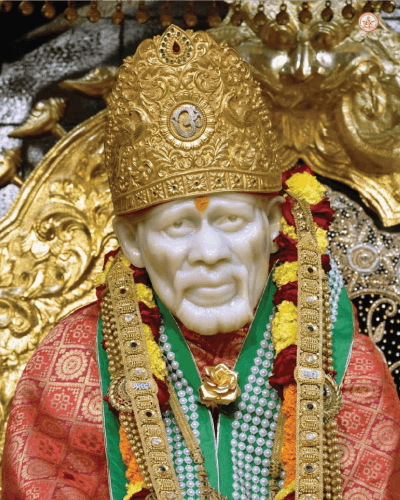
Bombay High Court on Tuesday endorsed an order by the Income Tax Appellate Tribunal (ITAT) while delivering its previous judgment regarding the significance of anonymous donations tax exemption granted to the Shri Sai Baba Sansthan Trust, Shirdi is a charitable institution and religious institution also. Voice [Shree Sai Baba Sansthan Trust].
The said issue arose from the October 25, 2023 ITAT order to which the Commissioner of Income Tax (Exemptions), Mumbai has filed the current appeal, which a Bench comprising Justices GS Kulkarni and Somsekhar Sundaresan dismissed.
The High Court observed that the trust has accepted anonymous donations upto ₹ 159.12 crores collected through hundi during the assessment years 2015-16, 2017-18 & 2018-19 for claiming exemption under section 115 BBC(1) of the IT Act are not exigible to tax.
As relevant, Section 115BBC(1) of the IT Act provides that donations to ‘trust’ may well be taxed in some circumstances. However, as provided under Section 115BBC(2)(b), no tax is deductible from such amount if the trust is created exclusively for religious and charitable purposes.
The trust was set up in 1953 and when it filled its income tax return it indicated nil income taxable.
However, the Deputy Commissioner of Income Tax tried to impose tax to the ₹159.12 crores received by the trust as anonymous donations since its operation showed that it was a charitable trust which was registered under Section 80G in order to receive donations in the form of tax exemptions. Hence, the claim by the trust was made that it could not be able to lay a leg on Section 115BBC (2)(b) exemption.
In its defence the trust claimed that it has dual beneficial purpose, that is, charitable and religious, In fact, it stated that it has spent only 0.49% of the total income on the religious purposes.
The $5001947 also stated that provisions of Section 80G(5B) envisage a dual-purpose trust, which accepts the expenditure incurred for religious purposes to be partially charitable but it does not hold any sway over the charity an organisation can conduct religious activities without losing its Charitable status.
First of all, the trust focused on the fact that its activities include cleaning of the temples and offering premises for the devotees that is charitable by definition.
Meanwhile, the analysis of the Courts below as well as the ruling to the extent given by the Commissioner of Income Tax (Appeals) [CIT(A)] favors the trust with a broader perspective and confirmation to the proposition that the trust in question serves the public, religious and charitable in different aspects.
The CIT(A) accordingly expunged the tax levied on the anonymous contributions received by the trust, thereby endorsing the trust’s arc of claiming income tax exemption under Section 115BBC(2)(b), as the trust it operates for both charitable as well as religious intentions.
After this, revenue appealed to ITAT which has endorsed the CIT(A) order regarding the trust engaged in both charitable and religious purposes. The appellate tribunal observed that Section 10(23C)(v) permitted the trust continued to function and claimed that its purpose was mixed.
This the High Court endorsed in its order of October 8 and dismissed the revenue contention that registration under Section 80G meant the trust could not have section 115BBC(2)(b) exemptions.
Some of the provisions under Section 80G must not be compounded as per, the provisions offered by Section 115BBC(2)(b) of the Act. Each of the provisions remains isolated and do not interact with one another in any manner. It would be too far-fetch to reach to a conclusion that merely the assessee being registered under Section 80G of the Act, it cannot be a religious trust, so as to fall outside the purview of Section 115BBC (2)(b) of the Act,” the Court said.
The Court also in its judgements stated that a trust can be both charitable and religious in nature.
“It should not be acceptable to Revenue to hold that Section 80G would exclude religious trust and/or Section 80G only applies to charitable institutions. Any way, in our view, such a construction of Section 80G that it would exclude religious and charitable entities, as per our finding would not be correct reading of the said provision, the Court said further.
After that, the Bench posited that the order passed by the ITAT was “legal as well as factual” and stated that Sai Baba Trust, which was created under the special laws enacted by the State legislature, is “no doubt a religious and charitable trust.”
“Having regard to the combined reading of the objects of the assessee, together with the provisions of the Sai Baba Trust Act which is special legislation enacted by the State Legislature regarding the objects and functioning of the assessee, as well as, bearing in mind the provisions of the Bombay Public Trust Act, our considered view is that the assessee indisputably qualifies to be a religious and charitable trust and, therefore, the assessee justifiably Similarly in such case the CIT (A) and the Tribunal is absolutely right in claiming such entitlement of the assessee, the Court observed.
The Counsel for the IT Department was Dinesh Gulabani.
For the Shree Sai Baba Sansthan Trust, Senior Advocate S Ganesh, joined by Advocates Ashwin Shete, Srivastav, and Anvi Vasani from Jayakar & Partners, appeared.