Bombay HC: Ganja Under NDPS Act Refers Only to Cannabis Flowering Heads, Excludes Seeds and Leaves
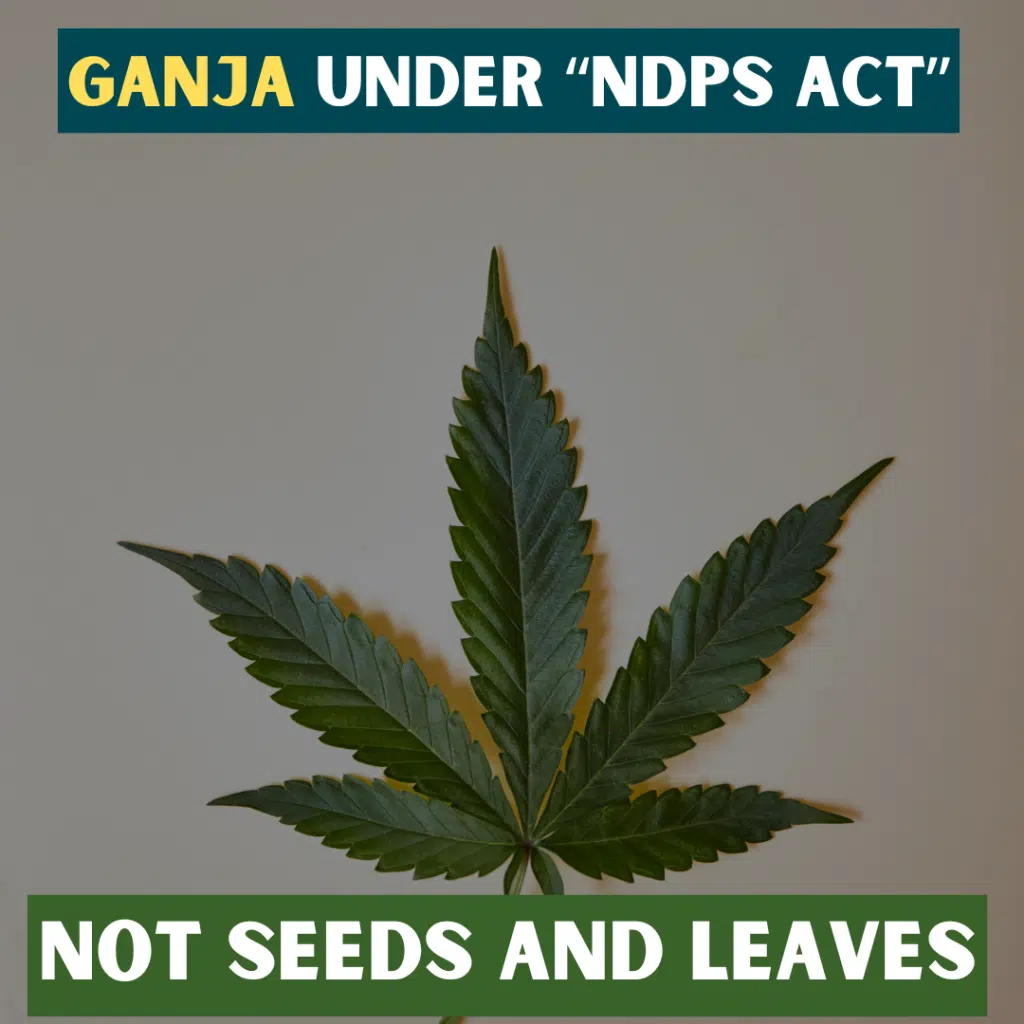
The bench pointed out that the Narcotic Drugs and Psychotropic Substances Act defines ganja as the flowering or the fruiting tops of the cannabis plant and not the seeds or the leaves while coming to this conclusion recently while granting bail to a man.
In the same case, Justice Urmila Joshi Phalke of the single Bench pointed out that the NDPS Act’s definition of ‘ganja’ does not include the seed or leaf matter of the plant.
The Court also pointed out that the term ‘ganja’ ‘ganja’ is defined and clarified as the flowering or fruiting tops of the cannabis plant exclusive of the seeds and leaves when they are not in the form of tops.”
The Court then went on to release on bail one, Mohammad Jakir Nawab Ali, who was charged with possession of quantity of cannabis used for commercial purposes.
The aspect of what is considered ganja under the NDPS Act took center stage because the police in this case had not properly sorted the contraband prior to measurement which raised an issue as to whether the quantity seized was indeed a commercial quantity of ganja (more than 20 kilograms).
The accused/bail applicant, Ali was arrested on 7th December 2021, after the police raided an area following a tip off on transportation of contraband.
Local Crime Branch personnel stopped a white Maruti Swift car driven by Ali near Tunki Shivar. Police also reportedly recovered around 50kg of what was packaged as ganja from the back seat during the search.
However, when the matter was before the court to consider Ali’s bail application, his legal representative made serious concerns about the police interviews. The defense counsel argued that the impugned material was mainly made up of the leaves, seeds, stems and stalks of the plant which by the act of the NDPS does not amount to ganja unless it has flowering or fruiting tops.
The Court stated that there were doubts concerning the legal sufficiency of the charges against Ali (of carrying a commercial quantity of a drug).
From the FIR and the investigation papers it has been revealed that 50 kg of ganja was recovered from the said vehicle. But the inventory certificate and the recitals of the FIR and the panchnama reveal that the items seized were leaves, seeds, stems and stalks,” the Court noted.
The court further observed,
Of course, none of the investigating papers proves that these materials were separated and then weighed. From the above it will be seen that there is nothing on record to prima facie indicate that before the weight of the seized plant of ganja was laid, the investigating officer had in any way separated the seeds or other parts of the plant in an attempt to determine the exact quantity of ganja.
The Bench was of the view that it was not easier to determine whether the quantity of contraband recovered by the police could be said to be commercial.
The defense also complained of delay in the trial and said that Ali’s right to a speedy trial was being violated.
The Court noted this issue in the recent Supreme Court decision in Ankur Chaudhary vs. State of Madhya Pradesh where it was noted that undue delay in a trial would be a violation of the accused persons right to a speedy trial as enshrised in Article 21 of the Constitution of India.
Considering these submissions the Court held that Ali had made a prima facie case for bail.
Therefore, from the Investigating Papers, and the charge-sheet, it is hard, in the first instance, to accept that the alleged prohibited substance is one which falls under the definition of ‘ganga’ under the NDPS Act. As the flowering or the fruiting tops of the cannabis plant is classified as ganja, it would be hard to prima facie hold the applicant involved without the substance being seized from him, the Court said.
The Court directed that Ali be set at liberty upon offer of a personal bond of ₹50,000 with a surety in the like sum. Other conditions of his bail are that he should report to the nearest police station every month and he should not commit such acts in the future.