Australia’s New Support Policy for Victims of Forced Marriages: A Step Toward Ending Modern-Day Slavery
Introduction:
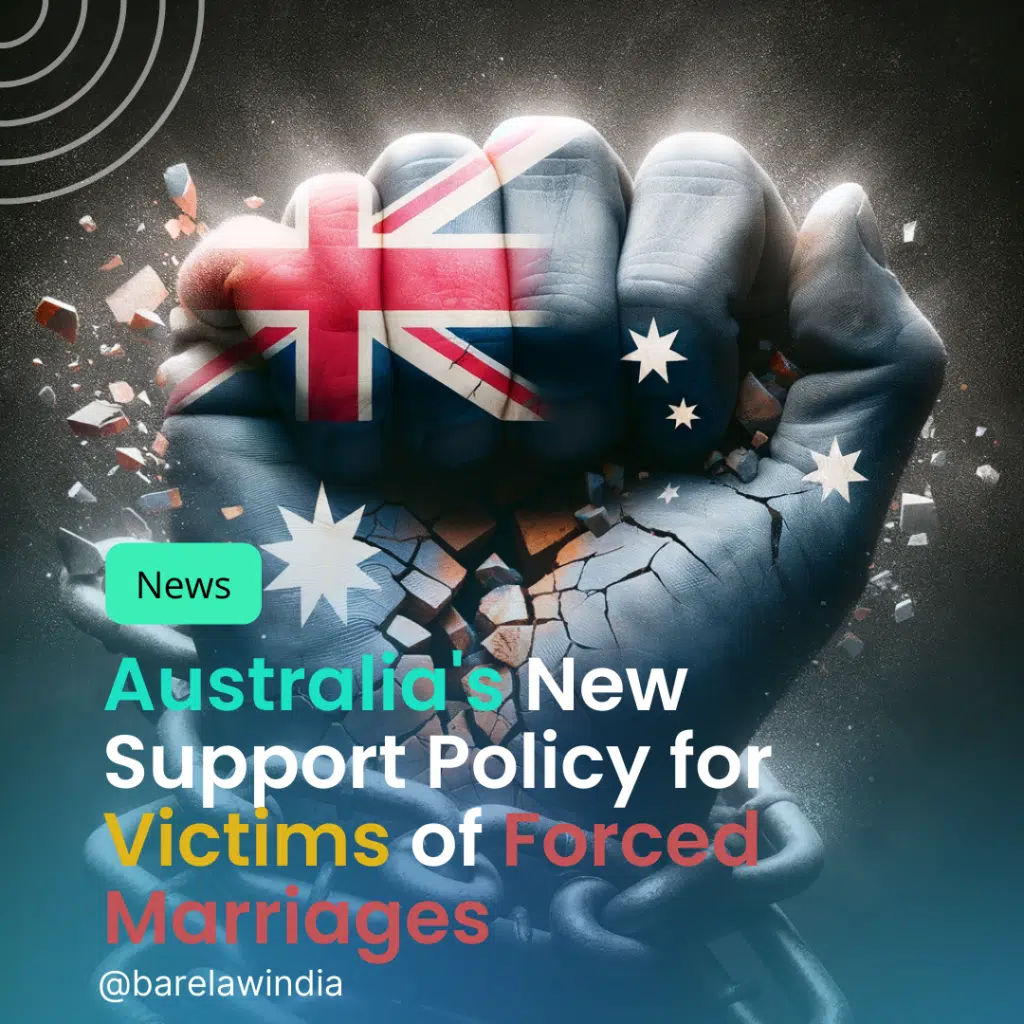
The Australian government announced a significant initiative on Sunday to combat modern-day slavery, particularly targeting the issue of forced marriages. This policy promises comprehensive support for victims, marking a critical step in Australia’s ongoing efforts to eradicate these human rights violations.
The New Support Policy:
Under this groundbreaking policy, victims of forced marriages, as well as individuals at risk, will gain access to a 200-day program of holistic support. This initiative, backed by AU$12.1 million in government funding, underscores a commitment to provide tangible aid without necessitating involvement in the criminal justice system. The program will offer financial assistance, health services, accommodation, counseling, and community support, catering to the diverse needs of affected individuals.
Enhancing Existing Efforts:
Additionally, the Australian government is investing AU$2.2 million to extend its Speak Now anti-slavery project, further bolstering the country’s stand against modern slavery. This extension represents an ongoing commitment to both prevention and early intervention strategies.
Legislative Developments:
The Modern Slavery Legislation Amendment Bill 2023, introduced in the Australian Capital Territory’s Legislative Assembly, aims to strengthen legislative measures against modern-day slavery. The bill proposes the establishment of an anti-slavery commissioner and sets forth obligations for entities to mitigate slavery risks in their operations and supply chains. This legislative move complements the broader efforts across government, business, and civil society sectors.
Understanding Forced Marriages:
Forced marriage, a form of modern slavery and gender exploitation, is complex and multifaceted. It often stems from cultural, religious, and ethnic pressures, compounded by factors like economic hardship, debt obligations, immigration issues, and attempts to conceal sexual abuse within families or communities.
Government’s Stance:
Amanda Rishworth, the Australian social services minister, emphasized the government’s resolve in addressing this issue, describing modern slavery, including forced marriage, as an “abhorrent abuse of power.” The government’s proactive approach seeks not only to support victims but also to eliminate these practices from Australian society.
Conclusion:
Australia’s new support policy for victims of forced marriages is a testament to the country’s dedication to fighting modern-day slavery. By offering a comprehensive support system and strengthening legislative measures, Australia is setting a precedent in the global fight against human rights abuses, providing hope and tangible assistance to those affected by forced marriages.