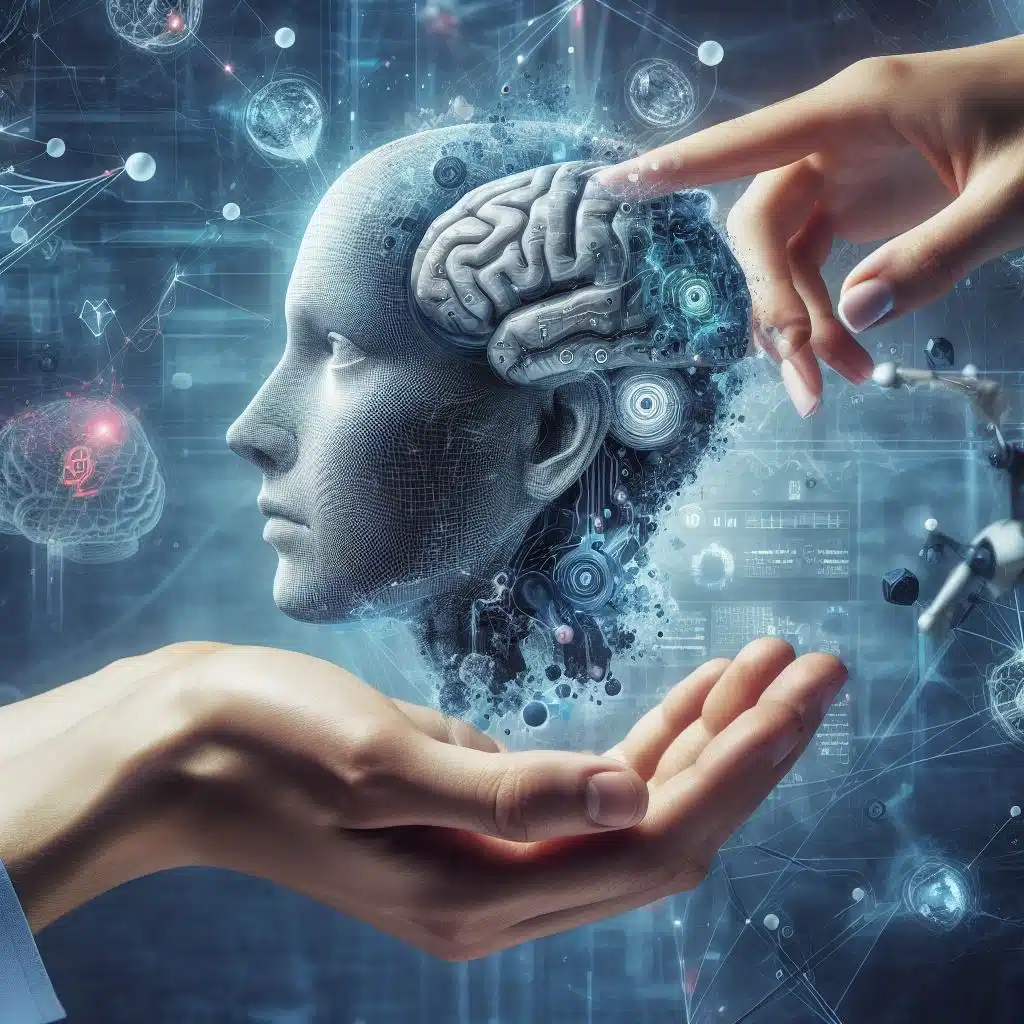
Introduction: Artificial Intelligence on Modern Society
The era of technology is upon us with a host of possibilities and challenges. Among the most potent technological advancements is Artificial Intelligence (AI). In this document, we shall look into AI’s details such as its context, main body of operation, the society it influences, and finally understand how it was born and integrated in our lives.
Context: AI,essentially refers to machines or software that can think intelligently like humans. Siri on our iPhone’s to more complex systems used in medical diagnosis are examples of AI found everywhere in our lives. It has origins from ancient history where there were myths about automated beings. However, its modern version started earnestly during the mid-20th century with pioneers such as Alan Turing who asked the question “Can machines think?”1.
At its core, AI works on algorithms – predetermined rules that it uses to make decisions. With machine learning coming in play over time these systems have learnt to improve on their rules which essentially means they learn from their mistakes and perfect their processes.
Two primary categories define AI:
- Narrow AI: Specialized for one taskExamples include voice assistants and chatbots.
- General AI: Machines that can perform all intellectual tasks just like human beings. This remains only a theoretical concept until now.
Impacts: The implications of AI in modern society are manifold:
- Economic: By creating efficiencies and performing tasks that humans find difficult or monotonous, this could result in boosting economies through Artificial intelligence while at the same time causing job displacement concerns.
- Medical : From diagnostic tools to treatment recommendation, AI is revolutionizing healthcare2.
- Environmental : Conservation efforts through predicting climate changes and optimizing energy among others can be done by using artificial intelligence (AI).
- Social : Integration of AI into everyday life will affect social structures; changing everything from interpersonal relationships to norms within societies
Storyline: The journey made by AI since its early days in the 1940s and 1950s has been one of steady progress. The initial wave consisted of rule based systems. Neural networks and natural language processing took centre stage when machine learning gained prominence in the 1990s and 2000s. Today, AI finds its application in every conceivable field—a situation that is characterized by rapid development.
Conclusion: Artificial Intelligence stands as a testament to human ingenuity. It is a tool – one that reflects our desires, ambitions, and at times fears. As we stand on the threshold of an AI dominated era it becomes critical for us to use this tool with responsibility so that it aids us in enhancing our abilities enabling us to live better lives rather than functioning as masters over us.
(Note: This article is a concise overview of a vast topic.)