TheAllahabad High Court Directive for a CBI Probe into DRT Conduct has directed the Central Bureau of Investigation (CBI) to investigate allegations of misconduct against a former Presiding Officer of the Debt Recovery Tribunal (DRT) in Lucknow, highlighting concerns about judicial accountability and procedural integrity in financial adjudication.
Ensuring Judicial Accountability: The Allahabad High Court Directive for a CBI Probe into DRT Conduct
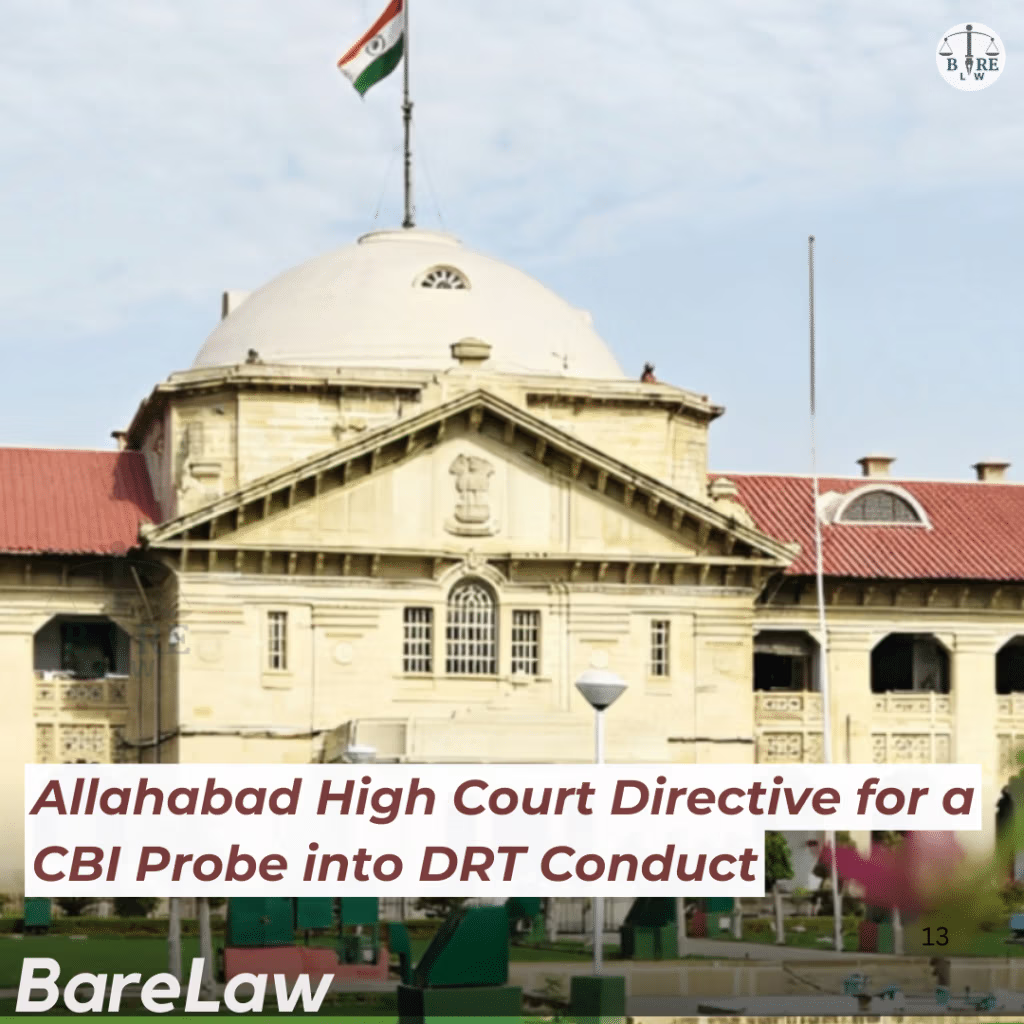
Table of Contents
The Allahabad High Court’s recent order for the Central Bureau of Investigation (CBI) to investigate the actions of a former Presiding Officer of the Debt Recovery Tribunal (DRT) in Lucknow has raised serious concerns about judicial accountability and integrity in India’s financial adjudication system. This article explores the case’s many facets and considers the wider ramifications for financial institutions and the legal system.
1. Judicial Accountability and Integrity
A just and open legal system is built on the foundation of judicial accountability. The accusations against A.H. Khan, the former DRT Presiding Officer, highlight the need for strict ethical guidelines for judges. Misconduct incidents undermine public confidence and cast doubt on the fairness of legal processes. The High Court’s choice to enlist the CBI shows its dedication to maintaining judicial integrity and successfully handling possible violations.
2. Functioning of Debt Recovery Tribunals (DRTs)
DRTs, created under the Recovery of Debts Due to Banks and Financial Institutions Act of 1993, are essential in resolving conflicts involving financial institutions’ debt recovery. They are intended to ensure creditor trust and financial stability by resolving such issues quickly. Nevertheless, accusations of wrongdoing within these tribunals have the potential to compromise both their effectiveness and the impartiality of their proceedings.
3. Role of the Central Bureau of Investigation (CBI)
As India’s top investigative organization, the CBI investigates high-profile cases, such as misbehaviour and corruption in public institutions. As instructed by the Allahabad High Court, its participation in the investigation of judicial conduct emphasizes its responsibility to provide accountability in all spheres, including the judiciary. Such actions are essential for upholding the integrity of the legal system and discouraging any wrongdoing.
4. Legal Recourse for Financial Institutions
The Bank of Baroda’s petition against the purported irregularities in the DRT proceedings best illustrate the legal options open to financial companies to contest apparent judicial errors. The bank sought accountability and restitution by going to the High Court, which strengthened the idea that court decisions were scrutinized and had to follow the law.
5. Impact of Judicial Misconduct on Financial Disputes
The settlement of financial issues can be greatly impacted by claims of judicial misconduct, such as the one made against the former DRT officer. Biased results could result from such efforts, compromising the adjudication process’s fairness and possibly costing the parties involved money. Trust in financial dispute resolution requires fairness and honesty in court proceedings.
6. Procedural Integrity in Judicial Proceedings
The case highlights how crucial it is to follow the correct legal procedures, which include issuing instructions in a timely and transparent manner. Procedural integrity violations are underscored by the claims that orders were issued without adequate hearings and that corrigenda were later issued to address the irregularities. Such variations can potentially undermine stakeholder confidence and jeopardize the validity of court rulings.
7. Oversight Mechanisms in the Judiciary
The current supervision procedures intended to handle claims of wrongdoing inside the judiciary are reflected in the High Court’s order for a CBI inquiry. Maintaining checks and balances, ensuring that judges are held responsible for their actions, and protecting the integrity of the legal system all depend on these procedures.
8. Implications for Judicial Appointments and Retirements
The fact that there was alleged misbehaviour right before the officer’s retirement raises important concerns regarding the procedures that govern judge retirements and appointments. To guarantee that judicial officers are held accountable for their actions during and after their tenure, it emphasizes the necessity of ongoing oversight and accountability procedures beyond active service.
Conclusion
The judiciary’s dedication to maintaining accountability and integrity among its ranks is demonstrated by the Allahabad High Court’s proactive approach in ordering a CBI investigation into the actions of a former DRT Presiding Officer. This case serves as a reminder of how crucial moral behaviour is in court, particularly in financial adjudication organizations such as the DRTs. To preserve public confidence and the efficient operation of the legal system, it is imperative to guarantee openness, conformity to procedural standards, and strong oversight procedures.
FAQs:
1. What prompted the Allahabad High Court to order a CBI investigation into the DRT Presiding Officer’s conduct?
The High Court’s decision was based on allegations that the former Presiding Officer issued orders without proper hearings and manipulated dates to cover procedural irregularities, raising serious concerns about judicial integrity.
2. What is the role of the Debt Recovery Tribunal (DRT) in India’s financial system?
DRTs are specialized tribunals established to expedite the recovery of debts owed to banks and financial institutions, thereby ensuring financial stability and creditor confidence.
3. How does the CBI’s involvement impact the investigation of judicial misconduct?
The CBI’s role underscores the seriousness of the allegations and ensures an impartial investigation, reinforcing accountability within the judiciary.
4. What legal recourse do financial institutions have against perceived judicial improprieties?
Financial institutions can file petitions in higher courts to challenge irregularities, as demonstrated by the Bank of Baroda’s approach to the Allahabad High Court in this case.
5. How can judicial misconduct affect the resolution of financial disputes?
Misconduct can lead to biased or unjust outcomes, undermining the fairness of the adjudication process and potentially causing financial losses to involved parties.
6. What measures are in place to ensure procedural integrity in judicial proceedings?
Oversight mechanisms, such as higher judicial review and investigative interventions like the CBI probe, are designed to maintain procedural integrity and address deviations.
7. What are the implications of this case for judicial appointments and retirements?
The timing of the alleged misconduct, just before the officer’s retirement, highlights the need for continuous oversight and accountability mechanisms that extend beyond active service.
8. How does this case reflect on the broader issue of judicial accountability in India?
It underscores the importance of maintaining ethical standards and transparency within the judiciary to preserve public trust and the effective functioning of the legal system.