Judicial Vacancy Crisis in India
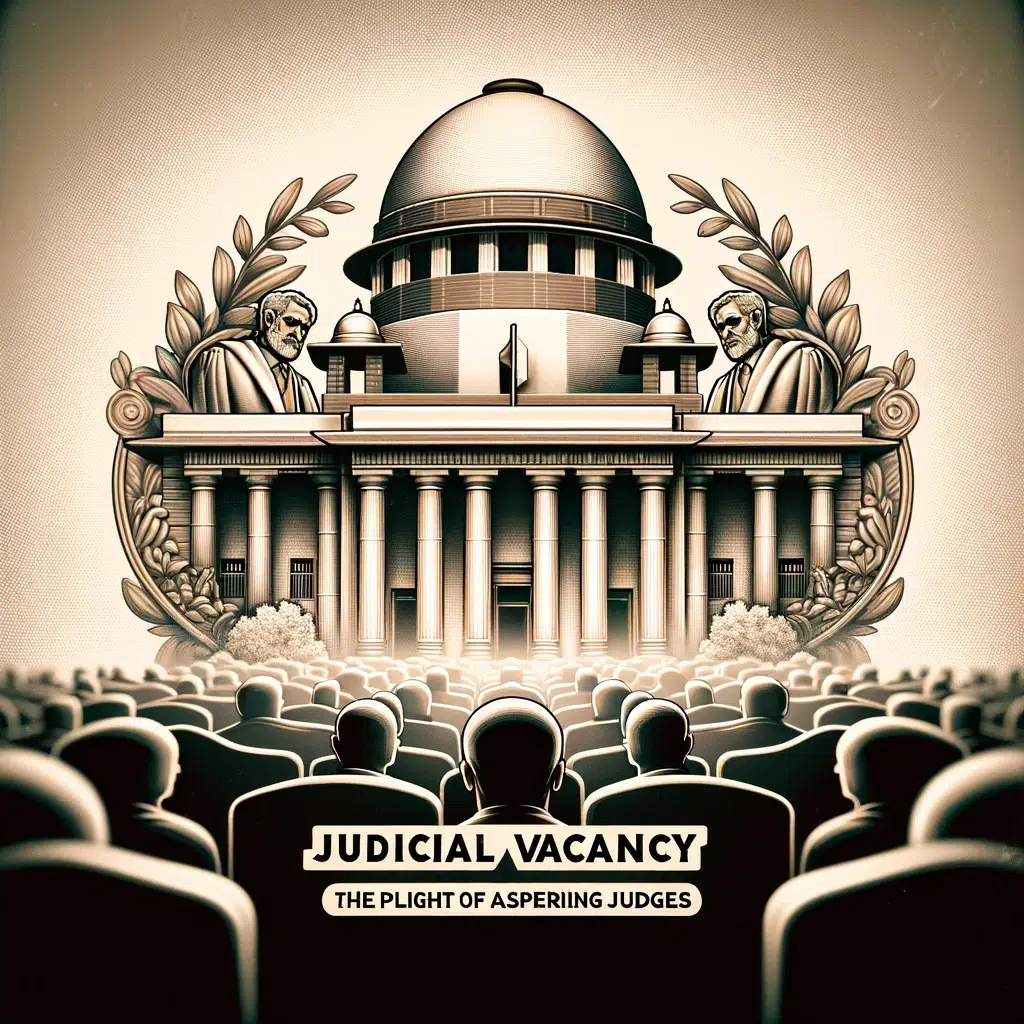
India’s judiciary, a cornerstone of its democracy, is currently grappling with a critical challenge: a significant number of vacancies in the lower judiciary. This issue, affecting states across the nation, has heightened concerns about the efficiency and accessibility of the justice system. The Supreme Court’s recent directive to the Haryana government to fill 175 junior civil judge vacancies underscores the urgency of this crisis.
The subordinate judiciary, which includes district and subordinate courts, plays a vital role in India’s legal framework. However, with approximately 5,388 vacancies out of 25,246 sanctioned posts, the strain on the system is evident. This shortage of judges is not helping the backlog of 4.4 crore cases.
Each state in India follows its unique procedure for judicial appointments, leading to distinct challenges in filling these vacancies. As per Article 234 of the Constitution, judicial appointments below the district judge level are made by the State’s Governor, in consultation with the State Public Service Commission and the respective High Court.
The judicial services exams are a gateway for law graduates to enter the judiciary. These exams are conducted by either the respective High Courts or the State Public Service Commissions, varying from state to state. The process involves a Preliminary Examination, a Mains Examination, and a personal interview. Despite the rising number of aspirants, the limited number of available seats presents a daunting challenge.
For instance, in the 2023 Uttar Pradesh exams, over 50,000 candidates competed for just 303 seats. Similar scenarios are seen in other states like Bihar, Uttarakhand, and Tamil Nadu, reflecting a nationwide trend of rising aspirants but limited opportunities.
Issues such as irregular exam schedules, delayed results, and lack of grievance redressal mechanisms exacerbate the situation. Aspirants often face years of waiting and uncertainty, contributing to mental health issues and career dilemmas. The pandemic-induced delay in conducting exams has further intensified these challenges.
The Supreme Court, recognizing the severity of the issue, has intervened on multiple occasions, emphasizing the need for timely conduct of exams and declaration of results. Despite these directives, the problem persists, with a constant 25% vacancy in judicial posts.
The impact on judiciary aspirants is profound. Many share experiences of mental strain, financial burden, and the pressure of high competition. The absence of a streamlined system for addressing grievances related to the examination process adds to their woes.
The judicial vacancy crisis not only affects aspirants but also hampers the justice delivery system at large. It underscores the need for a more efficient and transparent recruitment process and better support for judicial aspirants.