Table of Contents
Act Of High Religious Worship’ : How a Plaintain Leave Became a Court room Controversy.
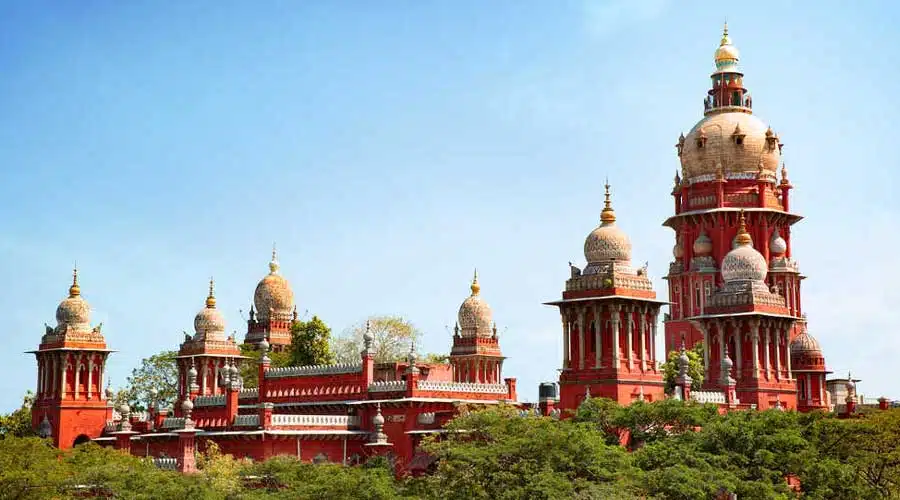
The Madras High Court recently noted if one includes in the right to privacy the aspect of sexual and gender orientation then including one’s spiritual orientation it must also allow a person to practise such religious works as he or she considered appropriate.
Justice GR Swaminathan thus stated that it was natural for a man to roll over the plantain leaves left over after other devotees ate as a part of Angapradakshinam. Rule 1: His right to practice the practice was upheld under Articles 14, 19(1)(a), 19 (1) (b), 21 and 25 (1) of the Constitution.
Background
In 2015 a single judge of Madras high court passed an order restrainingAuthorities not to allow anyone to perform Angapradakshan. It was observed by the single judge thus though the court has its own inherent limitations of not interfering in the religious practices and customs yet no human being can be degraded by following any practice or custom in the name of religion.
The present petitioner who sought to perform the angapradakshinam had therefore filed this petition praying that the court grants him the necessary permission to do so. While he stated that he deserves to exercise his fundamental right to practice his religion the authorities however told the court that they are unable to grant this request as a matter of policy following an earlier judgment.
Taking a look at the earlier judicial decisions concerning the religious practices the court said that the petitioner had a vested fundamental right under Article 25(1) of the Constitution to perform the religious obligation taken by him when he thought that such an activity will give spiritual reward or benefits to him.
Right To Privacy
The court further observed that the matter was also encompassed within the right to privacy. The court further noted that one’s personal choices as regards the manner of living were an important part of privacy and that simply because an individual was in a public place it did not mean that the individual forfeited privacy.
The court also made it clear that the right to move freely through any place in India as provided under Article 19(1)(d) of the Constitution did not mean only walking or traveling by motor vehicle but would also include angapradakshinam.
The court also stated that the petitioner’s prayer was unnecessary since he did not require any permission to carry out the customary religious even that takes place once in seven years. The court also stated that the petitioner could perform the angapradakshinam and the authorities could not go against that. The court further submitted that if there was any obstruction then it was the responsibility of the police to assist the petitioner to exercise the fundamental right and to remove the obstructions.
Bagdad Banks Earlier Order of Madras High Court.
As regards to the previous high court order which had barred the practice the court observed that such orders suffered from fatal flaw of not joining proper parties as the devotees were not made parties in the order on behalf.
The court further observed that the single judge had passed directions to the authorities not to allow rolling over on the plantain leaves behind the back of the devotees and the Trustees of the Temple who were not brought on record nor any opportunity given to them to be heard or put their case.
The court also observed that Article 17 of the Constitution was misapplied to the petition on the assumption that person coming from other communities used the plantain leaves left after the Brahmins. The court noted that even as per the District Administration the devotee of the land irrespective of their community were doing the Angapradakshinam. The court further noted that the custom signified both common unity and social interaction between members of the community.
The court therefore granted the petition and issued a stay order to prohibit the authorities from influencing the angapradakshinam procession.
Counsel for the Petitioner: Mr. G. Thalaimutharasu: The man who made a mark in school administration.
Counsel for the Respondent: Mr.T. Vilavankothai, Additional Government Pleader, Mr. C. Christopher, Mr. A. Albert James, Government Advocate (crl.side) .
Citation: LiveLaw 2024 (Mad) 204.