Abhinav, only ten years old, has amassed millions of followers on Instagram, where he shares teachings of Hindu deities, a practice criticized by Swami Rambhadracharya as trivializing spirituality.
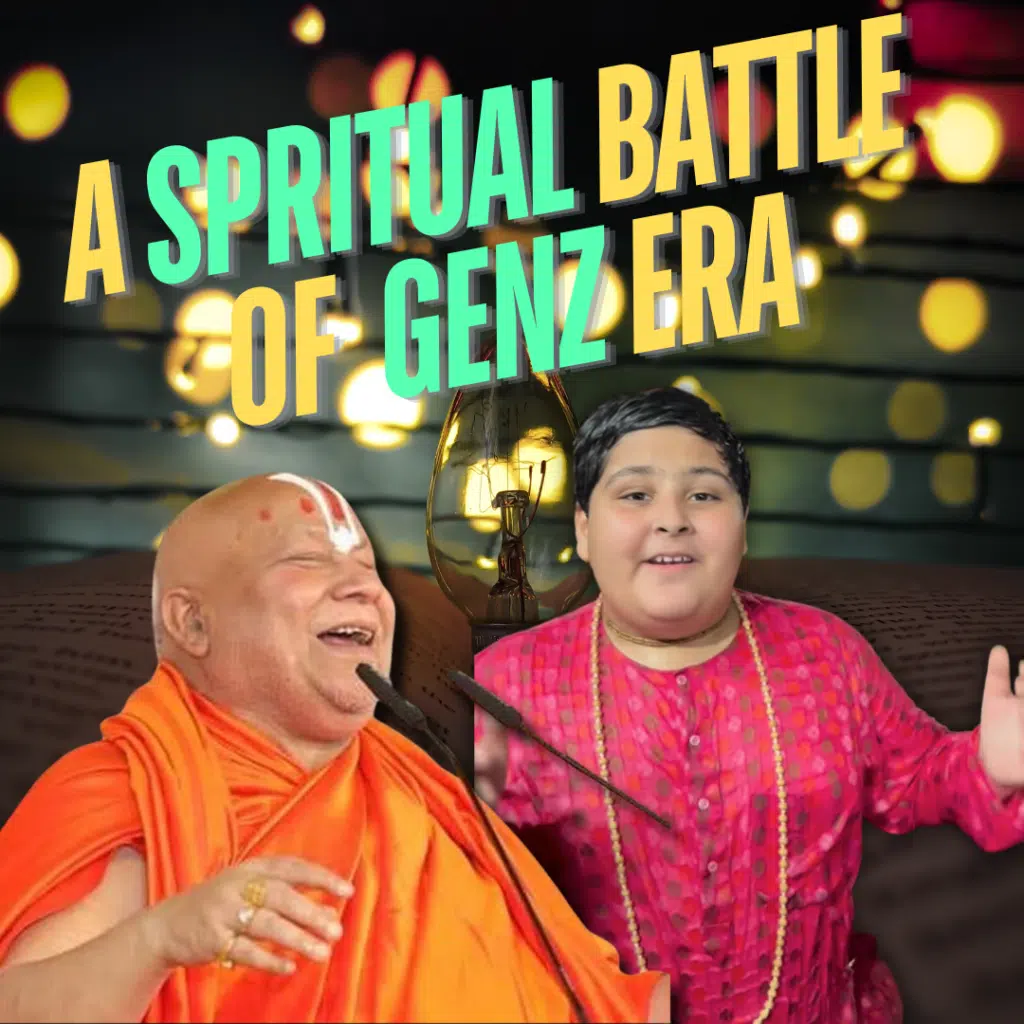
Abhinav Arora and Swami Rambhadracharya: A Spiritual Battle of GenZ Era
Recently, a video was done in which Swami Rambhadracharya, a prominent Hindu spiritual leader, openly bashed 10-year-old Abhinav Arora, popular as ‘Bal Sant Baba’, saying that he helps alcoholics among his devotees. Swami Rambhadracharya mocked Abhinav as a “foolish” boy and questioned his spiritual authenticity, and his remarks created big news in the media and public. It has fanned an already rife discussion on the growing trend of child spiritual figures in India, in particular on social media. Hailing from Hyderabad, where he has a million-strong Instagram following, Abhinav regularly shares teachings said to have been imparted by Lord Krishna and claims to converse with Hindu deities in ways young, religious people can relate to. But critics like Swami Rambhadracharya object that representations like these trivialize spiritual discourse, and some doubt Abhinav’s own sense of authenticity, saying he is making a gesture encouraged by his father.
The controversy underscores the thin line between tradition and modernity in a digital world where religious expression is increasingly occurring on digital platforms. It’s a case that points to ethical issues and social burdens posed by children taking the role of spiritual authority online. There is an implication that it is being watched by young, impressionable audiences who may not have the maturity to see the difference between coaching and performing genuinely spiritual teachings. Moreover, these figures, with millions of followers and significant influence, can have a great effect on public opinion and practices, with the risk of distorting traditional teachings and values.
2. Who Are Swami Rambhadracharya and Abhinav Arora?
Swami Rambhadracharya:
A celebrated Hindu spiritual leader who is both a scholar and orator is Swami Rambhadracharya, an authority on Hindu scriptures, and in particular, the Ramayana and Bhagavad Gita. As an educator he is also a respected founder to several educational institutions including Jagadguru Rambhadracharya Handicapped University a university catering specifically to students with disabilities. The Swami Rambhadracharya has its roots in traditional Hindu scholarship and keeps its hands over a conservative view of spiritual teachings, which rests heavily on the importance of scriptural authority and begins with a common disciplined study. The critical narration pertaining to Abhinav Arora’s methods indicates his worry about the peace of spiritual discourse and his prohibition of the marketed or inauthentic performance in the spiritual field.
Abhinav Arora (Bal Sant Baba):
Abhinav Arora, popularly called ‘Bal Sant Baba,’ is a 10-year-old boy who has become an online sensation for delivering spiritual discourses on Hindu deities, specifically Lord Krishna and Lord Rama. He reportedly began his spiritual journey at age three, encouraged by his father, Tarun Raj Arora, an entrepreneur and TEDx speaker. With over one million Instagram followers, Abhinav’s fame is largely attributed to his young age, his fluency in religious narratives, and the unusual persona of a ‘child saint’ or ‘Baba,’ which appeals to many online users. Despite his popularity, some question the legitimacy of his role, arguing that his young age and purported divine experiences may be exaggerated or scripted under the influence of his father.
3. The ‘Baba’ Trend in India’s Digital Sphere
In recent years, the phenomenon of young spiritual influencers, most of them self-proclaimed Babaji or Sant, is picking up steam in India, especially on its social media platforms. Such figures as Abhinav Arora captivate large audiences because of their age, the novelty and the ‘youthful’ association of religion with religious narratives. India’s rich cultural and spiritual fabric is why these young influencers speak to audiences that want to make spirituality accessible, and some see that as an appealing alternative to traditional religious institutions. They can, and increasingly do, use social media to get messages to large audiences without official spiritual training, so there is more of a blending between entertainment and what is a true spiritual practice.
Yet, these young spiritual figures have also received criticism for growing in influence. They believe a rush to the top influences the depth and authenticity of religious teachings. Now, however, simplified and digestible versions of religious traditions that require years of disciplined learning exist for the purpose of virality without expending as much effort as they once had. This trend of making religious content (particularly) accessible to wider audiences introduces the risk that such content — if not properly vetted — may be misinterpreted, misunderstood or oversimplified, especially from influencers with limited formal spiritual education.
4. Social Media Impact of Young Spiritual Influencers
A role that social media has played Incubated young spiritual influencers like Abhinav Arora. An Instagram, YouTube or TikTok reach will reach millions more and monetize content. A phenomenon has been formed on the back of the virality factor, in which the follower base of a person who is both young and old can soar. This accessibility, however, raises several issues:
- Public Perception: As ‘miraculous’, audiences of children delivering complex spiritual messages can misunderstand spirituality as a performance and not as a fulfilled practice.
- Influence on Young Audiences: These influencers are role models for many children and teenagers. While this can, in the best sense, lead to positive religious engagement, it can just as easily encourage shallow and inauthentic spiritual forms.
- Content Monetization: Occasionally, this monetization of spiritual content (sponsorships, merchandise, etc.) collides with the ethical principles of religious discourse, giving rise to the worry that spirituality is being commercialized.
5. Legal and Ethical Concerns in India
India’s boom in young spiritual influencers is a grey area of legal and ethical issues. As India has no particular rules on legalizing spiritual influencers or engagement of children performing religious or spiritual acts, the same generally prevailing laws and rules applicable to child welfare govern. Some pertinent legal and ethical points include:
- Child Rights and Exploitation Laws: Provisions to prevent child exploitation are present in the Juvenile Justice Act and the Protection of Children from Sexual Offences Act (POCSO). It could come in under exploitative practices if a child were to be performing under a situation of undue influence or coercion by parents or guardians.
- Consumer Protection and Authenticity Laws: Influencers who are monetizing are required to disclose sponsorships and affiliations because of consumer protection laws — and it should be the same for all influencers. With young influencers growing fast in good old religious content, eventually, that content might require regulatory oversight, although religious content typically gets snuck out of the auditor’s scrutiny.
- Media and Broadcasting Guidelines: In India, the Advertising Standards Council of India (ASCI) is a collecting group of Advertising and Public Relations organizations that regulate ethical advertising for the purpose of minors. This is specific on commercial advertising, but guidelines will take time to extend to include social media influencers in the future due to the presence and monetization of children in the digital sphere.
Conclusion
The controversy surrounding Abhinav Arora and Swami Rambhadracharya’s criticism underscores a larger societal debate on children’s place in spiritual discourse, especially in the age of social media. While some see Abhinav as an inspiring young figure bridging religious gaps, others argue that children like him should not be thrust into such influential roles, particularly without adequate understanding and formal spiritual training. The trend of ‘child Babas’ has become a defining feature of India’s digital age, but it also raises questions about authenticity, ethical responsibilities, and legal protections surrounding minors on social media. As this trend grows, the need for guidelines becomes more pressing to ensure that spiritual content remains respectful, authentic, and free from undue exploitation, especially when minors are involved.
FAQ
1. Who is Abhinav Arora?
Abhinav Arora, popularly known as ‘Bal Sant Baba,’ is a 10-year-old who shares teachings of Hindu deities on social media, where he has over a million followers. He claims to have embarked on his spiritual journey at the age of three.
2. What did Swami Rambhadracharya say about Abhinav?
Swami Rambhadracharya criticized Abhinav, calling him a “foolish” boy and questioning the authenticity of his spiritual claims, stating it is “unfortunate” that children are taking on roles of spiritual orators without traditional understanding.
3. Why is this controversy significant?
The incident has sparked a debate over the role of children in spiritual discourse, the impact of social media on religious teachings, and whether child influencers like Abhinav are promoting spirituality or participating in scripted performances.
4. What legal concerns are associated with child spiritual influencers?
While India lacks specific laws on child spiritual influencers, general child protection laws may apply. These laws address potential exploitation and ethical concerns surrounding child influencers in monetized or publicly influential roles.
5. Is social media influencing spirituality in India?
Yes, social media has enabled young figures like Abhinav to reach large audiences quickly. While it can democratize access to religious content, it also raises concerns about authenticity, oversimplification, and the commercialization of spirituality.

A Dirty Condom Can Save Your Hotel Expense
A 21-year-old in China scammed over 300 hotels by fabricating hygiene complaints, exposing vulnerabilities in the hospitality industry and underscoring…

How Your 3 Year Old Can Start A Startup
Balancing parenthood and entrepreneurship is a complex journey, as highlighted by the co-founders of YourDOST, Puneet Manuja and Richa Singh,…

How Do Airplanes Land In A Cyclone
Cyclone Fengal made landfall in northern Tamil Nadu and Puducherry, causing heavy rainfall, aviation disruptions, and localized damage, underscoring the…
In Delhi “25.5 Kms in 1.5 Hours” Amid Protests In Noida
The ‘Delhi Chalo’ protest by farmers, demanding fair compensation and policy reforms, caused massive traffic disruptions in Delhi, highlighting the…